
Livraison le jour même ou le lendemain

Qualité garantie

Débloquez vos offres de bienvenue: Livraison GRATUITE | Jusqu'à -80 % | 30 jours d'essai gratuits à JoyPlus
Téléchargez l'application
Choosing a video baby monitor is about more than comparing camera resolution. With connected models, devices with a dedicated screen and a range of alert features available, it is not always easy to know which one to choose. A highly detailed image will not make up for an unstable connection, while the advertised range can drop as soon as walls, floors and partitions get in the way.
Here are the key criteria to consider when choosing a baby monitor with camera to suit your daily routine, with or without WiFi.
A range of 300 metres is generally measured in open space. In a home, load-bearing walls, floors, thick partitions and certain electronic devices can significantly reduce the available distance. If you live in a multi-storey house, focus primarily on indoor range and signal stability.
A WiFi baby monitor lets you keep an eye on your baby remotely from a smartphone, even when you are away from home. On the other hand, it depends on your home network, the app and sometimes an online storage service. A non-WiFi baby monitor creates a direct connection between the camera and the parent unit. Set-up is often simpler, with no account to create or app to configure.
A 1080p or 2K camera will display more detail, but image quality also depends on the lighting, lens, video compression and screen being used. At night, good infrared night vision is often more useful than a high pixel count. Motion and crying alerts should also be adjustable, so you do not receive notifications constantly.
A 5-inch colour screen makes it comfortable to view the image from a bedside table or another room. A more compact model, meanwhile, will be easier to carry around. Also check:
Infrared night vision should let you distinguish movement in the dark, but it should not be presented as a guarantee of continuous monitoring.
Motion and crying detection can alert you when a change is detected in the nursery. These alerts do not replace direct supervision by an adult, and their reliability may vary depending on the child’s position, background noise and the settings selected.
Two-way audio lets you talk to your baby from the parent unit or app. When comparing battery life, make sure you check the measurement conditions: a runtime stated for audio-only mode will not necessarily match use with the screen continuously switched on.
Finally, always install the camera out of your child’s reach. Cables must be securely fastened and kept away from the cot, in line with the manufacturer’s warnings.
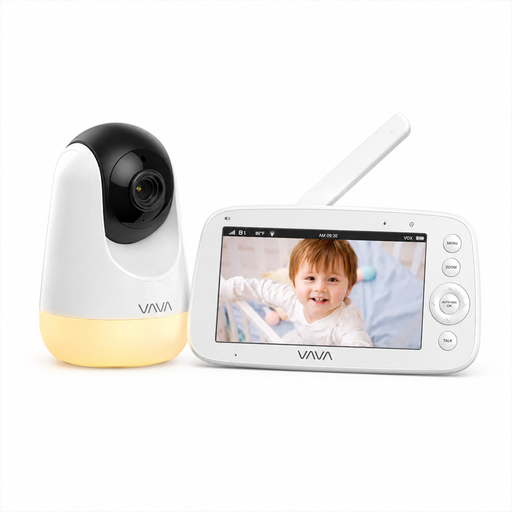
Why this model suits this profile: a local solution for families who want to monitor their baby at home without relying on WiFi or an app.
The direct connection avoids the constraints associated with the router, user account and potential internet outages.
5-inch 720p screen, infrared night vision, two-way audio and an advertised range of up to 300 m in open space.
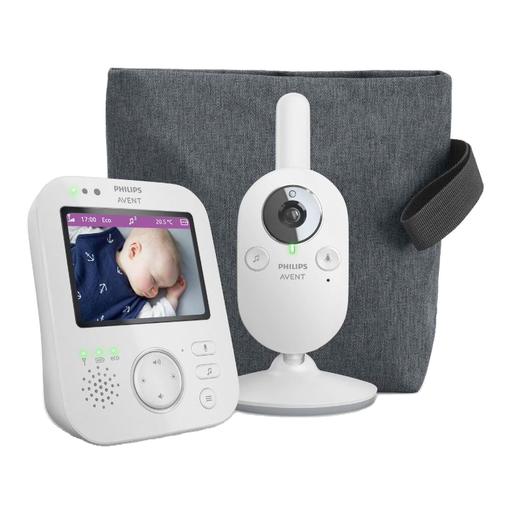
Why this model suits this profile: it combines a 3.5-inch colour screen, a private connection and several settings designed for everyday use at home.
The listing mentions 2.4 GHz wireless technology with private pairing, rather than access that relies on an online service.
Infrared night vision, 2× digital zoom, eco mode, two-way communication and advertised battery life of up to 10 hours.
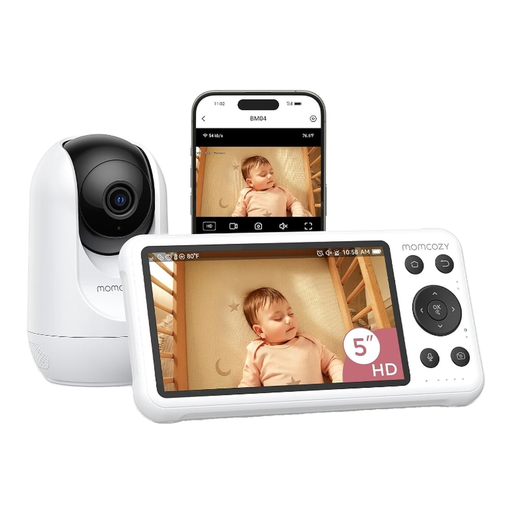
Why this model suits this profile: ideal for families who want to view the camera from a smartphone while still having a dedicated parent unit.
Dual mode reduces the risk of losing all access to the camera if there is a problem with the network or phone.
1080p resolution, 5-inch screen, app control, local storage, real-time alerts and two-way audio, according to the product listing.
We have put together an up-to-date selection of products designed to meet different monitoring needs and selection criteria for families in France.
Place the camera on a stable surface or mount it according to the manufacturer’s instructions. It must remain out of your baby’s reach, while cables should be kept away from the cot and play areas. Avoid damp locations and use only the supplied adaptor.
Before the first night, test crying detection, the volume, night vision and connection quality in the rooms where you usually spend time. With a WiFi model, install any available updates, choose a dedicated password and check the permissions requested by the app.
A baby monitor is an aid to supervision. It does not replace an adult’s presence and attention, or the safety rules that apply to putting an infant to sleep.
Yes, if you want to view the footage from outside your home. A non-WiFi model mainly communicates between the camera and parent unit, which is sufficient for monitoring your baby around the house. Your choice therefore depends on whether you need remote access and how comfortable you are with connected apps and services.
It depends entirely on the mode being used. A screen that stays on continuously uses more power than audio-only or eco mode. The VAVA VA-IH006 PRO, for example, offers up to 10 hours with the screen activated and up to 24 hours in audio-only mode. These figures may vary depending on brightness, sound volume and signal quality.
Start by lowering the sensitivity, then check the camera’s angle and sources of noise in the nursery. A fan, moving door or shadows can trigger certain alerts. Carry out several tests before relying on notifications during the night.