
Livraison le jour même ou le lendemain

Qualité garantie

Débloquez vos offres de bienvenue: Livraison GRATUITE | Jusqu'à -80 % | 30 jours d'essai gratuits à JoyPlus
Téléchargez l'application
The arrival of a baby is a wonderful upheaval, but it also brings a new kind of anxiety: the constant need to watch over their safety and well-being. The connected video baby monitor has established itself as an indispensable tool for new parents. It provides that much-needed peace of mind by allowing you to keep an eye and an ear on your child, whether you're in the next room or on the other side of the world.
But with an overwhelming number of options on the market, it's hard to know where to start. This guide is designed to help you navigate the market and give you all the keys to choosing the video baby monitor that's perfectly suited to your lifestyle and needs.
By the Joybuy Product Recommendation Officer
Before diving into our top picks, let's review the essential features that will make all the difference in your daily life. Here are the crucial points to consider.
This is the first and most critical decision to make.
A video baby monitor must provide a clear, sharp image. Today, Full HD (1080p) resolution has become the standard, ensuring a welcome level of detail so you don't miss a thing.
Night vision isn't an option—it's a must-have. Using infrared sensors, the baby monitor automatically switches to night mode to provide a clear black-and-white image, even in complete darkness, without ever disturbing your baby's sleep.
Other options enhance the experience, such as motion and cry detection. The baby monitor will then send a notification to your smartphone or parent unit as soon as your baby moves or starts to cry. It's a practical way to react in an instant.
For a device that films inside your home, security is non-negotiable. Opt for models that guarantee end-to-end data encryption to protect your privacy. Reputable brands are transparent about their security protocols, which is an essential sign of trustworthiness.
Here is our selection of models that stand out for their performance and design, catering to different types of parents.
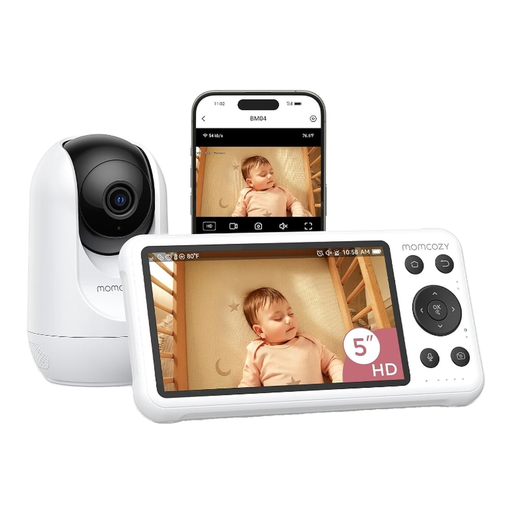
Highlights: This Momcozy model offers an incredibly effective hybrid solution. It combines a parent unit with a comfortable 5-inch screen for at-home monitoring and Wi-Fi connectivity for keeping an eye on your baby remotely via the app. The local storage of videos on the device (and not in the cloud) is a real bonus for privacy.
Pros:
Who is it for? For parents seeking absolute flexibility, who want the simplicity of a traditional monitor at home and the freedom to watch over their baby from anywhere.
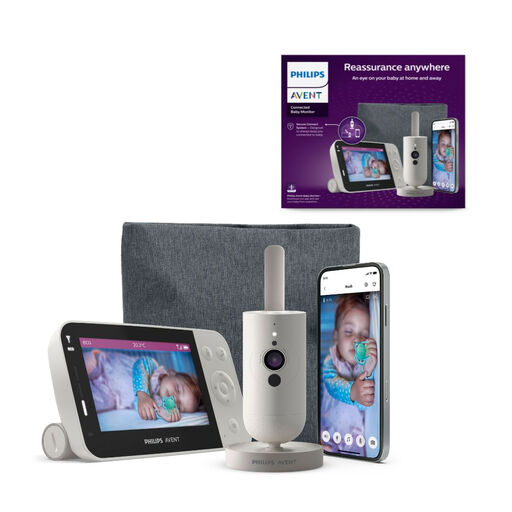
Highlights: This high-end model from Philips Avent goes all-in on security and performance. It uses a proprietary, secure connection system with multiple encrypted links for maximum protection. Its Full HD camera and the Baby Monitor+ app make it a comprehensive and reliable monitoring tool.
Pros:
Who is it for? For parents who trust major brands and are looking for an ultra-comprehensive device, packed with features designed for their baby's comfort and their own peace of mind, both at home and on the go.
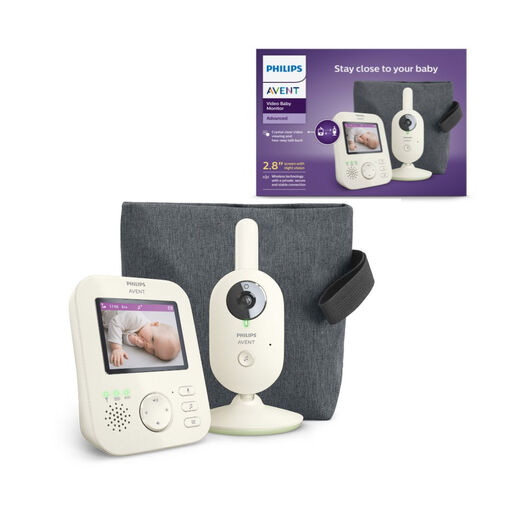
Highlights: This is the perfect alternative for parents who prefer a 100% offline system without Wi-Fi. It operates using radio technology (FHSS on the 2.4 GHz band) that guarantees a private, secure, and interference-free connection. Its simplicity and reliability make it a safe bet.
Pros:
Who is it for? For parents who prefer to avoid Wi-Fi and are looking for a simple, reliable, and secure video baby monitor for purely domestic use.
Choosing a baby monitor is a very personal decision: it depends on your home's layout, your habits, and, of course, your budget. If our selection doesn't check all your boxes, don't worry—other solutions are available.
A traditional baby monitor (FHSS radio) establishes a direct, private connection between the camera and its dedicated parent monitor. Its range is limited (typically 300-400m in an open field). In contrast, a Wi-Fi camera baby monitor connects to your internet router, allowing you to monitor your baby from anywhere in the world via a smartphone app. The range is therefore unlimited.
Absolutely. Night vision is an essential feature. It uses infrared LEDs (invisible to the naked eye) to provide a clear image of your baby, even in total darkness, without emitting any light that could disturb their sleep. It's a non-negotiable criterion for effective day and night monitoring.