
Livraison le jour même ou le lendemain

Qualité garantie

Débloquez vos offres de bienvenue: Livraison GRATUITE | Jusqu'à -80 % | 30 jours d'essai gratuits à JoyPlus
Téléchargez l'application
A video baby monitor with camera can make it much easier to keep an eye on a baby, young child or even a pet. However, product descriptions often pile on the promises — high resolution, impressive range and connected features — without always spelling out their limitations. To find a baby monitor that suits your home, it is better to focus on the essentials: connectivity, power, night vision and data protection.
A camera advertised as 4K does not guarantee a perfectly detailed image in all circumstances. Image quality also depends on lighting, video compression, screen size and connection quality. When monitoring a baby in a dark room, infrared night vision often matters more than the number of pixels shown on the packaging.
Remember to check the resolution of every component too. Some models pair a high-definition camera with a less precise parent unit screen. This is not necessarily a deal-breaker, but the image displayed on a baby camera with screen will not reproduce all the detail captured by the lens.
A range of 300 metres is generally measured in open space. Thick walls, different floors, doors and nearby wireless networks can quickly reduce this distance. In a flat or house, it is therefore the indoor range that deserves your attention.
A Wi-Fi-free baby monitor creates a direct connection between the camera and the screen. A Wi-Fi-connected model lets you monitor your baby remotely through an app, but it depends on network quality and requires access to be secured carefully.
A camera may require a microSD card sold separately, a cloud storage subscription or a permanent mains connection. Crying and motion detection can also generate a large number of notifications if the sensitivity or monitored areas are not set correctly.
Before placing your order, check:
For mainly home use, a Wi-Fi-free model avoids creating an account and managing remote access. It suits parents who want to keep the device within the home without relying on an app.
A Wi-Fi model is more useful if you want to view the camera from work, while travelling or from another distant room. In this case, use a strong password, install firmware updates and, where available, prioritise local storage.
Dual mode offers a particularly practical compromise: the camera works with a dedicated screen at home and can switch to the app when remote access is needed.
A 360° baby camera can cover a large part of the room thanks to its pan and tilt functions. Automatic tracking is useful when a child moves around, but it can also point the lens towards an area you did not intend to film. Disable it when a fixed view is preferable.
Digital zoom enlarges the image, but it does not add any detail that was not originally captured. It can be useful for checking a position or movement, but it should not be your only selection criterion.
A mains-powered camera can run continuously, but its cable must always be kept out of reach of the cot and play areas. Portable models offer greater flexibility, particularly when travelling or during a power cut, provided you check the battery level regularly.
Always place the camera on a stable surface or secure it firmly to the wall. When cables are present, position it at least one metre away from the cot. A baby monitor is an aid to supervision: it never replaces direct supervision by an adult.
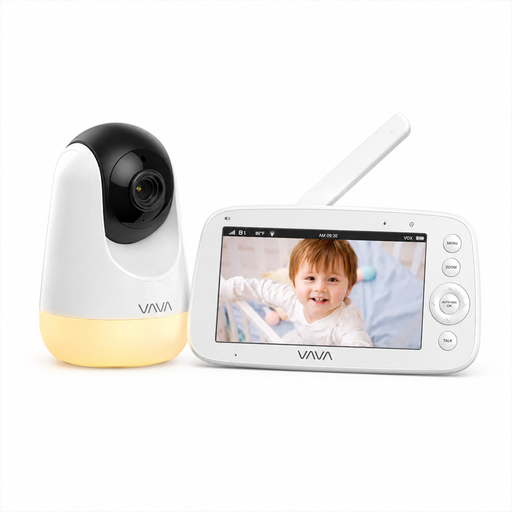
Why this choice suits this profile: Its direct Wi-Fi-free connection, 5-inch screen and simple controls make it a reassuring choice for a first home installation.
No app, account or cloud service is required. However, the 300 m range is measured in open space, while the camera runs from the mains.
720p screen, night vision, two-way audio, 2× and 4× zoom, and claimed battery life of up to 10 hours with the screen switched on.
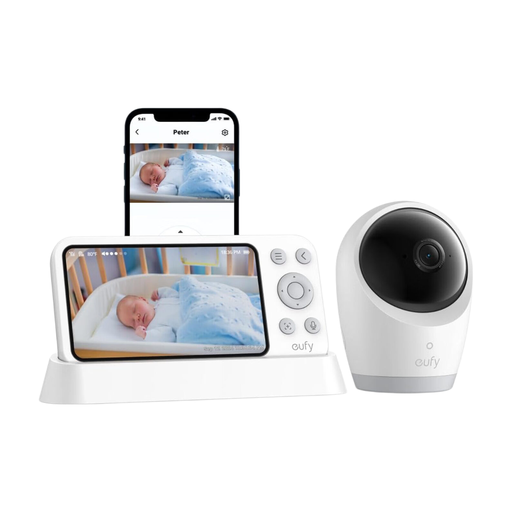
Why this choice suits this profile: Its offline and Wi-Fi operation suits families who want a screen at home while retaining the option to monitor their child remotely.
Switching to a local connection reduces reliance on Wi-Fi. However, the SD card is sold separately, and updates require a Wi-Fi connection.
Camera advertised as 4K UHD, 5-inch screen, 330° pan, 60° tilt, 8× zoom and a 5 000 mAh battery.
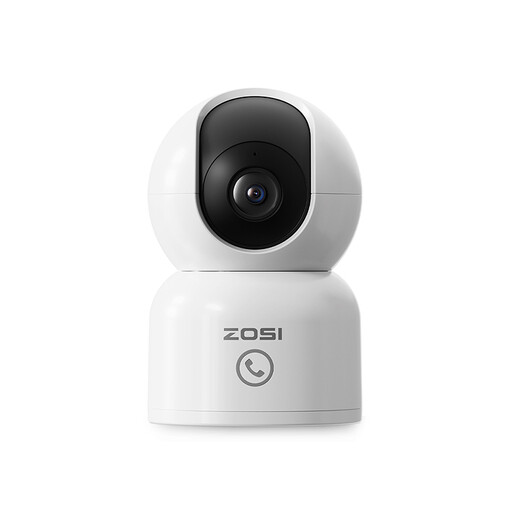
Why this choice suits this profile: This camera can be used in a child’s bedroom or living room, or to keep an eye on a pet or loved one through the app.
Privacy zones allow certain filmed areas to be hidden. The memory card, with a maximum capacity of 256 GB, is not included, so remember to allow for it in your budget.
2.5K resolution, 360° rotation, automatic tracking, night vision advertised up to 10 m and two-way audio.
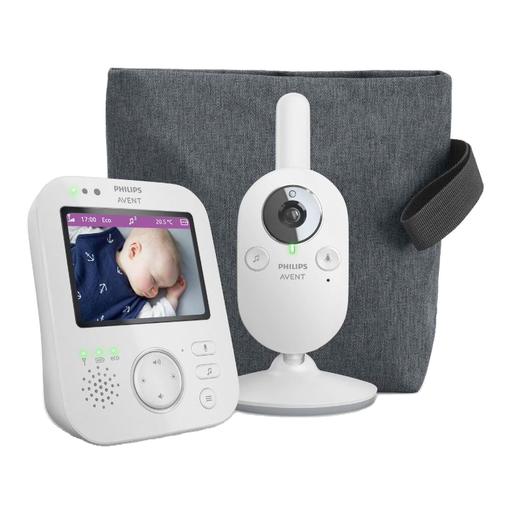
Why this choice suits this profile: Its private connection, with no app, and dedicated screen are ideal for parents looking for a traditional setup without remote access.
It does not rely on an internet connection or subscription. However, the advertised range should be treated with caution once walls and floors come into play.
3.5-inch colour screen, 2× digital zoom, night vision, eco mode, temperature sensor and claimed battery life of up to 10 hours.
We have put together a complete selection, updated in real time, of products that meet these demanding criteria and European safety standards.
Yes. Some models use a direct radio connection between the camera and the parent unit. They let you monitor your child locally, without an app or internet connection. However, they generally do not allow you to view the footage from outside the home.
Battery life depends on several factors: screen size, brightness, audio mode and the frequency of alerts. A stated duration in audio-only mode will inevitably be longer than the battery life achieved with video enabled. For overnight use, choose an eco or VOX mode and remember to recharge the parent unit regularly.
No. Crying, sound or motion detection can alert you when activity is detected, but it depends on the selected sensitivity and the surrounding noise levels. It is not a medical device and can never replace an adult’s presence or attention.