
Livraison le jour même ou le lendemain

Qualité garantie

Débloquez vos offres de bienvenue: Livraison GRATUITE | Jusqu'à -80 % | 30 jours d'essai gratuits à JoyPlus
Téléchargez l'application
A vertical garment steamer can simplify your morning routine, freshen up a jacket before a meeting, or smooth out curtains without having to drag out the ironing board. Yet some purchases turn out to be disappointing in practice. The advertised wattage alone doesn't guarantee a consistent steam output. And a compact appliance can quickly become frustrating if its small water tank means you have to refill it several times for just one outfit.
Before choosing your steamer, focus on the criteria that really matter day to day: runtime, steam output, size, safety and maintenance.
Measured in watts, power mainly indicates how quickly the appliance heats up. On its own, it doesn't tell you how much steam is produced. To compare two models, also look at the steam output, measured in grams per minute, as well as the pressure in bars when it comes to a steam generator.
A handheld steamer of 1,200 to 1,600 W is generally fine for everyday touch-ups. A steam generator designed for longer sessions usually has a larger water tank and higher pressure.
A small tank makes the appliance lighter, but it inevitably reduces its runtime. Travel models sometimes offer only a few minutes of steam – enough to de-wrinkle a shirt or a dress. For several garments, curtains or upholstery fabric, a capacity between 250 ml and 1.5 litres provides much greater convenience.
Check that the tank is removable, that its water level remains visible, and that it's easy to fill. An anti-drip system can also help prevent water marks on your clothes.
Limescale can gradually reduce steam output, especially in areas with particularly hard water. A self-cleaning function or a descaling collector simplifies maintenance, but it doesn't replace the need to empty the tank after each use or to follow the instructions in the manual.
The steam and soleplate can reach high temperatures. Choose an appliance with an automatic shut-off, a stable base and a comfortable handle. Always follow the manufacturer's instructions, particularly those about the water to use and which fabrics are suitable.
For occasional use, a continuous steam output of around 20 to 25 g/min is usually sufficient for shirts, lightweight trousers and dresses. Thicker fabrics often need several passes. With a pressure of 6 to 8 bars and a higher output, a steam generator is better suited to households that switch between vertical steaming and traditional ironing.
The heat-up time is also worth your attention. Some portable steamers are ready in 30 to 45 seconds – handy for a last-minute touch-up. A steam generator takes a little longer to prepare, but its generous tank means fewer interruptions.
A foldable steamer slips easily into a suitcase or drawer. The trade-off is that its tank is often small, and its cord can restrict your freedom of movement. A home-use model with a 250 to 320 ml tank offers a good balance between manoeuvrability and runtime.
For heavy use, it's better to go for a steam generator or a vertical steaming appliance with extended runtime. The ability to refill the tank while in use can be invaluable during long sessions.
A ceramic soleplate helps the appliance glide smoothly when it can also be used flat. A fabric brush helps to gently separate thick fibres, but it doesn't replace a setting that's appropriate for each material.
Even when the manufacturer highlights a thermal protection technology, always test on an inconspicuous area first. Keep the recommended distance and avoid holding the steam in one spot. Silk, coated materials and some synthetic fabrics require extra care.
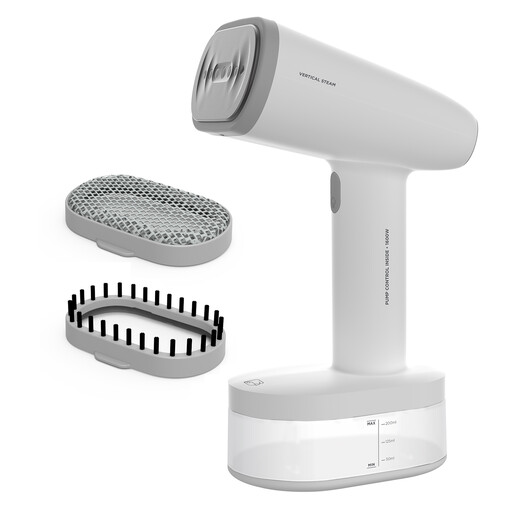
Why this choice suits this profile: This handheld format is ideal for regular touch-ups at home, in the office or before heading out, without having to set up an ironing board.
Its removable 250 ml tank and claimed output of 25 g/min mean you won't have to refill it too often for a short session.
1,600 W power, lockable continuous steam function, anti-drip system and self-cleaning cycle as advertised.
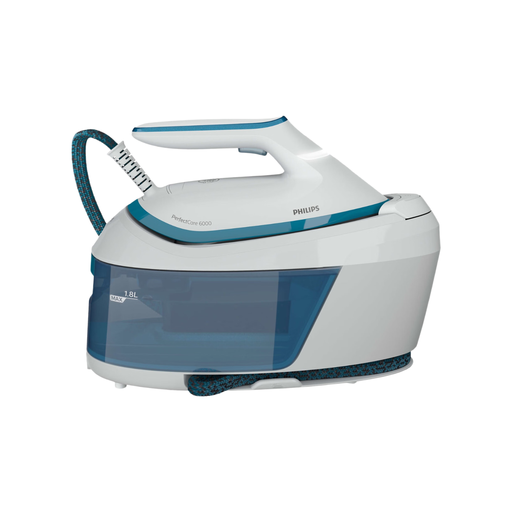
Why this choice suits this profile: This steam generator is designed for households that iron regularly and also want to steam hanging garments.
Its removable 1.8 litre tank minimises interruptions, while the descaling system tells you when maintenance is needed.
Advertised pressure of 6.5 bars, continuous steam output up to 150 g/min and automatic shut-off.
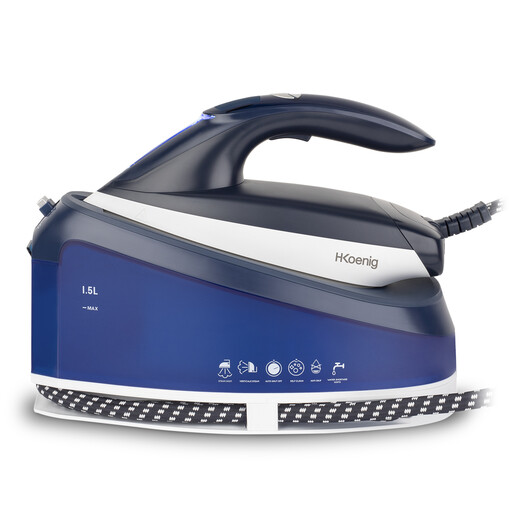
Why this choice suits this profile: This steam iron with a vertical function is ideal for large amounts of laundry and for those who switch between traditional ironing and steaming.
Its 1.5 litre tank avoids the limitations of portable appliances during long sessions.
Advertised power of 2,600 W, pressure of 8 bars, steam output of 120 g/min and non-stick ceramic soleplate.
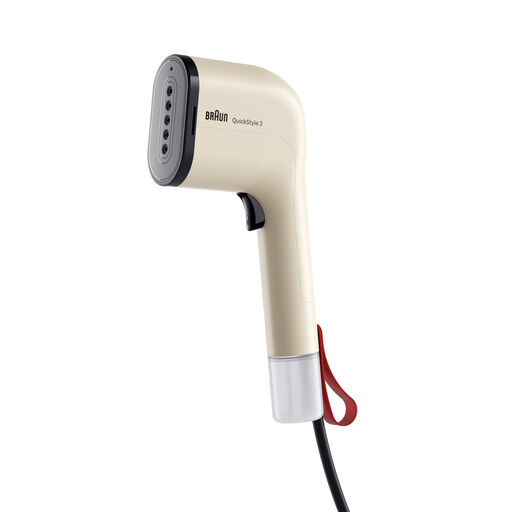
Why this choice suits this profile: At a claimed 770 g, with its slim design and heat-resistant pouch, it's easy to carry in a suitcase.
Its 70 ml tank limits sessions to a few touch-ups, but avoids carrying a bulky appliance for occasional use.
1,100 W power, claimed steam output of 20 g/min and heats up in 30 seconds.
We've compiled a complete, real-time updated selection of products that meet these demanding criteria and European safety standards.
Yes, some models are designed to release steam vertically onto curtains and upholstery fabrics. Keep the appliance moving, avoid saturating the fabric, and test on a hidden area first. Check the manual before using on any delicate or coated material.
Follow the manufacturer's recommendations. Many appliances accept tap water, while areas with very hard water may require water specified in the manual. Never add perfume, essential oil or any chemical to the tank unless it is explicitly permitted.
Not always. A portable steamer is ideal for hanging garments and quick touch-ups. A steam generator or a steam iron remains better suited to bulky laundry, stubborn creases and regular horizontal ironing. The right choice really depends on the amount of laundry, the space you have and how often you use it.