
Livraison le jour même ou le lendemain

Qualité garantie

Débloquez vos offres de bienvenue: Livraison GRATUITE | Jusqu'à -80 % | 30 jours d'essai gratuits à JoyPlus
Téléchargez l'application
A well-stocked toolbox can give the impression of excellent value for money. Yet the number of pieces alone isn't enough to make the right choice. Whether you're repairing a car, maintaining a bike, dismantling a computer or doing DIY around the house, the tools must first and foremost match the screw sizes, the available space and how often you'll use them.
Buyers generally come up against three pitfalls:
For 2026, our selection therefore focuses on well-organised kits, formats suited to each use and verifiable technical specifications.
When choosing a socket set with ratchet, look at the stated material, not just the outer appearance. Cr-V sockets, made from chrome-vanadium steel, are very common for tightening and loosening nuts. However, their strength depends on the manufacturing quality, the heat treatment and the intended use.
S2 steel bits generally offer hardness and wear resistance suited to screws and small assemblies. That doesn't mean they're suitable for every torque setting: a precision bit isn't designed to replace a socket used on a stubbornly stuck nut.
For wheel nuts or use with an impact driver, check compatibility carefully. Standard sockets and impact sockets are not interchangeable.
A kit may offer several drive square sizes. The 1/4″ size suits small sockets and jobs that require more precision. 1/2″ generally offers more leverage for automotive or mechanical work. In between, the 3/8″ size fits easily into a versatile workshop.
Also remember to check:
A toolbox that looks complete on paper can prove impractical if it doesn't contain the sizes you use most often.
For a mechanical tool kit or a car tool box, every item should stay firmly in place and be easy to identify. A sturdy handle and a reasonable weight also make a difference if you regularly carry the toolbox between home, the garage and a breakdown location.
For precision work, choose a compact case with a reliable closure and storage that prevents bits from getting mixed up. For a bike repair kit, volume is often more important: tyre levers, hex keys, chain tools and patches need to stay accessible when you're working outdoors.
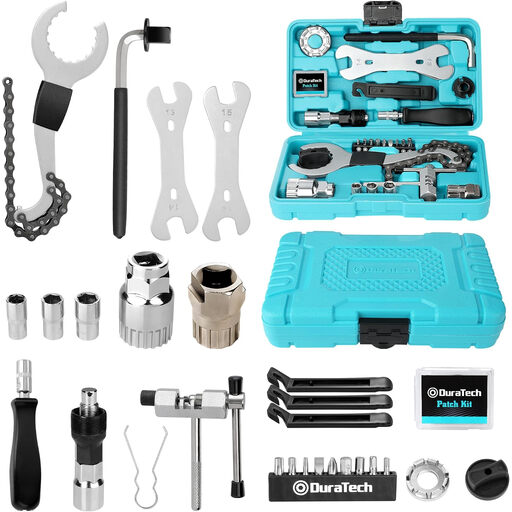
Why this choice suits this profile: this kit brings together the common tools for maintaining a bike at home and is easy to carry in its 24 × 14 × 5.5 cm box.
The 31 items correspond to clearly identified tasks: chain, pedals, cassette, tyres and hex screws. The box limits the mixing of small parts.
The specification lists a chain tool, a tyre repair kit, hex keys and several items in chrome-vanadium steel.
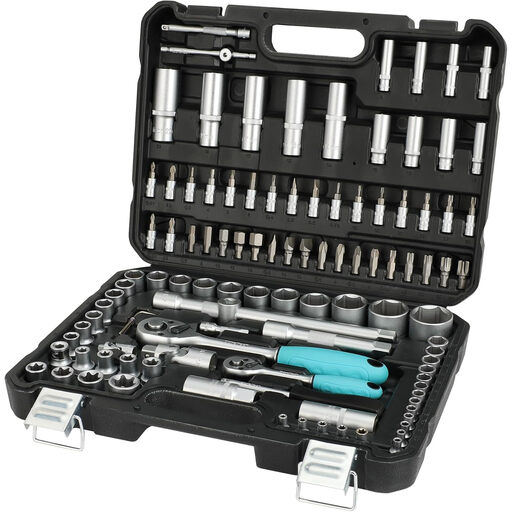
Why this choice suits this profile: the two ratchets in 1/4″ and 1/2″ cover both household tasks and mechanical, car or motorbike work.
The specification mentions visible markings, dedicated slots and accessories such as extension bars and a universal joint. The contents are therefore easier to verify.
The kit states 108 pieces, Cr-V sockets, S2 bits and 72-tooth ratchets with quick-release.
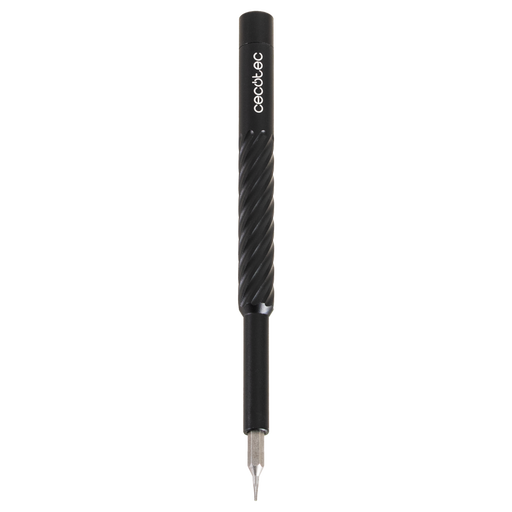
Why this choice suits this profile: this kit is designed for the screws found in phones, tablets, computers, laptops and household appliances that require small bits.
The number of bits corresponds to a clearly defined precision use. The case and built-in magnetiser make storage and handling of small screws easier.
The specification states 128 pieces, chrome-vanadium steel bits and a rigid case with closure.
We've put together an updated selection of products that meet these criteria for household, mechanical and precision work in France.
Before ordering, compare the exact list of pieces, the sizes, the weight of the toolbox and the terms of the legal conformity guarantee applicable in France. Using tools within the limits stated by the manufacturer also helps extend their lifespan: in particular, avoid forcing a small bit or using a standard socket with an impact tool.
Yes, provided it contains the metric sockets and drive square suited to your vehicle. For the wheels, also check that the sockets are compatible with the tool you're using and that the 17, 19 or 21 mm sizes match your nuts.
A precision screwdriver kit uses small bits intended for the screws in electronic devices. A mechanical set focuses instead on sockets, ratchets and the leverage needed for nuts and larger assemblies. These two formats meet very different needs.
Wipe the sockets after use in a damp environment, return each item to its slot and avoid improvised extensions. For metal parts, storing them in a dry place limits the risk of corrosion. Respecting torque settings and intended uses is just as important.