Fans of pure verbena
If you want to know exactly which plants are in your after-dinner cup, compare the ingredient lists. The products listed by Carrefour, Auchan and E.Leclerc include infusions made with verbena alone.


For a cup after a winter meal, choose between a pure verbena infusion and a verbena-and-mint blend, depending on what you’re looking for. If you want a jar to keep in the cupboard, check the packaging before you buy: a box of tea bags or a refill won’t meet that requirement.
If you want to know exactly which plants are in your after-dinner cup, compare the ingredient lists. The products listed by Carrefour, Auchan and E.Leclerc include infusions made with verbena alone.
Organic status and the plant’s origin answer two different questions. Auchan’s product information shows that organic verbena can come from several different places. Check each detail separately if it matters to you.
If you prefer verbena with mint, check the ingredients rather than relying on the word ‘verbena’ on the box. E.Leclerc, for example, lists a Bio Village blend containing both plants.
Start with the ingredients, then check any organic or origin information that matters to you. If you want an infusion to keep in the cupboard, also check the packaging and instructions on the box: a tea bag, a refill and a jar are different formats.
| What to consider | What to check | Who is it for? |
|---|---|---|
| Pure verbena or a blend | Read the ingredients: is it verbena alone, or does it include other plants, and in what proportions if these are stated? | After a meal, I want to identify an infusion made only with verbena, rather than mistake a blend for a pure infusion. Around 46% of consumers would put this composition first. |
| Organic status and origin | Check the organic label and, if stated, the plant’s origin. Don’t confuse this with where the product was made. | If organic status or origin guides my purchase, I want to be able to distinguish these details before choosing a box. This would be a priority for around 27% of consumers. |
| Flavour and preparation | Check which plants are in the blend, as well as the number of tea bags and the brewing instructions for that particular product. | For my after-dinner cup, I prefer a hint of mint or a tea bag with instructions that suit me. Around 27% of consumers would prioritise this flavour or ease of use. |
The Bio Village blend listed by E.Leclerc contains 50% verbena and 50% peppermint. It won’t suit you if you’re looking for an infusion made with verbena alone.
Check the ingredients and stated proportions if the presence of mint affects your choice.
These labels describe different things. E.Leclerc says that TISEA is made in France, while the origin of the verbena may vary. Auchan lists several possible origins for its organic verbena.
Look for the specific detail that matches your criteria on the product you choose: organic status, the plant’s origin or where it was made.
The verbena products described by Carrefour, Auchan and E.Leclerc come in boxes of tea bags. On their own, these won’t provide the storage container you’re looking for.
Decide whether you want an infusion sold in a jar or tea bags to transfer into your own container, then check the stated packaging before you order.
These examples let you compare specific ingredients and formats. The inclusion of a brand here doesn’t mean all its products come in the same packaging or are available everywhere.
Carrefour lists a 100% organic verbena infusion in a box of 20 tea bags, each weighing 1.3 g.
The TISEA product listed by E.Leclerc contains 25 tea bags, weighs 40 g in total and lists verbena as an ingredient.
Auchan lists a 100% organic verbena infusion in a box of 20 tea bags, weighing 26 g.
E.Leclerc lists an organic verbena and mint infusion in a box of 20 tea bags, weighing 30 g.
ALDI’s Westminster range includes verbena and verbena-and-mint options, each in a box of 25 tea bags.
These products are verbena infusions in tea bags, either on their own or blended with other plants, for a cup after a meal. If a jar is essential, check the packaging for each product: a box, gift set or refill of tea bags isn’t the same as a product sold in a jar.
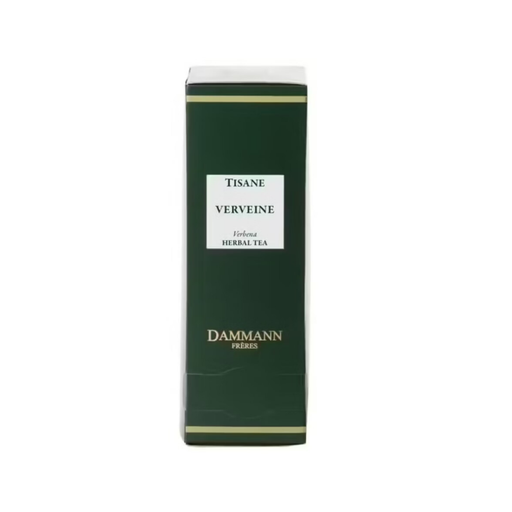 Image unavailable
Worth considering if you’re looking for a cup of verbena without a blend of other plants. Check the ingredients on the product you order. It comes in a box of tea bags, not a jar.
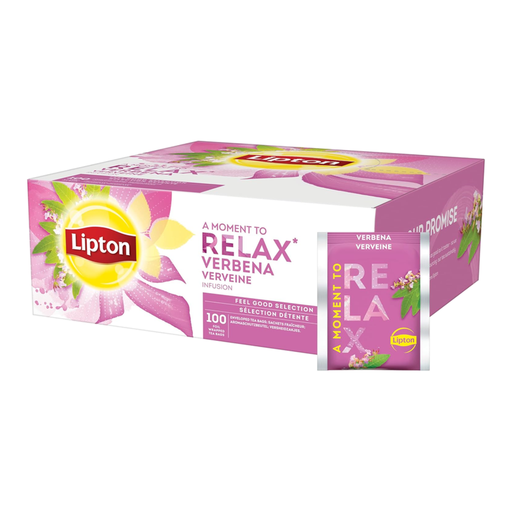 Image unavailable
Worth a look if you want verbena in tea bags and prefer a gift set with 100 portions. Check the ingredients and type of container if you plan to store the infusion in a jar.
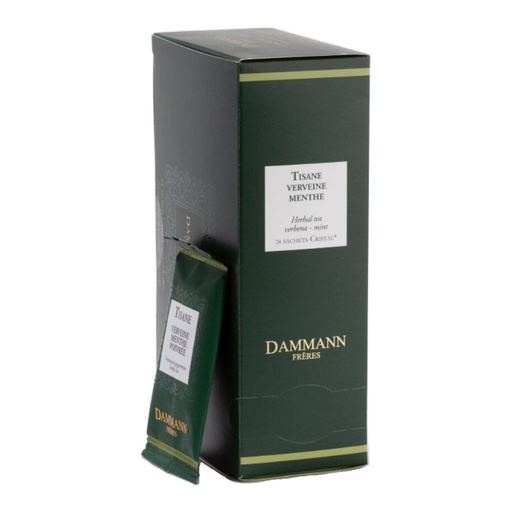 Image unavailable
Choose this if you’d prefer verbena with peppermint rather than a pure verbena infusion. This refill contains individually wrapped tea bags. You’ll need your own container if you want to keep them in a jar.
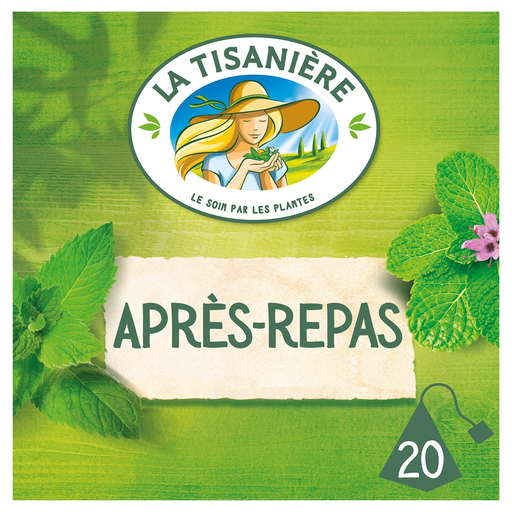 Image unavailable
Consider this only if you’re looking for a blend of verbena, mint and anise, rather than pure verbena. The product information also lists liquorice and warns that excessive consumption may be harmful to people with high blood pressure. Read the warnings on the packaging.
 Image unavailable
A tea-bag infusion combining verbena and mint, rather than pure verbena. Check the proportions of each plant and the brewing time on the box before making your cup.
Read the ingredients rather than relying on the name on the front of the box. Carrefour Bio and Auchan’s 1336 product list 100% verbena, while the Bio Village blend listed by E.Leclerc also contains peppermint.
No. Organic status and the plant’s origin are two different things. The Ministry of Agriculture says that organic farming is governed by European regulations. To find out where the verbena comes from, check the information for the product you choose.
Follow the instructions on the box you buy, as they vary from product to product. Auchan’s 1336 product information recommends 150 ml of water at between 75 and 90 °C and an infusion time of 4 to 5 minutes. Auchan Bio recommends 200 ml of hot water and 3 to 5 minutes. Also follow the storage instructions on the packaging.
When choosing an infusion, check details such as its name, ingredients, net quantity and the date shown on the packaging. The DGCCRF says that labelling information for pre-packed food sold in France must be visible, legible and written at least in French.