
Livraison le jour même ou le lendemain

Qualité garantie

Débloquez vos offres de bienvenue: Livraison GRATUITE | Jusqu'à -80 % | 30 jours d'essai gratuits à JoyPlus
Téléchargez l'application
Worried about a dead battery on a cold winter morning? Feeling range anxiety with your new electric car? Or simply want a more organised, clutter-free interior? Good vehicle charging equipment is no longer a gadget—it's an essential. In a market saturated with confusing marketing claims, our guide is here to cut through the noise and help you make the right choice.
To avoid buyer's remorse, let's start by exposing the most common pitfalls set by manufacturers:
To avoid these pitfalls, a few technical points are essential to check. They guarantee the performance, safety, and longevity of your equipment.
This is the non-negotiable starting point. Your equipment must be perfectly compatible with the technology of the battery it will be charging.
Don't pay for power you don't need. Tailor your choice to your actual requirements.
A charger handles powerful electrical currents, so safety isn't an option—it's a requirement. Always check for the following protections:
To help you choose, we've selected several products that meet different needs while adhering to the quality and safety criteria we've just discussed.
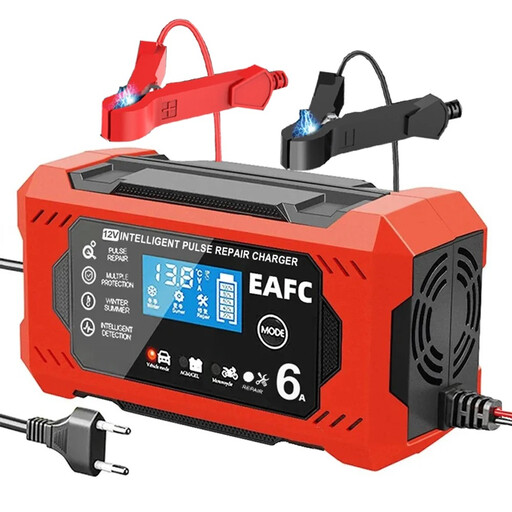
Why we chose it: A straightforward, cost-effective solution for the regular maintenance of a car or motorcycle battery. Ideal for preventing breakdowns during winter or after long periods of inactivity.
It doesn't fall for the misleading "universal compatibility" trap. It is clearly designed for lead-acid batteries (AGM, GEL, SLA, Wet) from 4 Ah to 100 Ah, covering the majority of internal combustion vehicles.
Fully microprocessor-controlled, its operation is automatic and prevents any risk of overcharging thanks to its multiple built-in protections.
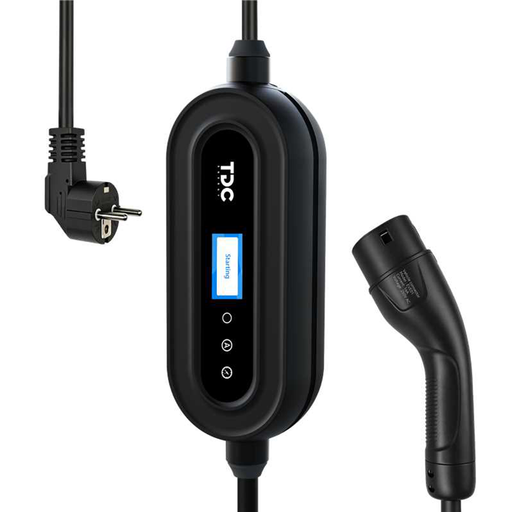
Why we chose it: A portable and flexible charging solution, without the hassle and installation cost of a fixed wallbox. Perfect for charging at home from a standard socket, at a friend's house, or on holiday.
It sidesteps the trap of high power ratings that require complex installation. This portable charger plugs into a standard household socket (Type F/Schuko), delivering 3.5 kW of power with no electrical work needed.
Its charging current is adjustable (8/10/13/16 A) to adapt to any electrical circuit. With Wi-Fi and Bluetooth connectivity, it allows you to schedule charging sessions from a mobile app.
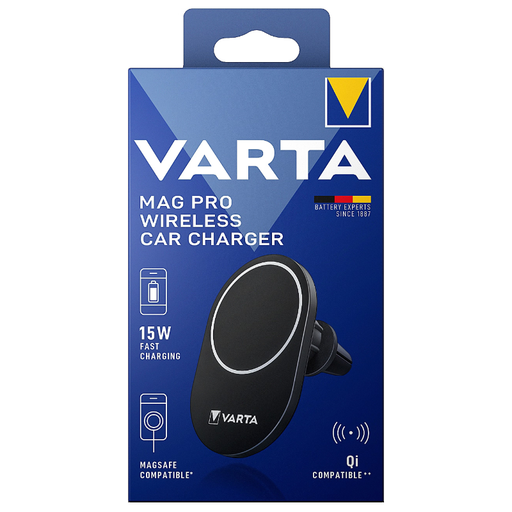
Why we chose it: For those who want a clean, minimalist interior and a fully integrated charging experience with no messy cables.
No more flimsy plastic mounts and slow charging! This model offers a strong magnetic attachment (MagSafe compatible) and true fast wireless charging up to 15 W.
It's an excellent 2-in-1 that serves as both a magnetic phone mount and a high-performance wireless car charger, all with the quality and reliability of a major brand like VARTA.
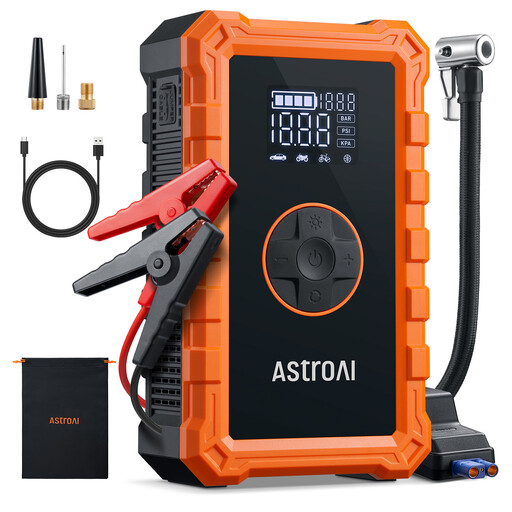
Why we chose it: The ultimate multi-tool for any emergency: jump-start an engine, reinflate a tyre, and recharge portable devices.
No need to buy and store a separate jump starter, compressor, and power bank. It combines all these functions into one surprisingly compact unit.
Its versatility is its greatest strength: it's a 1500 A battery booster, a 150 PSI portable air compressor, a power bank, and a torch all in one.
Explore our full selection of products that meet our quality criteria and European safety standards.
A standard car battery charger is used to recharge a significantly discharged battery. A charge maintainer, on the other hand, is designed to be left connected for long periods (for example, when winterising a motorcycle or convertible). It delivers a very low current to compensate for the battery's natural self-discharge, keeping it at its optimal charge level without any risk of overcharging. Many modern chargers now include an automatic maintenance mode.
This mode sends electrical pulses to try and dissolve the sulphate crystals that form on a battery's lead plates, a phenomenon that degrades its capacity. This function can be effective at recovering some performance from a lightly sulphated battery or one that has been left discharged for too long. However, it won't work miracles on a battery with internal damage (like a short circuit) or one that is simply at the end of its life.
It depends on the power level. A portable EV charger up to 3.7 kW can often be plugged into a reinforced household socket without professional help. However, to install a 7.4 kW or more powerful wall-mounted charging station (wallbox), hiring a qualified electrician is not only recommended but often mandatory for safety and insurance purposes. A certified professional will ensure the installation is safe and compliant with local electrical codes.