
Livraison le jour même ou le lendemain

Qualité garantie

Débloquez vos offres de bienvenue: Livraison GRATUITE | Jusqu'à -80 % | 30 jours d'essai gratuits à JoyPlus
Téléchargez l'application
Looking for vegetarian konjac tripe with a firm, springy texture—without the meat? Between individual ready-to-eat sachets, mala-flavoured assortments and products designed for hot pot, it is not always easy to know which option to choose. In this context, “tripe” generally refers to a plant-based imitation, not beef tripe.
Three common mistakes often arise when shopping: confusing a ready-to-eat snack with an ingredient that needs cooking, relying solely on the “low calorie” claim, and overlooking allergens or salt content. Here are the key criteria to consider when choosing a product suited to your diet, budget and eating habits.
Vegetarian mock tripe, also known as vegan tripe or konjac tripe, is generally made from water, konjac flour, starch and seasonings. It recreates the shape and chew of offal but contains no meat.
Beef omasum, also known as book tripe, is an actual part of the cow’s third stomach. It can be used in hot pot, soup or stir-fries, but it must be stored and prepared like raw or precooked meat. Always rely on the legal product name and ingredients list rather than the product image.
Konjac can have a moderate energy value, depending on the recipe. The seasoning can nevertheless make a significant difference. In particular, take oils, sugar and spicy sauces into account. Some products contain more than 3 g of salt per 100 g, while others exceed this level by an even greater margin.
This information is not a substitute for medical advice; it simply helps you compare labels. If you eat these products regularly, also consider the portion you actually consume. An 18 g or 50 g sachet obviously does not have the same impact as a 252 g or 360 g family-size box.
A spicy Chinese konjac snack may contain soy, sesame, peanuts or wheat, even when its base is entirely plant-based. Recipes made with soy sauce, bean paste, sesame oil or compound seasonings should therefore be checked carefully.
In France, allergens must be clearly identified on the label. Also remember to check the best-before date, storage conditions and instructions to follow after opening.
Texture depends in particular on the proportion of konjac flour and starch, as well as the product’s shape. Thin strips offer a more yielding bite, while thick or wavy sheets are generally firmer. Konjac does not exactly replicate the texture of beef omasum: it is a plant-based alternative inspired by it.
For a snack on the go, choose a ready-to-eat snack in an individual sachet. For sharing, boxes containing 20 or 28 portions are more practical and make it easier to manage quantities.
The terms “mala”, “spicy”, “hot and sour” and “sesame” refer to distinctly different flavour profiles:
If you are not yet familiar with your tolerance for chilli, start with a small format. This will help you avoid ending up with several portions you cannot finish.
Before opening, dry or pre-seasoned snacks can generally be stored in a cool, dry place. Once opened, some should be eaten immediately, while others must be refrigerated and consumed promptly. In every case, follow the product label.
For beef tripe intended for hot pot, maintaining the cold chain is essential. Raw products must be stored at –18 °C or below. Once thawed in the refrigerator, they must never be refrozen and should be consumed within the stated timeframe. Thorough cooking is essential.
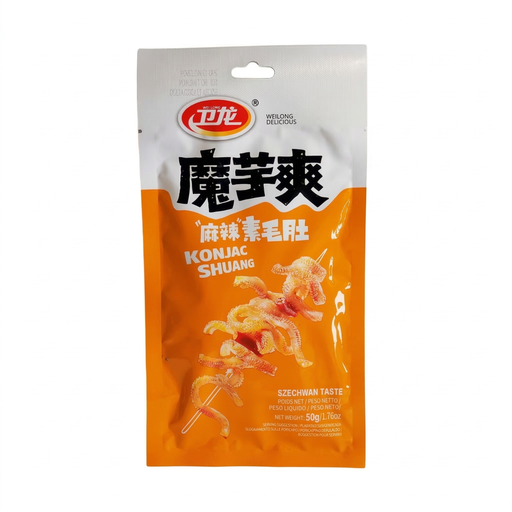
Why this format may suit you: at 50 g, this sachet lets you discover konjac’s texture and mala flavours without committing to a large box.
The ingredients list identifies a konjac base and the presence of soy, making it easy to distinguish this plant-based imitation from genuine beef tripe.
50 g ready-to-eat sachet, konjac flour listed in the ingredients and mala-style seasoning.
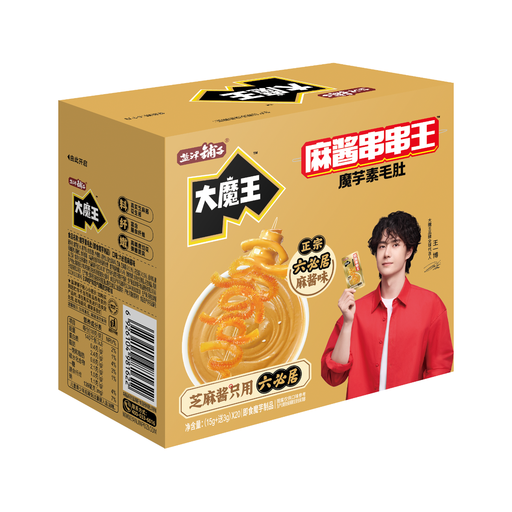
Why this format may suit you: its 20 portions of 18 g are easy to keep at the office or carry in a bag, and can also be served as a snack with drinks.
The listed allergens include soy, sesame, peanuts and wheat, so the label must be checked carefully before tasting.
360 g box, 20 individual sachets, no preparation required and sesame seasoning.
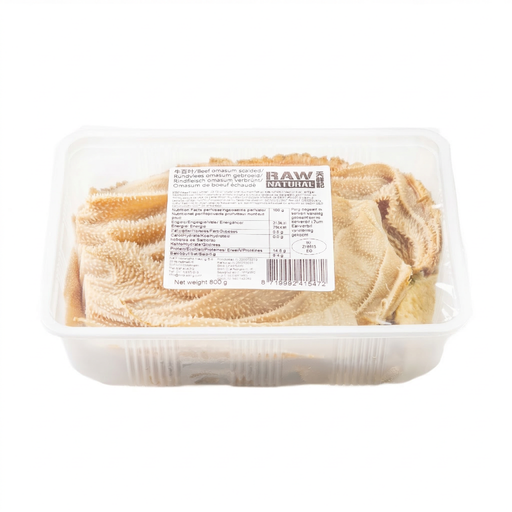
Why this format may suit you: this product is intended for those who want genuine tripe for hot pot, rather than a plant-based alternative.
The ingredients list beef omasum, water and salt: this is neither a vegan snack nor a product to eat straight from the pack.
800 g format, precooked product, storage at –18 °C or below and use specifically indicated for hot pot.
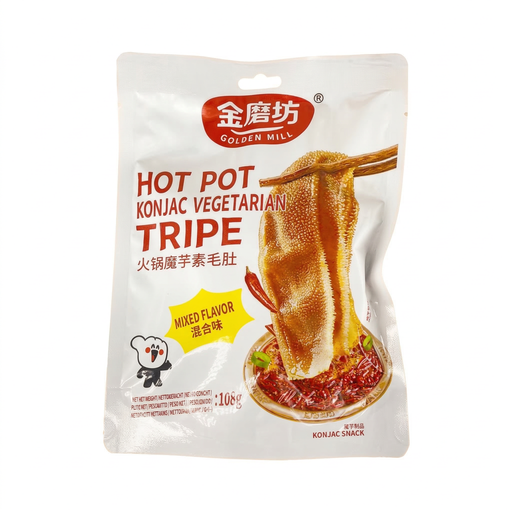
Why this format may suit you: its pieces are designed for hot pot and stir-fries, with several flavours combined in a 108 g format.
The product listing presents it as an ingredient that needs cooking, not as a ready-to-eat snack, clearly defining its intended use.
Konjac-based product, assortment of flavours and preparation suitable for hot pot or pan-frying.
Our regularly updated selection brings together products in a range of formats, with varied ingredients, flavours and uses, helping you compare before you buy.
Not necessarily. Its base may be plant-based, but some recipes contain ingredients or sauces that need to be checked. The presence of soy, sesame, peanuts or wheat does not mean the product contains meat. Check the ingredients list and the statement indicating whether the product is suitable for your diet.
A ready-to-eat snack can sometimes be added to a dish, but that is not its primary purpose. For hot pot, choose a product whose listing clearly states that it must be cooked, such as a konjac product designed for broth or genuine precooked beef tripe. Follow the instructions and cooking time shown on the packaging.
Dry snacks should generally be resealed and consumed promptly. Refrigerated and frozen products are subject to different requirements: once thawed, do not refreeze them and follow the timeframe stated on the label. For the exact storage duration, always refer to the date and instructions on the packaging.