
Livraison le jour même ou le lendemain

Qualité garantie

Débloquez vos offres de bienvenue: Livraison GRATUITE | Jusqu'à -80 % | 30 jours d'essai gratuits à JoyPlus
Téléchargez l'application
Peeling a few potatoes, grating carrots, preparing a salad or making mash can quickly become tedious without the right tool. Yet the range of vegetable preparation tools is so vast that marketing promises alone aren’t always enough to tell the genuinely useful gadget apart from the one that will end up at the back of a drawer.
Before you buy, three common pitfalls keep cropping up.
For blades, stainless steel remains a popular choice for kitchen utensils. It resists moisture and acidic foods better than unprotected metal, provided you follow the manufacturer’s care instructions.
The body can be made of plastic, wood or steel. Plastic generally helps keep the weight down, while steel offers a more rigid structure. A wooden handle can feel nice in the hand, but it needs careful drying and usually isn’t dishwasher-safe.
Each tool serves a specific purpose:
Choose based on the recipes you actually make — that way you won’t pay for features that will never get used.
A non-slip base, a collection container or feet that fit the diameter of a mixing bowl can make preparation much easier. Also think about checking the dimensions: a 30 cm tool might be effective, but hard to fit into a narrow drawer.
The “dishwasher-safe” claim should be checked for each model. Some products need hand washing to protect their blades or wooden parts. In any case, dry the metal parts after washing and store the blades with their guard, if one is supplied.
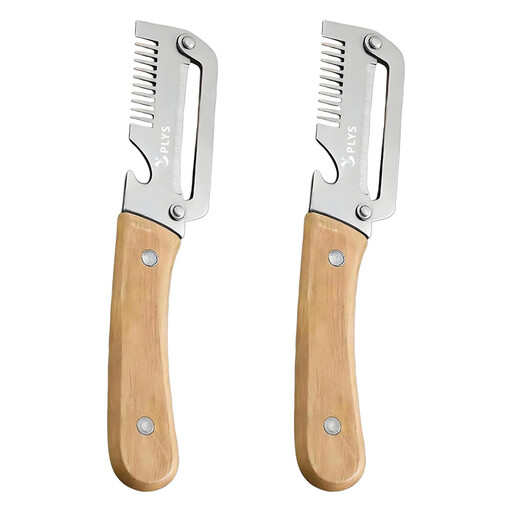
Why this choice suits this profile: this set of two tools covers everyday preparations in a small kitchen, while taking up little space and offering several manual uses.
It doesn’t pile on specialised accessories: the set focuses on peeling, fine slicing and opening bottles.
Stainless steel blades, wooden handle, stated length of approximately 19 cm and sold as a set of two.
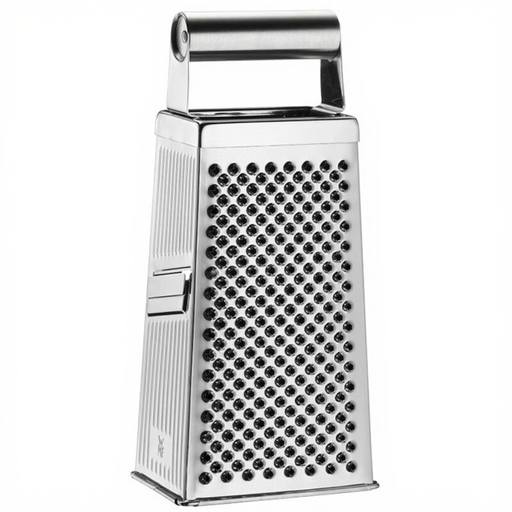
Why this choice suits this profile: its square shape combines several types of grater for cooks who regularly prepare vegetables, cheese, fruit or zest.
The functions are spread across four clearly identifiable sides, rather than being crammed into a mechanism with lots of interchangeable parts.
Cromargan stainless steel construction according to the product sheet, with coarse grater, fine grater, slicer and zesting function.
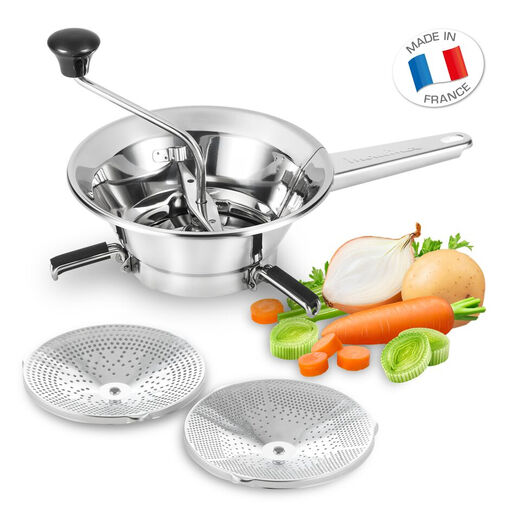
Why this choice suits this profile: this manual mill is aimed at families who regularly make purées, soups, coulis or compotes in quantity.
It is designed for cooked food and clearly states its limits: hard foods, stones and bones must not be put in.
190 mm diameter, two stainless steel discs, non-slip feet and parts stated to be dishwasher-safe.
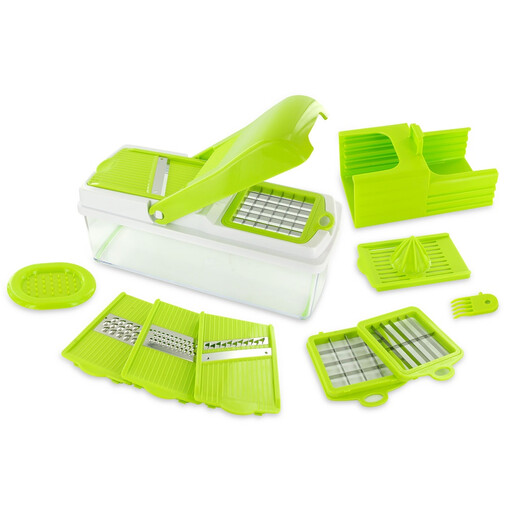
Why this choice suits this profile: its collection container and interchangeable accessories are ideal for salads, gratins, toppings and various cuts.
The container limits splashes, while the supplied pusher should be used with the blades, especially for the last bits.
Seven stainless steel accessories, five stated functions, integrated container and dimensions of approximately 11.5 × 12.5 × 27.5 cm.
We’ve put together a comprehensive, real-time updated list of products that meet these demanding selection criteria and European safety standards.
Stainless steel works well for blades that are exposed to moisture and food. However, do check the quality of the grip, the stability of the tool and the washing instructions. A comfortable handle doesn’t mean you can skip using it carefully.
Place it on a flat, stable surface, then always use the pusher or finger guard supplied. Never hold the vegetable directly near the blade and don’t apply excessive pressure to very hard foods. Store the blades with their guard, out of reach of children.
The lifespan depends on how often you use it, the pressure applied and how well you look after it. Replace the tool or stop using it if the blade is bent, rusty, unstable or hard to clean. Proper washing, followed by immediate drying, helps keep it performing well.