
Livraison le jour même ou le lendemain

Qualité garantie

Débloquez vos offres de bienvenue: Livraison GRATUITE | Jusqu'à -80 % | 30 jours d'essai gratuits à JoyPlus
Téléchargez l'application
A peeler that catches, slips, or scalps your vegetables, taking half the flesh with it: a classic kitchen frustration. Yet this everyday tool, often relegated to the back of a drawer, is the key to turning a chore into a quick and almost satisfying task. But with all the different models, materials, and shapes, how do you navigate the options?
This guide is here to help you break down the key criteria for choosing a vegetable peeler that won't let you down. We've also selected a few standout gems for their efficiency, design, or durability. Everything you need to equip your kitchen with a reliable and pleasant-to-use ally.
To find the perfect one, a few technical details deserve your attention. Here are the two main criteria that will guide your choice.
The heart of a good peeler is its blade. Two materials dominate the market, each with its own strengths and weaknesses.
The stainless steel blade: This is the choice for robustness and reliability. A quality stainless steel blade is built to last: it handles impacts well and can sometimes be sharpened. It's unfazed by tough skins or irregular surfaces. In short, it's a kitchen classic and a safe bet for heavy use.
The ceramic blade: The ceramic peeler is renowned for its formidable sharpness. Its ceramic blade, made from zirconium oxide, holds its edge much longer than steel. Stainless and lightweight, it also has the advantage of not altering the taste of food. Its surgical precision is perfect for fruits and vegetables with thin skins. Its only Achilles' heel: its fragility. An unfortunate drop or twist can chip it.
Comfort is essential, especially if you're embarking on a big peeling session. The shape of the tool will directly influence your grip and movements.
Here are the models that caught our attention, chosen for their performance, design, and value for money.
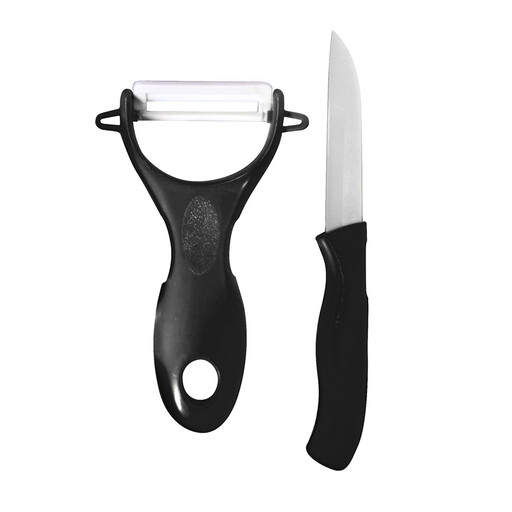
Ceramic Knife and Peeler Set – COOK CONCEPT
Why it stands out: This clever duo offers a complete solution for small cutting and peeling tasks. Both tools feature a zirconium oxide ceramic blade, known for its long-lasting sharpness and hygienic properties. A set designed for those who prioritise precision and a lightweight feel.
Advantages:
Who is it for? For home cooks who love the surgical precision of ceramic, especially for delicate fruits and vegetables (tomatoes, kiwis), and who are looking for a coordinated set for small prep work.
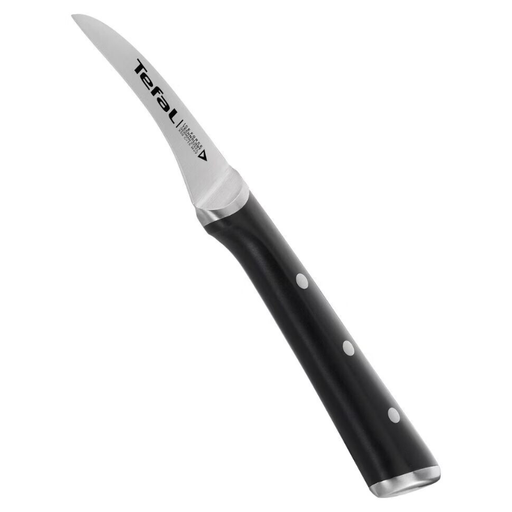
Ice Force Paring Knife 7 cm – Tefal
Why it stands out: More than just a peeler, this is a paring knife designed for performance and longevity. It features Ice Force technology: its German stainless steel blade undergoes a thermal shock at -120°C after being heated. According to Tefal, this process enhances its strength and corrosion resistance.
Advantages:
Who is it for? For those who prefer the versatility and control of a paring knife for peeling their vegetables. A wise choice for cooks seeking a durable tool from a trusted brand, which will be useful for much more than just peeling.
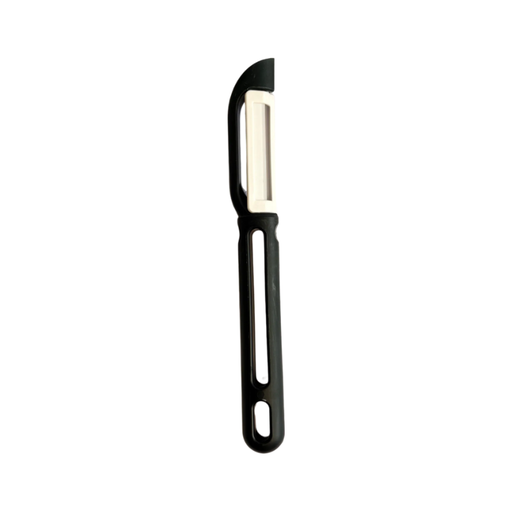
Black Ceramic Peeler – Belissam
Why it stands out: This peeler combines an ultra-efficient ceramic blade with an eco-conscious approach. Its handle is made from Sulapac, a bio-based composite material. Belissam is a French brand that focuses on sustainable materials and thoughtful design.
Advantages:
Who is it for? For cooks who care about performance as well as the impact of their purchases. It's the ideal tool for anyone looking for an effective, elegant fruit and vegetable peeler from a committed French brand.
Our selection highlights models with distinct profiles. However, the world of peelers is much larger, and your perfect match might be waiting there. If you have a specific shape, material, or budget in mind, feel free to browse our full catalogue.
? Discover our full range of kitchen peelers
A ceramic blade is extremely hard but also brittle. To preserve its edge and prevent chipping, wash it by hand with a soft sponge and washing-up liquid. Skip the dishwasher: harsh detergents and impacts with other cutlery could damage it. Dry it thoroughly before storing, ideally away from other metal objects to avoid impacts.
Even high-quality "stainless" steel is not completely immune to rust. Prolonged exposure to moisture, acidic foods (lemon, tomato), or overly strong detergents can eventually cause small spots of corrosion. The best practice? Wash and dry your peeler right after using it.
The straight peeler has a blade parallel to the handle. It's typically used in a back-and-forth motion, perfect for long vegetables. The Y-peeler, on the other hand, has a blade perpendicular to the handle, which encourages a pulling motion towards you. Many find it faster and safer for round vegetables (apples, potatoes) because the hand stays further from the blade. Ultimately, the choice depends on your personal habits and comfort.