Vegans keeping an eye on salt
You prepare meals without animal products and want to control how much salt you add to chickpeas, lentils or beans. The ingredients list and salt content matter more than the name of the pulse alone.


To control the seasoning in your vegan meals, compare a tin’s ingredients and salt content per 100 g rather than relying solely on the words ‘no added salt’. A classic tinned option may also suit you if its ingredients meet your needs. Dried pulses give you control over how much salt you add while cooking, but take longer to prepare.
You prepare meals without animal products and want to control how much salt you add to chickpeas, lentils or beans. The ingredients list and salt content matter more than the name of the pulse alone.
You use ready-cooked pulses in salads, stews or hummus. The drained weight helps you work out how much you can use, while storage instructions after opening are useful if you have leftovers.
You browse the products available from Carrefour, E.Leclerc or Auchan. The same category can include different recipes, so compare the ingredients and nutritional information for each product.
For vegan shopping, check the ingredients and salt content first, then choose the preparation time and format that work for your meals.
Choose this if: you want ready-cooked pulses but would like to season your dish yourself.
Keep in mind: ‘no added salt’ doesn’t mean ‘salt-free’. Auchan’s listing for D’AUCY organic chickpeas with no added salt shows 0,08 g of salt per 100 g.
Choose this if: the ingredients and salt content suit the recipe you’re making.
Keep in mind: some products contain added salt. Carrefour’s listing for Jardin BiO étic organic chickpeas includes sea salt in the ingredients.
Choose these if: you can plan ahead and want to decide how much salt to add while cooking.
Keep in mind: they’re not as convenient as ready-cooked pulses in a tin. Follow the preparation instructions for the product.
| Criteria | What to check | Who it matters to |
|---|---|---|
| Salt | Compare the ‘salt’ value per 100 g across similar products and check that the exact product is labelled ‘no added salt’. | If I want to season my own hummus, I need to distinguish between no added salt and the amount of salt shown on the label; around 33% of consumers put salt control first. |
| Vegan ingredients | Read the ingredients for your chosen product, especially if it contains a sauce or seasoning. | For a meal without animal products, I need to be able to check every ingredient; around 25% of consumers make this their top priority. |
| Preparation and format | Check whether the pulses are already cooked, their drained weight if applicable, and the storage instructions after opening. | When I’m putting a meal together quickly, I want a usable quantity that doesn’t need cooking first; convenience comes before other criteria for around 25% of consumers. |
| Organic, origin and variety | Check these details separately from the ingredients and salt content: one doesn’t guarantee the others. | If I’m looking for a particular variety or origin, I want to balance that with my choice of salt level; around 17% of consumers prioritise these preferences. |
The label refers to whether salt has been added, not to a zero value in the nutritional information. Auchan’s listing for the D’AUCY jar with no added salt shows 0,08 g of salt per 100 g.
To compare two tins, check their salt content on the same basis, particularly per 100 g.
These details answer different questions. Carrefour lists sea salt among the ingredients in its Jardin BiO étic organic chickpeas.
Check the ingredients, salt content and organic information separately for each product.
For pulses that need draining, the net drained weight helps you work out how much you’ll have for your recipe. Auchan lists a drained weight of 215 g for the D’AUCY jar mentioned here.
Compare the drained weight when choosing a pack size, and read the storage instructions for after opening.
An ingredients list that suits a vegan meal doesn’t necessarily meet the needs of someone who has to avoid an allergen.
If you’re cooking for several people, check the ingredients and allergen information on the pack you actually buy.
Auchan’s listing for D’AUCY organic chickpeas with no added salt provides details of a specific product, making it easier to compare ingredients, salt and format.
Carrefour’s range includes chickpeas, lentils and beans, with ingredients that are worth comparing product by product.
E.Leclerc’s range includes Notre Jardin lentils and chickpeas in packs listed at 265 g net drained weight.
These two products are dried pulses that you’ll need to prepare. They’re a good choice if you’d rather control the seasoning as you cook than choose ready-cooked pulses in a tin.
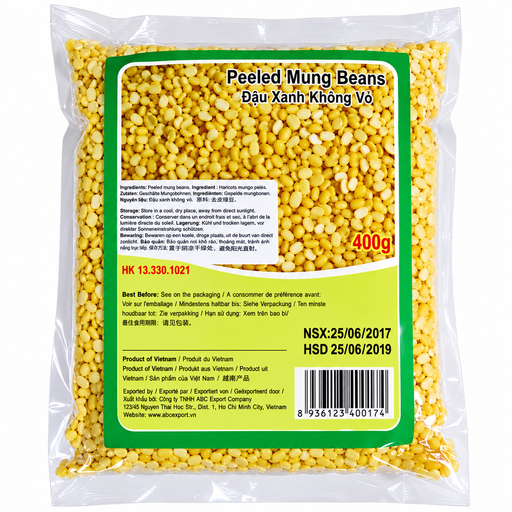 Image unavailable
If you want to prepare a pulse dish yourself and control the seasoning, this product contains peeled and split mung beans.
400 g pack. This isn’t a ready-to-use tin, so check the cooking instructions on the packaging.
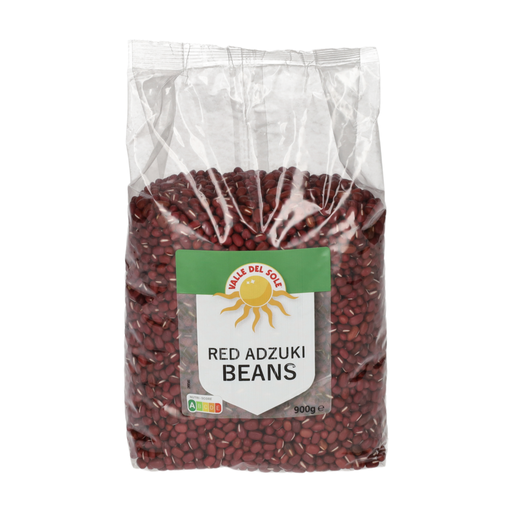 Image unavailable
These adzuki beans are for anyone who prepares their own pulses and wants to decide how to season the dish.
900 g pack. This product isn’t ready-prepared or pre-cooked in a tin, so follow the cooking instructions on the packaging.
No. ‘No added salt’ doesn’t mean the salt content is zero. Auchan’s listing for D’AUCY chickpeas labelled this way shows 0,08 g of salt per 100 g. Compare the ‘salt’ value for the products you’re considering.
Read the ingredients list for the exact product to check for any animal products, particularly in seasoned or cooked recipes. Anses defines a vegan diet as excluding animal products; the category ‘pulses’ alone doesn’t tell you everything that’s in a tin.
For its jar of D’AUCY organic chickpeas with no added salt, Auchan says to store the contents in a suitable airtight container in the fridge and recommends eating them within two days of opening. For other products, follow the instructions on the packaging you buy.
No. Organic labelling and added salt are two separate things. Carrefour’s listing for Jardin BiO étic organic chickpeas includes sea salt among the ingredients, so check both the ingredients and the ‘salt’ value for the product you choose.