People who cook vegan meals every day
If you regularly make pasta dishes, bakes or stews, a 500 g tomato base lets you choose the seasoning and other ingredients for your meal.


If the 500 g size matters as much as the vegan ingredients, choose tomato purée and season it yourself: some products in this size list only tomatoes as ingredients. A ready-made sauce saves you the preparation, but check its recipe and net weight rather than assuming it comes in a 500 g pack. Whichever you choose, check the allergens and storage instructions after opening for the product you buy.
If you regularly make pasta dishes, bakes or stews, a 500 g tomato base lets you choose the seasoning and other ingredients for your meal.
A ready-made sauce is a better choice if you want to keep preparation to a minimum. However, check the ingredients of the exact recipe and its net weight: “tomato sauce” alone doesn’t mean it’s “vegan” or “500 g”.
If you want to control the amount of salt or use a carton over several meals, compare the recipe and storage instructions after opening before choosing the 500 g size.
Choose this if: you want a 500 g base and would rather make your own sauce; the Tomacouli Panzani and Mutti purées featured by Carrefour list “100% fresh tomatoes” and “100% tomato” respectively.
Bear in mind: purée isn’t a pre-seasoned sauce, so you’ll need to set aside time to prepare your dish.
Choose this if: avoiding sauce preparation matters more to you than finding a 500 g carton; Barilla, for example, offers a Vegan Basil Pesto with no cheese.
Check: the ingredients and net weight of the recipe you choose. Don’t assume that pesto or a cooked sauce is the same as 500 g of tomato purée.
| Criteria | What to check when buying | Who it matters to |
|---|---|---|
| Vegan ingredients | Read the ingredients and allergen information for the exact product; don’t rely on the name “tomato sauce” alone. | I want to rule out animal-derived ingredients before adding a cooked sauce or pesto to my basket; around 40% of consumers would put this check first. |
| Size and preparation | Check the net weight and product name: 500 g of purée needs seasoning, unlike a ready-to-serve sauce. | For my meals, I’d rather have 500 g of a base I can adapt to my recipe; this would be the priority for around 30% of consumers. |
| Salt and recipe | If you want to control the salt, look for “no added salt” and compare the salt value per 100 g in the nutrition information. | I want to choose the seasoning myself rather than infer the salt content from the word “tomato”; around 20% of consumers would prioritise this. |
| After opening | Check how long the product keeps and how to store it on the packaging, then plan how you’ll use any leftovers. | If I don’t use the whole carton at once, I need to be able to include the rest in another meal; for around 10% of consumers, this would be the main criterion. |
A 500 g tomato purée is a base for homemade sauce; it doesn’t save you the time needed to season it and prepare the dish.
Choose purée if you want to create your own recipe. If speed is your priority, look for a ready-to-serve sauce with ingredients that suit your vegan meal.
A ready-made sauce or pesto can have a different recipe from plain tomato purée.
Check the ingredients and allergen information for the exact product, especially if it’s pesto or a creamy sauce.
Storage instructions after opening vary: Auchan says to keep Tomacouli Panzani in the fridge for eight days, and the Mutti tomato purée featured on its product page for five days.
Before buying, check the instructions on your pack and plan another dish if you don’t expect to use the whole carton.
Some of the product could go to waste if it isn’t used within the stated time.
The 500 g Tomacouli Nature purée is a tomato base for cooking with, rather than a sauce that’s already seasoned.
The brand offers 500 g tomato purées to use as sauce bases.
Vegan Basil Pesto is better suited to anyone looking for a ready-made sauce than a tomato base to season themselves.
These three products fit the “500 g tomato base for cooking” option. When choosing between purée and pulp, think about the recipe you want to make; none of these product names refers to a ready-to-serve, pre-seasoned pasta sauce.
 Image unavailable
A 500 g purée to consider if you want to make and season your own vegan pasta sauce.
This isn’t a ready-made sauce. For this product, the instructions say to refrigerate after opening and use within five days; check the pack you buy.
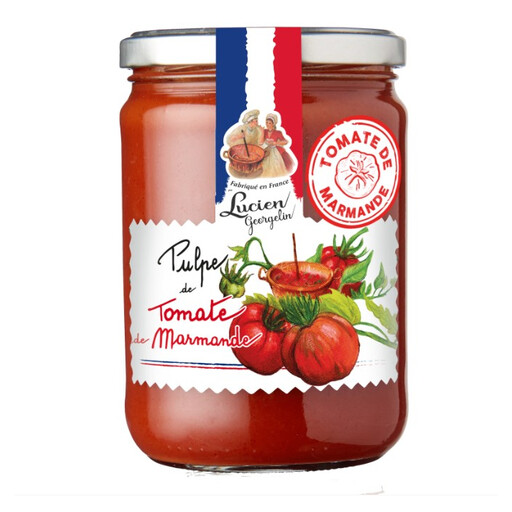 Image unavailable
500 g of tomato pulp for anyone planning to make their own sauce rather than use a ready-made one.
The listed recipe contains salt and pepper, so bear this in mind if you want to control the seasoning yourself. After opening, the instructions say to refrigerate and use within five days; check the packaging.
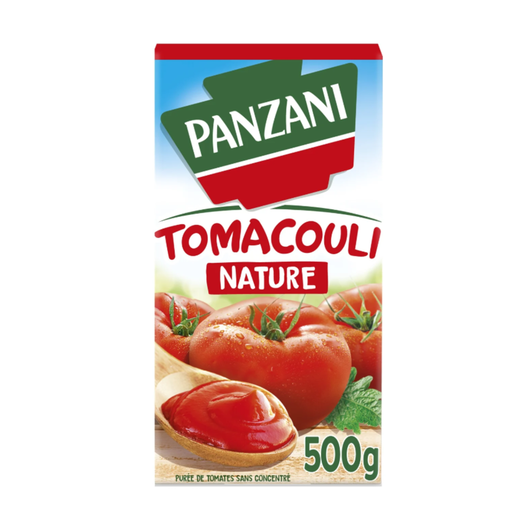 Image unavailable
A 500 g purée for making homemade sauce and choosing the other ingredients yourself.
This is a base for cooking with, not a ready-to-serve sauce. Check the ingredients list and storage instructions after opening on the packaging for this product before planning how to use the rest.
Read the ingredients list and allergen information for the exact product before buying. A purée listing only tomatoes, such as the 500 g Panzani and Mutti products featured by Carrefour, doesn’t declare any animal-derived ingredients; for a ready-made sauce or pesto, check the recipe for the specific product you choose.
Yes, but purée is a base to cook with rather than a sauce that’s already seasoned. If you want to make your own sauce, you can add the plant-based ingredients for your dish; if you’d rather skip the preparation, choose a ready-to-serve sauce after checking its ingredients.
Follow the storage instructions and use-by period on the carton you buy, as these vary by product. Auchan says to keep Tomacouli Panzani in the fridge for eight days, and the Mutti tomato purée featured on its product page for five days; don’t apply these timeframes to a different recipe.
Compare the product name, ingredients, allergens, net weight and nutrition information, particularly the amount of salt per 100 g. The DGCCRF highlights the importance of clear labelling and provides details on nutrition information. Compare these details with what your recipe needs rather than relying on the product name alone.