Vegans keeping an eye on salt
You’re looking for a recipe that fits a vegan diet, while paying close attention to the ‘salt’ figure in the nutritional information.


If you’d like to season your noodles yourself, choose plain noodles after checking their ingredients and salt content. If speed and a clear vegan label are your priorities, an instant recipe could work for you, but check its salt content separately: vegan doesn’t mean ‘low in salt’.
You’re looking for a recipe that fits a vegan diet, while paying close attention to the ‘salt’ figure in the nutritional information.
You want a meal ready in minutes and check for a vegan label, the ingredients in the seasoning sachets and the salt per 100 g.
You’d rather start with plain noodles so you can choose the sauce and stock separately, and control how much salt you add to your dish.
Choosing between plain noodles and an instant recipe comes down to factors such as whether you want to prepare the seasoning yourself, the vegan label and how much time you have. In either case, compare the salt per 100 g for products shown in the same state.
Choose these if : you want to make your own sauce and control how much salt you add. Auchan’s listing for plain noodles states 0.02 g of salt per 100 g.
Bear in mind : you’ll need to prepare the seasoning and check the ingredients on the pack you buy; this listing doesn’t guarantee that the product is vegan.
Choose these if : you want a quick meal and a clear vegan label. Auchan states that the Oyakata Yakisoba Classic Soy Sauce recipe takes three minutes to prepare.
Check : the sauce and seasoning are part of the product; the listing for this Oyakata recipe shows 1.4 g of salt per 100 g.
| Factor | What to check | Who it matters to |
|---|---|---|
| Salt content | The ‘salt’ figure per 100 g, with the product in the same state, and whether seasoning is included. | I want to choose my own seasoning without overlooking the salt already in the noodles; around 40% of shoppers put this check first. |
| Vegan ingredients | The vegan label, where available, as well as the ingredients in the noodles and each sachet. | A vegetable flavour isn’t enough for me: I want to check the exact recipe, including the seasoning. Vegan suitability is the priority for around 40% of shoppers. |
| Preparation time | How to prepare the noodles and whether they come with a ready-made sauce. | When I’m short on time, I look for a quick meal while still checking its label; around 20% of shoppers prioritise convenience. |
Auchan’s listing for Oyakata Yakisoba Classic Soy Sauce describes it as vegan and shows 1.4 g of salt per 100 g. These two details answer different questions.
Check the ingredients and vegan label separately from the ‘salt’ figure in the nutritional information.
Under European Union Regulation (EC) No 1924/2006, the claim ‘reduced sodium/salt’ requires a reduction of at least 25% compared with a similar product. A figure shown on its own doesn’t prove that comparison.
If this claim is important to your purchase, look for it on the packaging and check the comparison it’s based on. Otherwise, use the salt figure shown without describing the product as ‘low in salt’.
Auchan says that the ingredients in its plain noodles may vary depending on the delivery location and date; some versions also mention possible traces of egg.
Check the ingredients list, any trace warnings and the nutritional information on the pack you receive.
Its plain noodles are a good example of a product you can season yourself.
The Yakisoba Classic Soy Sauce recipe is a quick option when you’re short on time.
Carrefour’s search results for this range include 250 g rice noodles.
These rice noodles and rice vermicelli are a starting point for adding your own seasoning. For vegan shopping, check the ingredients on the pack. If you’re looking for a ‘reduced salt’ claim, check for it separately rather than assuming it applies because the noodles are plain.
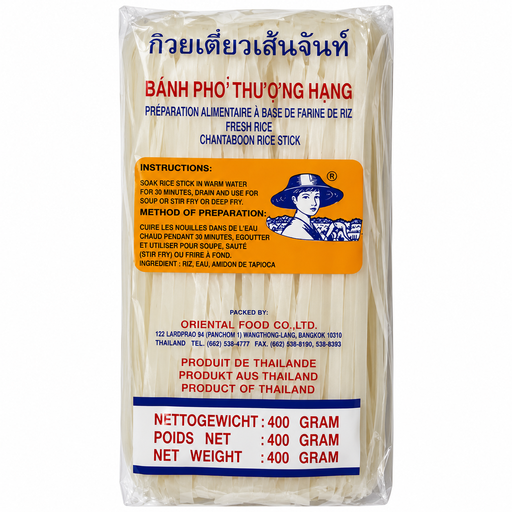 Image unavailable
A base of rice noodles for adding your own seasoning; check the ingredients and nutritional information on the pack before choosing.
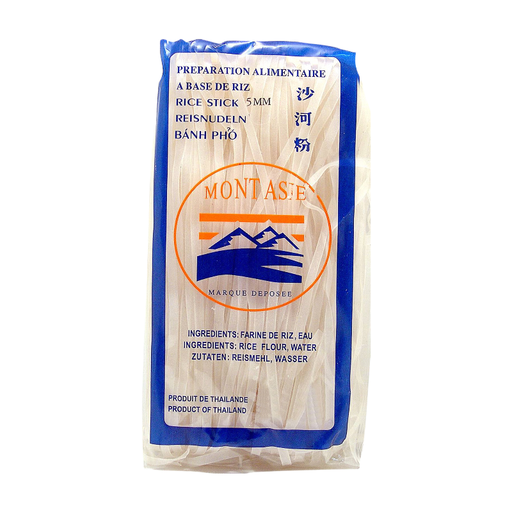 Image unavailable
Rice vermicelli to consider if you’d like to prepare the sauce separately. Check the ingredients on the pack to make sure it suits your vegan diet.
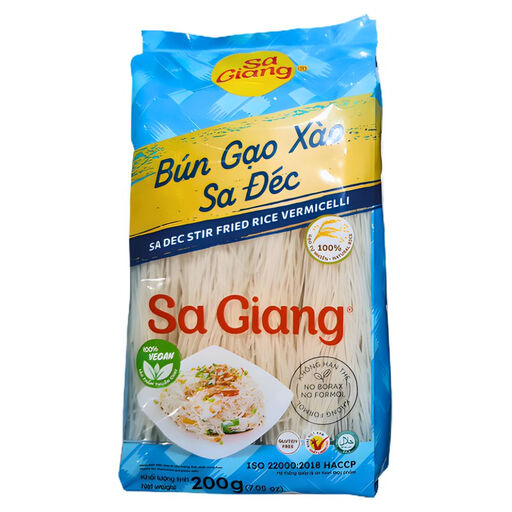 Image unavailable
Rice vermicelli for a recipe where you choose the seasoning. Check the ingredients and the ‘salt’ figure on the packaging.
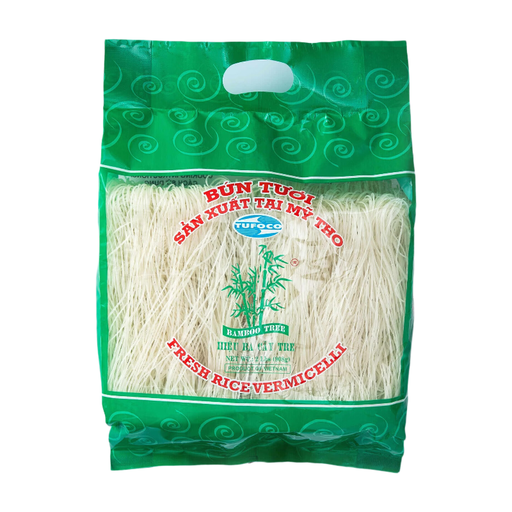 Image unavailable
A larger pack of rice vermicelli to season as you like. Check the packaging to make sure it meets your vegan and salt requirements.
Compare the ‘salt’ figure per 100 g for products shown in the same state, for example, as sold. As the DGCCRF explains, nutritional information per 100 g or 100 ml makes it easier to compare products. Also check whether the figures include a sauce or seasoning.
No. A vegan label doesn’t tell you the salt content on its own. Auchan describes Oyakata Yakisoba Classic Soy Sauce as vegan, while its listing shows 1.4 g of salt per 100 g. So check the ingredients and nutritional information separately.
Under European Union Regulation (EC) No 1924/2006, this claim requires a reduction of at least 25% in sodium or salt compared with a similar product. A low figure on its own isn’t enough to show that noodles meet this requirement.
It’s not a substitute you should use without considering your individual circumstances. Anses highlights risks for some people associated with potassium chloride salt substitutes. If you’re following a prescribed diet, ask a healthcare professional for advice before using one.