People who check for vegan ingredients
You avoid ingredients of animal origin and want to read the ingredients list on every bar. If you have a milk allergy, you’ll need to check ‘may contain’ warnings separately from your vegan requirements.


When choosing dark chocolate as part of your vegan shop, first check the ingredients of the exact bar you’re buying: the words ‘dark chocolate’ alone don’t tell you what it contains. Then choose the cocoa content to suit your taste and how you plan to use it, without assuming this tells you how much sugar it contains. If you have a milk allergy, check any ‘may contain’ warnings separately.
You avoid ingredients of animal origin and want to read the ingredients list on every bar. If you have a milk allergy, you’ll need to check ‘may contain’ warnings separately from your vegan requirements.
You’re choosing between a 70% cocoa bar and options labelled 85% or 90%. The percentage gives you an idea of the intensity, but not the sugar content of the bar you choose.
You’re looking for chocolate to add to a mousse, cookies or another recipe. Even if the packaging recommends it for baking, you should still check the ingredients and allergen information.
For a vegan shop, start with the ingredients of the exact product, then compare bars based on the taste and use you have in mind.
| What matters | What to check | Who is it for? |
|---|---|---|
| Ingredients and allergens | Read the ingredients on the exact bar, then check the allergen information and any ‘may contain milk’ warnings. The absence of milk from the ingredients list is not a guarantee for someone with an allergy. | For my vegan shop, I want to avoid ingredients of animal origin. If I have a milk allergy, I also need to take possible traces into account. Around 42% of consumers would put these checks first. |
| Intensity and sugars | Choose a cocoa content you like, then compare the sugars per 100 g in the nutritional information. Don’t confuse ‘sugars’ with ‘added sugars’. | If I’m looking for a robust dark chocolate, I also want to know its sugar content rather than infer it from the cocoa percentage alone. Around 33% of consumers would prioritise both of these factors. |
| Baking | Check how the chocolate is intended to be used and its cocoa percentage, then check the ingredients and allergens before adding it to a vegan recipe. | When making a vegan dessert, I’m looking for chocolate that suits my recipe without overlooking its ingredients. Around 25% of consumers would prioritise this use above all else. |
The words ‘dark chocolate’ don’t tell you everything about the ingredients. Some dark chocolate bars also carry a ‘may contain milk’ warning, which is particularly important if you have an allergy.
Check the ingredients and allergen information whenever you switch to a different product or format. If you’re looking for an explicit vegan label, make sure it appears on the product you choose.
A high cocoa content doesn’t tell you everything about the ingredients or, by itself, how much sugar the bar contains. It also doesn’t guarantee that you’ll enjoy the bitterness.
Start by choosing an intensity you like, then read the ingredients and compare the sugars per 100 g on specific products.
According to Santé publique France, displaying Nutri-Score is voluntary. So if it’s missing, you’ll still need to read the other information on the label.
If it’s displayed, consider it alongside the ingredients list, allergens and nutritional information. Don’t assume it means a bar is suitable for your vegan diet.
These examples relate to specific products. Ingredients and allergen information can vary between bars and pack sizes.
Among the products in the Excellence range described by Carrefour France and Joybuy France are bars labelled 70% and 85% cocoa.
The Bio 70% bar described by Carrefour France has a stated minimum cocoa content of 70%. Its ingredients include cocoa mass, cane sugar, cocoa butter and vanilla extract.
The Noir Bio bar listed by Carrefour France is a baking chocolate with a stated minimum cocoa content of 57%.
The Bio 90% bar described by Carrefour France is aimed at people looking for a high cocoa content.
The Bio bar described by Auchan France has a stated minimum cocoa content of 85%, between the 70% and 90% levels of the other products mentioned here.
These dark chocolate bars cater to different tastes: one is labelled 85% cocoa, another 70%, and there’s also a bar with almonds and sea salt. For a vegan shop, check the ingredients and warnings on the bar you receive before deciding which one to choose.
 Image unavailable
Worth considering if you’re looking for a bar labelled 85% cocoa to enjoy on its own. The Joybuy France listing for this product doesn’t declare any allergens, but that doesn’t guarantee it’s free from traces. Check the label on the product you receive, particularly if you have a milk allergy.
 Image unavailable
Worth considering if you prefer a bar labelled 70% cocoa. The listing for this product notes that it contains maltitol and warns that excessive consumption may have a laxative effect. Check the label for ingredients and any ‘may contain’ warnings too.
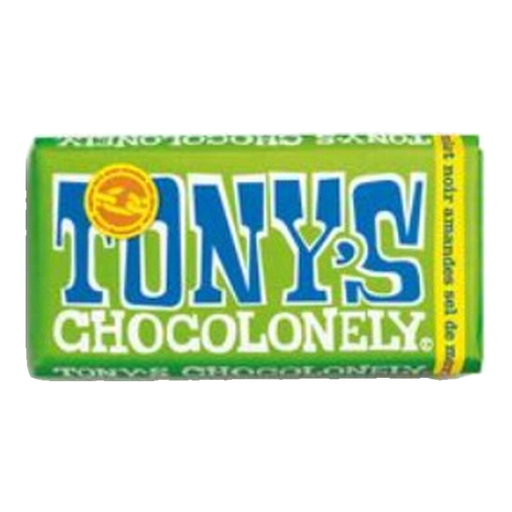 Image unavailable
Worth considering if you’d like dark chocolate with almonds and sea salt rather than a plain bar. If a high cocoa content is important to you, check the percentage on the packaging. Also check the ingredients and allergen information for this product.
No. Check the ingredients of the exact bar rather than relying on its name alone. A ‘may contain milk’ warning is separate from the ingredients list, but it matters if you have an allergy. If you need an explicit vegan label, look for one on the product you buy.
The levy described in Article 1613 ter of the French General Tax Code, in the text published by Légifrance, applies to drinks and liquid preparations for drinks, not chocolate bars. To choose based on sugar content, check the nutritional information on the bar instead.
No. Santé publique France says that producers display Nutri-Score voluntarily. Its absence isn’t a reason on its own to rule out a bar; check its ingredients, allergens and nutritional information.
Compare the ‘sugars’ per 100 g on the nutritional information for each bar. If a listing gives ‘added sugars’ separately, don’t compare that figure directly with the total sugars in another bar: they measure different things.