Fans of different teas and infusions
If you want to choose water below 100 °C depending on the drink, check which temperatures you can actually select. UFC-Que Choisir distinguishes variable-temperature kettles from standard models on this basis.


A standard kettle is a good choice if you mainly want to boil water without selecting a temperature. If you switch between drinks and would like to choose a lower water temperature, opt for a variable-temperature model with settings that suit your needs. In either case, compare the minimum fill level, the stated safety features and the capacity you need for your usual cups.
If you want to choose water below 100 °C depending on the drink, check which temperatures you can actually select. UFC-Que Choisir distinguishes variable-temperature kettles from standard models on this basis.
The capacity should suit the number of drinks you make at once, as well as the amount of water you usually heat. Compare the maximum capacity, the minimum fill level and how easy the water-level indicator is to read.
If you use a kettle several times a day, check the automatic shut-off, the stated protection against running dry or overheating, and the body design if its outer temperature matters to you. These features vary by model.
First decide whether you simply want to boil water or select an intermediate temperature. Then choose a capacity that suits the number of drinks you usually make.
Choose this if: you mainly use boiled water and would rather not have temperature settings.
Bear in mind: you generally won’t be able to select a setting below 100 °C.
Choose this if: you switch between drinks and want to select intermediate temperatures, as described by UFC-Que Choisir.
Bear in mind: settings, controls and keep-warm functions differ between models, so check that they suit the way you’ll use the kettle.
| Feature | What to check | Who is it for? |
|---|---|---|
| Temperature | The settings you can actually select and, if useful, whether there’s a keep-warm function. | If I make teas and infusions that need different temperatures, being able to choose a setting matters more than simply boiling water. Around 36% of consumers make this their top priority. |
| Ease of use | Automatic shut-off, plus explicitly stated protection against running dry or overheating; check the body if it’s often touched. | When I use the kettle several times a day, I want to know which safety features apply each time it heats and is handled. This is the top priority for around 29% of consumers. |
| Capacity | The maximum capacity, the minimum permitted fill level and an easy-to-read water-level indicator. | Sometimes I make one cup, sometimes several, so I want a kettle I can fill according to how much I’m serving. For around 21% of consumers, choosing the right capacity is the priority. |
| Noise and maintenance | A noise test with measurements if this is a deciding factor, as well as access to the filter and descaling instructions. | If the kettle is used often and kept within easy reach, I pay most attention to how loud it sounds and how easy it is to clean. Around 14% of consumers prioritise these features. |
A large-capacity kettle isn’t necessarily convenient for one cup if its minimum fill level is high.
Compare the number of cups you make at once with the maximum capacity, then check the instructions for the minimum permitted fill level.
Switching off at the end of the heating cycle doesn’t necessarily mean a model also has protection against running dry or overheating.
Look for each of these safety features in the product specifications or instruction manual for the model you’re considering.
A noise rating without comparable test conditions won’t help you choose between two kettles on this basis.
If noise is important to you, look for a test that measures it explicitly and check the returns policy for the product you’re considering.
A repairability promise or commercial warranty comes with its own terms. In France, the Ministry of the Economy explains that the legal guarantee of conformity applies to goods sold by a business to an individual.
Keep your proof of purchase and check the commercial warranty terms, availability of spare parts and repair arrangements separately.
These examples of product ranges can help you identify features to compare from model to model. They don’t guarantee that a specific product is available.
The range includes standard and variable-temperature kettles; the features listed by Tefal vary by model.
Depending on the model, Bosch’s variable-temperature kettles combine temperature selection with ease-of-use features.
The Maya 1 L is an example of a more compact variable-temperature kettle for people who usually make smaller amounts.
These kettles suit two of the needs covered here: selecting a temperature for different drinks, or boiling water. Compare each model against the features you actually need.
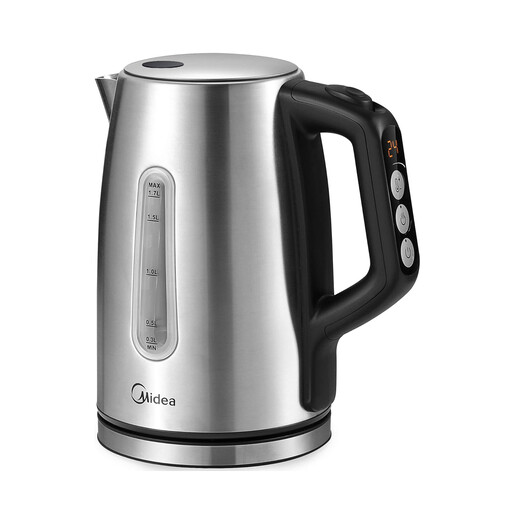 Image unavailable
Worth considering if you want to select a temperature for different drinks and serve several cups.
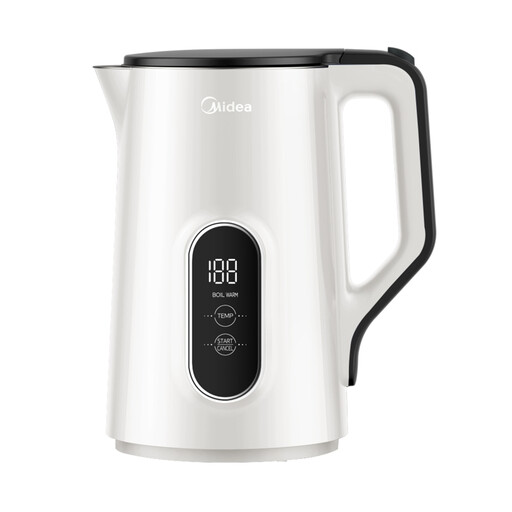 Image unavailable
Worth considering if you want to choose a temperature and check a digital display while preparing several cups.
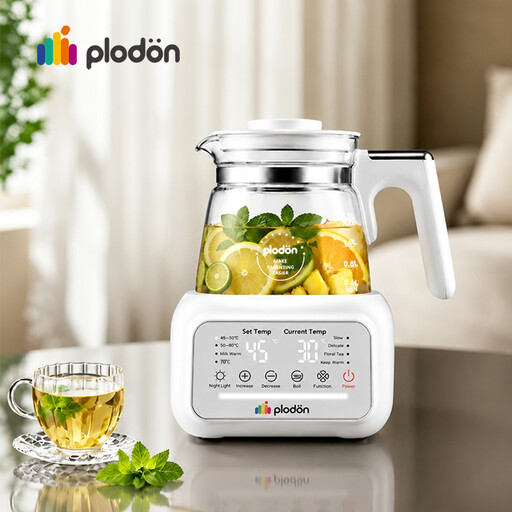 Image unavailable
Worth considering if you’re looking for a glass kettle with temperature control for your hot drinks.
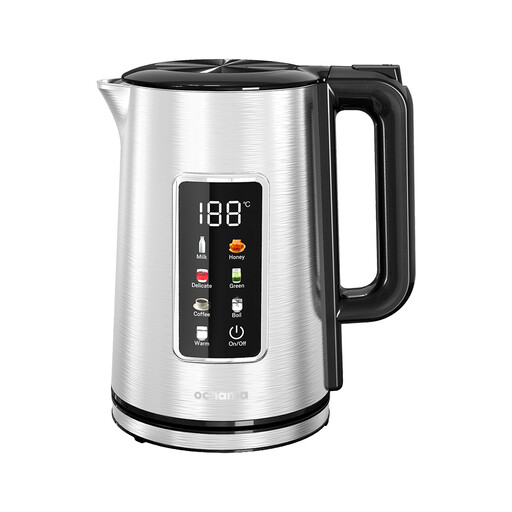 Image unavailable
Worth considering if you serve several cups and mainly want to heat water without relying on selectable temperature settings.
 Image unavailable
Worth considering if you boil water for several drinks and prefer a glass jug.
No. If boiling water suits the way you make your drinks, a standard kettle may be all you need. If you want to choose a temperature below 100 °C, compare the available settings. UFC-Que Choisir highlights the value of these intermediate temperatures, which vary between models.
Not necessarily. Check the kettle’s specifications and instruction manual separately for protection against running dry or overheating. Some models also state that they switch off when lifted from the base, but you shouldn’t assume this feature is available across an entire range.
In France, a kettle sold by a business to an individual may be covered by the legal guarantee of conformity if it doesn’t match its description. The Ministry of the Economy distinguishes this mandatory guarantee from additional commercial promises. Contact the seller and keep a copy of the product description and your proof of purchase.
In France, you may be able to return old electrical equipment of the same type when buying a new one. The Ministry for the Ecological Transition describes this as a “one-for-one” take-back scheme. Check with the seller how to hand over your old kettle when you make your purchase.