
Livraison le jour même ou le lendemain

Qualité garantie

Débloquez vos offres de bienvenue: Livraison GRATUITE | Jusqu'à -80 % | 30 jours d'essai gratuits à JoyPlus
Téléchargez l'application
By the Joybuy Editorial Team, 10 July 2026
Have you invested in a delicate green tea or a speciality coffee, only to be disappointed with the result in your cup?? An unpleasant bitterness has overpowered the subtle aromas. The culprit is often easy to identify?: water that's too hot. Using 100?°C water for any beverage is a common mistake that literally burns away the most delicate flavours.
A variable temperature electric kettle is therefore not a gadget, but a true precision tool for any hot beverage enthusiast. It's the only way to heat water to the exact degree needed to unlock the full potential of your teas, coffees, and infusions. This guide gives you all the keys to understand the essential criteria and find the model that will fit your daily rituals.
The market is filled with models making various promises. To help you navigate the options, let's focus on the features that will truly make a difference in your daily use.
The primary function of these kettles is control. Check the offered temperature range and the precision of the increments.
Capacity, measured in litres (L), should be suited to your household. A 0.8?L to 1?L model is sufficient for one or two people, while a 1.5?L to 1.7?L kettle is better for a family or for office use.
The choice of material is just as crucial. A stainless steel kettle is praised for its durability, flavour neutrality, and ease of cleaning. Glass models, while aesthetically pleasing and allowing you to watch the water simmer, are often more fragile. In any case, ensure that the parts in contact with water are guaranteed BPA-free.
Certain options can completely transform the user experience:
To help you make your choice, we have reviewed three models that meet distinct needs, based on their technical specifications and design.
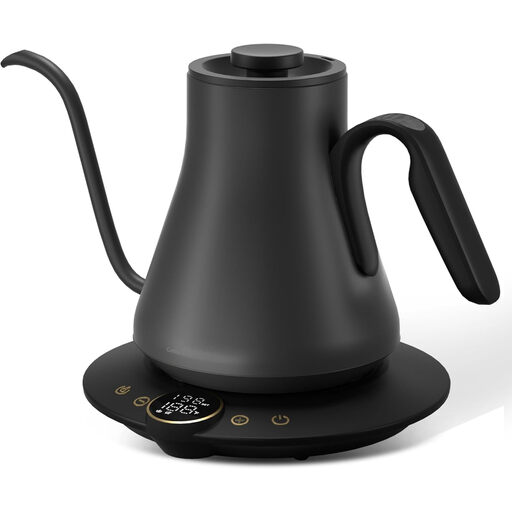
What sets it apart
This model is aimed primarily at filter coffee purists. Its gooseneck spout offers exceptional control over the water flow, a non-negotiable feature for a proper brew. It stands out with its highly precise manual temperature adjustment, from 38?°C to 100?°C.
Pros
Who is it for? For slow coffee enthusiasts (pour-over, V60, Chemex) and connoisseurs of delicate teas who demand maximum precision and total pouring control.
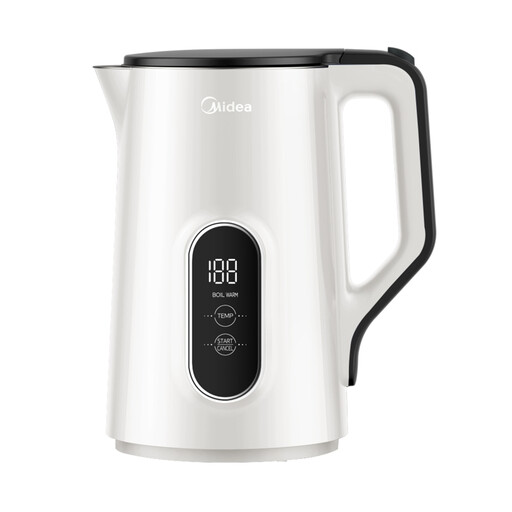
What sets it apart
The Midea kettle focuses on versatility and safety. With its large 1.5?L capacity and 7 temperature presets, it easily adapts to all of a family's needs. Its double-wall insulation keeps the exterior cool to the touch, a safety feature to prevent burns.
Pros
Who is it for? For families and those looking for a versatile, safe, and easy-to-use kettle for everyday tasks, from morning tea to preparing baby bottles.
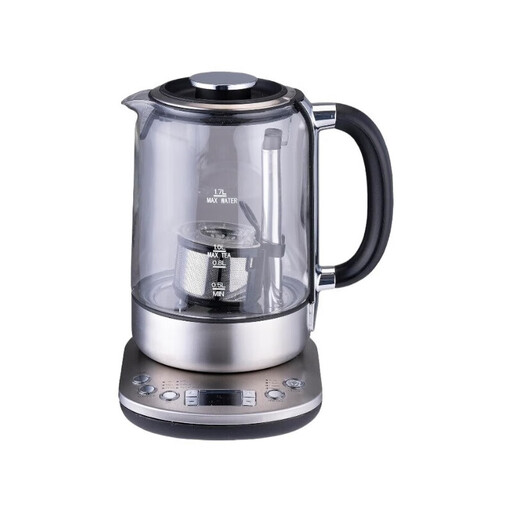
What sets it apart
This Alpina model is the dream all-in-one solution for tea lovers. It includes a removable tea infuser and dedicated programs to brew green, black, or white tea directly at the correct temperature. Its glass and stainless steel body lets you keep an eye on the infusion.
Pros
Who is it for? For loose-leaf tea drinkers who will appreciate the convenience of a kettle that heats and brews in a single device, with settings optimised for their favourite beverage.
Our selection highlights versatile models, but the world of kettles is vast. If you are particularly drawn to the durability and timeless design of stainless steel, you'll love our dedicated collection.
? Discover more metal electric kettles on Joybuy.fr
The wrong temperature ruins flavour extraction. Water that is too hot (100?°C) on delicate green tea will "scorch" the leaves and release a pronounced bitterness (from tannins). For coffee, it can cause over-extraction, resulting in an acrid taste. Conversely, water that is too cold will produce a flat, one-dimensional drink. Every beverage has its ideal temperature for a perfect balance of flavours.
Not necessarily—quite the opposite! Heating water to 80?°C requires less energy than bringing it to a full boil (100?°C). When used correctly, it can actually help you save energy. The "keep warm" function does consume a small amount of electricity, but it prevents you from having to restart a full heating cycle, which is often more economical in the long run.
The number one enemy is limescale. To preserve your kettle's performance and lifespan, regular descaling is essential. The frequency depends on the hardness of your water. The easiest method: boil a mixture of water and white vinegar (about 2/3 water to 1/3 vinegar), let it sit for about twenty minutes, then rinse thoroughly with clean water several times. For the exterior, a simple wipe with a damp cloth is all you need.