
Livraison le jour même ou le lendemain

Qualité garantie

Débloquez vos offres de bienvenue: Livraison GRATUITE | Jusqu'à -80 % | 30 jours d'essai gratuits à JoyPlus
Téléchargez l'application
The secret to a perfect hot beverage is the perfect temperature. Green tea brewed at 100°C turns bitter, instant coffee made with lukewarm water is disappointingly bland, and preparing a baby bottle requires a level of precision that standard kettles simply can't provide. If you're looking to master the art of infusion or just want more everyday convenience, the variable temperature electric kettle is the perfect appliance for you.
This guide is here to help you navigate the jungle of available models, focusing on key criteria to help you make a truly informed choice.
Before you decide on a specific model, let's review the key features that make all the difference in daily use.
The main advantage of these kettles is, of course, their ability to heat water to a precise temperature. But not all models are created equal in this regard. Some offer preset levels (e.g., 70, 80, 90, 100?°C), while others, often equipped with a digital screen, allow you to set the temperature down to the degree.
For a tea enthusiast, this precision is crucial. The ideal temperature for green tea is between 70 and 80?°C to preserve its delicate aromas, whereas a black tea will fully express itself at around 95?°C. If you're preparing baby bottles, a temperature of 45?°C is often recommended. A digital kettle with a wide range of settings is therefore a guarantee of versatility.
The material of your kettle has a direct impact on the taste of the water and the appliance's longevity.
Safety is also a non-negotiable point. Check for essential features like automatic boil-dry protection and an insulated double wall to prevent burns from touching the outer surface.
Certain options can greatly enhance your user experience:
We've selected three standout models for you, each catering to a specific user profile.
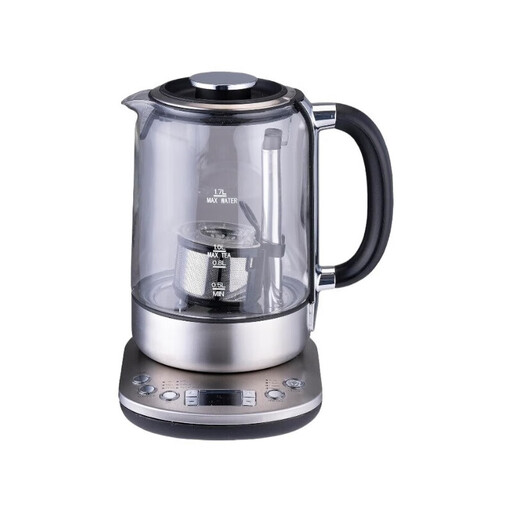
Why it stands out This Alpina model is aimed squarely at tea lovers. Its key strength? A dedicated "Tea" button with preset temperatures for green, black, and white teas. The removable infuser and brew strength selection make it a true all-in-one tea kettle.
Advantages
Who is it for? Ideal for tea enthusiasts who want to simplify their ritual and achieve a perfect brew effortlessly, thanks to settings designed just for them.
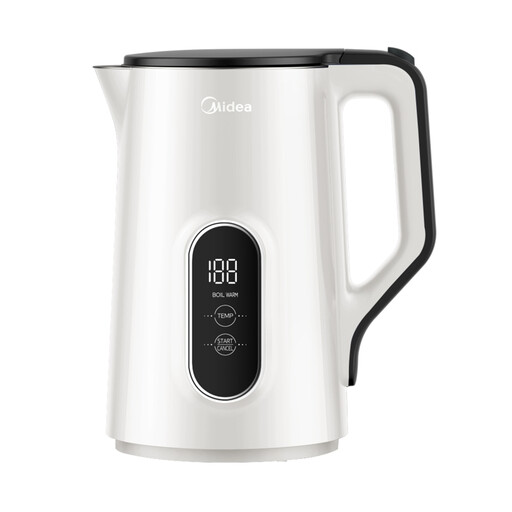
Why it stands out The Midea kettle focuses on versatility and safety. Its very wide temperature range, from 45?°C to 100?°C, makes it suitable for all beverages, including preparing baby bottles. Its double-wall design with a 100% 304 stainless steel interior and BPA-free plastics ensures that water never comes into contact with unwanted materials.
Advantages
Who is it for? Perfect for families and health-conscious users who need a versatile kettle that can handle everything from baby bottles to the most demanding teas.
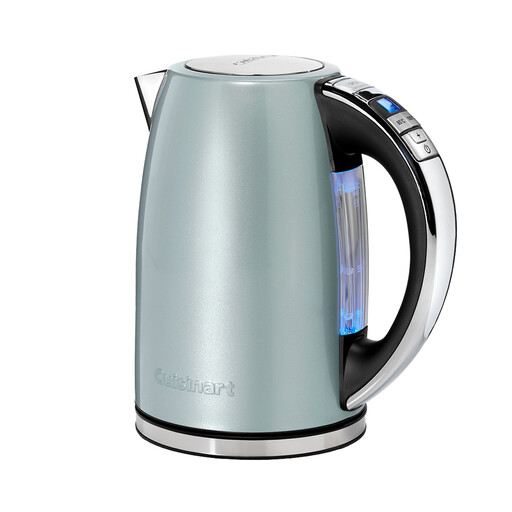
Why it stands out The Cuisinart CPK17GE combines performance and aesthetics. With its pistachio green finish and full stainless steel body, it's a designer kettle that doesn't go unnoticed. But its looks aren't its only asset: it features a powerful 3000?W heating element for lightning-fast boiling and offers settings from 85?°C to 100?°C, visible on its LCD screen.
Advantages
Who is it for? Aimed at those looking for a fast, high-performance appliance without sacrificing style. It will fit perfectly in modern kitchens where appliances also serve as decorative objects.
Our selection is just a taste. Design, capacity, budget... if your criteria are different, know that the selection is vast.
To discover a wider range of models, feel free to explore our full category.
Discover all our electric kettles
To preserve antioxidants and avoid bitterness, it is recommended to brew green tea in water heated to between 70?°C and 80?°C. Boiling water would burn the leaves and destroy their delicate aromas.
Yes, a stainless steel kettle is an excellent choice. Stainless steel is durable, hygienic, imparts no taste to the water, and holds up very well to wear and tear over time. It is the benchmark material for quality kitchen appliances.
The keep warm function does consume energy, but typically less than bringing the water back to a boil. It's a trade-off between the convenience of having hot water always ready and slightly higher electricity consumption.