
Livraison le jour même ou le lendemain

Qualité garantie

Débloquez vos offres de bienvenue: Livraison GRATUITE | Jusqu'à -80 % | 30 jours d'essai gratuits à JoyPlus
Téléchargez l'application
A cup of green tea at 80°C, a pour-over coffee at 92°C, or a baby bottle at 45°C: precision is the key to the perfect beverage. A variable temperature electric kettle seems like the ideal solution. Yet, the market is saturated with marketing promises that too often lead to disappointment. As a Product Recommendation Manager at Joybuy, my mission is to help you navigate the common pitfalls and make the right choice: a durable investment that’s truly tailored to your needs.
Before you decide, watch out for these two common issues:
To avoid these disappointments, focus on a few non-negotiable technical specifications. These are the true guarantors of your appliance's quality and longevity.
The quality of your water is directly dependent on the materials it comes into contact with. For pure water and preserved taste, two options stand out:
In any case, a BPA-free (Bisphenol A) certification for all plastic parts (handle, base, outer lid) is an essential prerequisite for your peace of mind, especially if you are preparing drinks for young children.
A kettle's efficiency is measured by its ability to heat water quickly and reach the desired temperature with flawless accuracy.
For the keep-warm function to be both economical and effective, insulation is crucial. Double-wall kettles are the solution. The inner wall retains heat while the outer wall remains cool to the touch, offering a dual advantage: energy savings and cool-touch safety.
There's an ideal kettle for every user. Here is our selection, designed for different profiles and based on the quality and safety criteria we've just outlined.
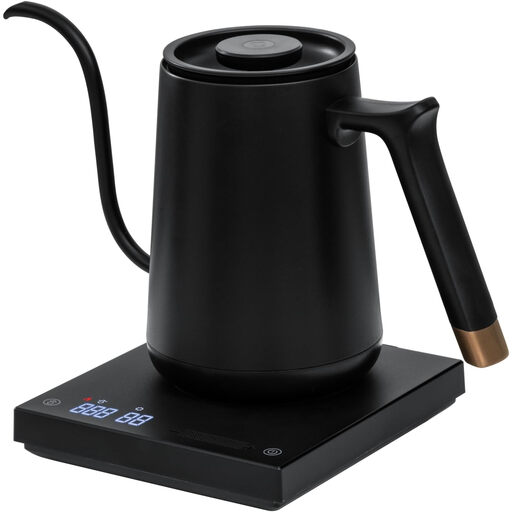
Its standout feature: Perfect for fans of manual pour-over coffee (*slow coffee*) and delicate teas that demand total control over the pour and temperature. Its 40 to 100°C adjustment range and slender spout allow for brewing with surgical precision.
No more false precision! Its STRIX temperature controller, a benchmark for reliability, ensures to-the-degree adjustment without compromise.
Patented spout for a stable and precise 90° vertical water flow. Full construction in food-grade 304 stainless steel.
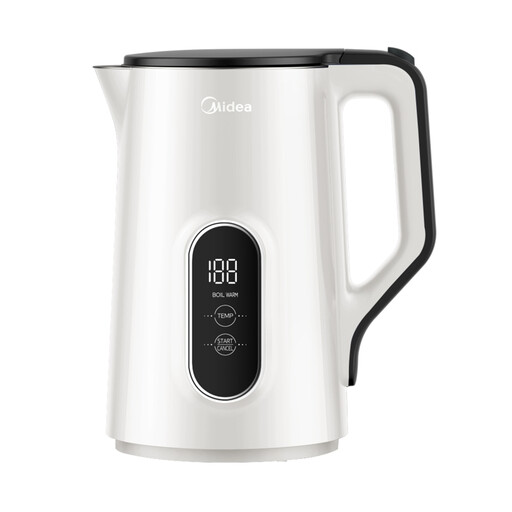
Its standout feature: Versatile and safe, it adapts to all family needs. Its temperature presets (from 45°C to 100°C) are perfect for everything from baby bottles to teas, while its double-wall construction protects curious hands.
It sidesteps the questionable materials trap: its interior (lid, spout, rim) is made entirely of 304 stainless steel. The few plastic parts are guaranteed BPA-free and never come into contact with the water.
Insulating double wall for an economical keep warm function and cool-touch safety. Strix thermostat and auto shut-off for complete peace of mind.
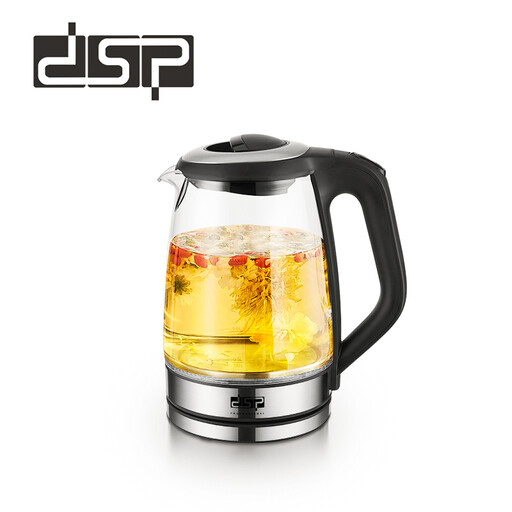
Its standout feature: For those who love to combine sleek design with material purity. Its glass body lets you monitor cleanliness and boiling at a glance, while the blue LED lighting adds a high-tech touch to the kitchen.
The combination of borosilicate glass and a stainless steel heating base ensures that water only touches inert materials. Goodbye to off-tastes and plastic-related risks.
Large 1.7L capacity and 2200W of power for express boiling. The borosilicate glass provides excellent resistance to high temperatures and thermal shock.
Explore our full selection of kettles that meet our quality criteria and the strictest safety standards.
Limescale is your kettle's number one enemy. For simple and effective descaling, half-fill it with an equal parts mixture of water and white vinegar. Bring to a boil, let it sit for an hour (with the appliance off), then empty and rinse thoroughly with clean water. Boil a second time with only clean water to remove any residual vinegar smell. In areas with very hard water, monthly descaling is ideal.
Absolutely. Materials like food-grade 304 stainless steel or borosilicate glass are considered the safest. They are inert, meaning they don't react with hot water or release any particles or chemicals, unlike some low-quality plastics. For maximum peace of mind, choose a model where all parts in contact with water are made of stainless steel or glass, and whose other components are certified BPA-free.
Consumption depends directly on the kettle's insulation. A single-wall model will lose heat very quickly and will need to reactivate often, which is very energy-intensive. In contrast, a double-wall kettle retains heat for much longer, reducing the frequency of heating cycles and, consequently, energy consumption. It is therefore an essential criterion for keeping your electricity consumption in check.