
Livraison le jour même ou le lendemain

Qualité garantie

Débloquez vos offres de bienvenue: Livraison GRATUITE | Jusqu'à -80 % | 30 jours d'essai gratuits à JoyPlus
Téléchargez l'application
More than just a kitchen gadget, the variable temperature electric kettle has become a true precision instrument. Essential for tea lovers, pour-over coffee aficionados, and new parents, it promises water at the perfect temperature. However, faced with a jungle of models, the buying process can quickly turn into a headache. Between marketing promises and daily reality, there's a high risk of ending up with an inaccurate appliance or one that will show signs of failure after just a few months.
To avoid these common pitfalls, here are the most frequent traps to watch out for?:
To help you see more clearly, here are the features that will make all the difference in daily use.
This is the heart of the matter?: the ability to heat water to the exact degree. Green tea is best brewed between 70 and 80?°C, pour-over coffee requires water around 95?°C, and a baby bottle is prepared with water at 37-40?°C.
So, check for relevant presets on the digital kettle or, even better, the ability to manually adjust the temperature in 5-degree increments for maximum flexibility. Models equipped with a thermostat from a recognised brand, like the British Strix, are an excellent guarantee of reliability and durability.
The materials of your kettle directly impact the purity of the water, as well as its longevity.
To help you sort through the options, here are a few models from our catalogue that meet specific needs.

Why it's a perfect match: Perfect for pour-over coffee (slow coffee) and specialty tea lovers who leave nothing to chance. Its gooseneck spout ensures a surgically precise pour, while its control panel guarantees temperature accuracy down to the degree.
It demolishes the problem of false precision. With a stated temperature control of ±1 °C, the extraction is perfect, every time.
Gooseneck spout for pinpoint water flow; 100% 304 stainless steel interior; built-in timer to master infusion time.
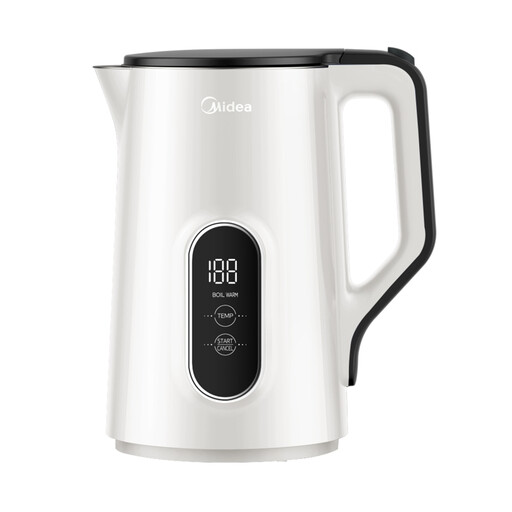
Why it's a perfect match: Versatile, fast, and safe, it checks all the boxes for family use: 7 presets, a comfortable 1.5 L capacity, and a cool-touch design, all powered by 2200 W.
It scores perfectly on materials and safety. The interior (chamber, spout, lid) is 100% 304 stainless steel, the plastics are guaranteed BPA-free, and its double-wall construction keeps the whole family safe from burns.
Cool-touch anti-scald wall; keep-warm function for 1 hour; 7 preset temperatures for maximum versatility.
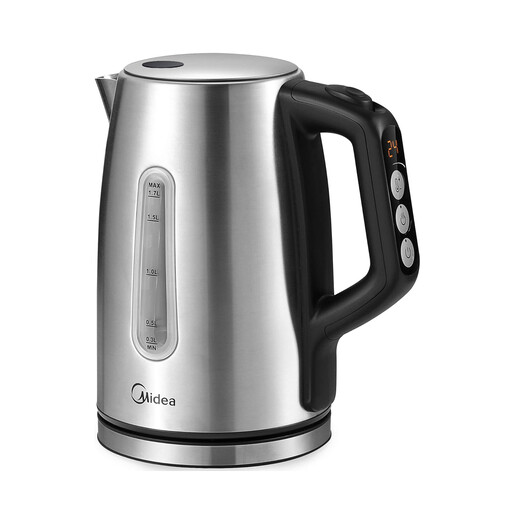
Why it's a perfect match: Its 40 °C preset is the peace-of-mind feature for preparing baby bottles at the right temperature, stress-free. Its large 1.7 L capacity and BPA-free design provide ultimate reassurance.
It meets the critical need for precision when preparing baby bottles. Its 40 °C setting is a simple, reliable, and practical feature, far from useless gimmicks.
6 presets including the essential 40 °C; large 1.7 L capacity; Strix thermostat, a guarantee of safety and longevity.
Discover our full selection of kettles that meet our quality criteria and the strictest safety standards.
Limescale is your kettle's public enemy number one: it harms its performance and lifespan. The simplest and most economical solution: fill the kettle halfway with a 50/50 mixture of water and white vinegar. Bring to a boil, let it sit for an hour (unplugged), then empty it. Rinse it 2 to 3 times with clean water to remove the vinegar smell. Do this every one to three months, depending on your water's hardness.
High power (e.g., 2200?W) primarily means faster heating. While the instantaneous consumption is higher than a 1500?W model, the usage time is much shorter. Ultimately, the energy consumption to heat 1?L of water is nearly identical. The real benefit of high power is the time you save.
It all depends on the build quality and maintenance. A good model, equipped with a reputable thermostat (like Strix, tested for thousands of cycles) and descaled regularly, can easily last you 5 to 10 years. Conversely, entry-level appliances with fragile components often show their limits after only 2 or 3 years.