
Livraison le jour même ou le lendemain

Qualité garantie

Débloquez vos offres de bienvenue: Livraison GRATUITE | Jusqu'à -80 % | 30 jours d'essai gratuits à JoyPlus
Téléchargez l'application
At first glance, choosing a kettle seems like child's play. But for tea and coffee connoisseurs or new parents, it's a different story: precision is king. A variable temperature electric kettle is no longer a simple gadget, but an indispensable tool for unlocking the aromas of a delicate green tea or preparing a baby bottle at the perfect temperature. The problem? The market is flooded with marketing promises that often hide serious design flaws. Here's how to sidestep the most common pitfalls and avoid a purchase you might regret.
The 3 pitfalls to avoid when buying a kettle:
To make the right choice, focus on a few technical specifications that make all the difference in daily use.
For a variable temperature kettle, precision isn't an option: it's the number one criterion. A high-performance model should offer a wide adjustment range, ideally from 40-45°C to 100°C. This versatility covers every need:
The keep-warm function is a real everyday convenience. It holds the water at your chosen temperature (often for up to an hour), saving you from needlessly re-boiling.
The composition of your kettle has a direct impact on the taste of the water and its lifespan. Two materials stand out from the pack:
For the few plastic parts, a BPA-free (Bisphenol A) certification is non-negotiable.
A 1.7?L stainless steel kettle, the most common capacity, is perfect for a family and can prepare 6 to 7 cups. For a single person or a couple, a 1.5?L model will be more than enough.
The power, measured in watts (W), directly affects the heating speed. Aim for 2200?W for a rapid-boil kettle worthy of the name, capable of bringing 1.5?L of water to a boil in under 5 minutes.
To help you make a clear choice, here are models that check all the boxes, each tailored to a specific user profile.
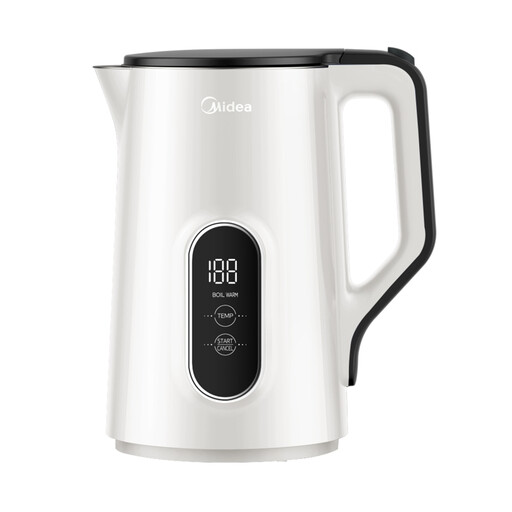
Ideal profile: This is the secret weapon for those who accept no compromises on precision. Perfect for tea experts, pour-over coffee enthusiasts, and new parents who need exact temperatures for baby bottles.
It offers a true adjustable temperature range from 45 to 100 °C, which is far more useful than vague presets. Its 100% 304 stainless steel interior, lid, and spout, along with its BPA-free plastics, guarantee perfectly neutral-tasting water.
Its versatility is its greatest strength, with precise temperature control and a one-hour keep-warm function. The double-wall construction insulates from heat and prevents any risk of burns.
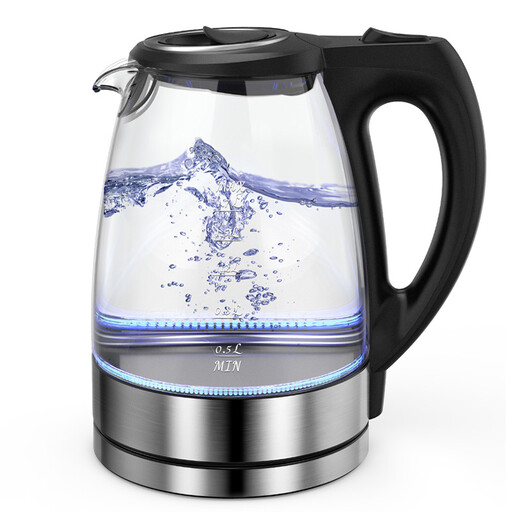
Ideal profile: For those who want to combine elegance with material purity. Its transparent glass body is a centrepiece in any modern kitchen and lets you watch the water as it boils.
Its borosilicate glass body and 304 stainless steel heating plate guarantee pure taste, avoiding the trap of low-quality plastic kettles. Its 2200 W power ensures an express boil.
Its large 1.7 L capacity is perfect for family use. The glass design is not only elegant but also practical for monitoring the water level and limescale buildup. Please note: this model does not offer variable temperature control.
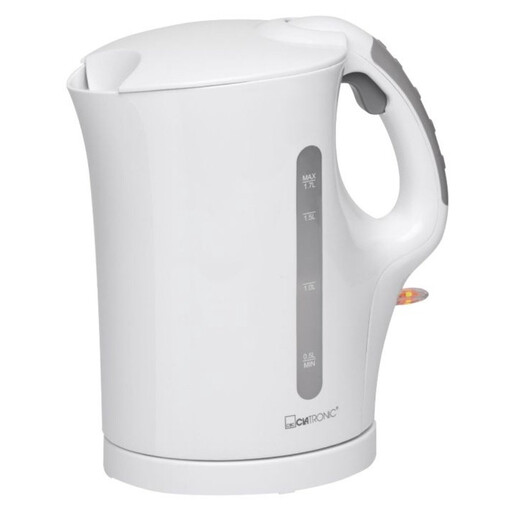
Ideal profile: The smart choice for families, students, or offices that need to boil water quickly and efficiently, without any fuss. Simple, affordable, and remarkably effective.
This model gets straight to the point and does it well: a 2200 W rapid boil for a large 1.7 L capacity. It avoids the trap of superfluous gadgets that drive up the price and increase the risk of failure.
An excellent capacity-to-price ratio. Its simplicity (a single button) and safety features (automatic shut-off, boil-dry protection) make it a reliable daily companion.
Explore our full selection of kettles that meet our quality criteria and European safety standards.
Not necessarily. By heating water to the exact temperature required (for example, 80°C instead of 100°C for green tea), you actually save energy. The keep-warm function consumes a small amount of power, but it's still more efficient than starting a full re-boil cycle.
Regular descaling is the key to preserving its performance and a neutral taste. The recipe is simple: a mixture of water and white vinegar (about 2/3 water, 1/3 vinegar). Bring it to a boil, let it sit for about fifteen minutes, then empty and rinse thoroughly with clean water several times. This simple step protects the heating element from premature wear due to limescale.
Here's a quick guide to get you started:
With a variable temperature electric kettle, you can master the art of infusion and rediscover the true taste of your favourite drinks.