
Livraison le jour même ou le lendemain

Qualité garantie

Débloquez vos offres de bienvenue: Livraison GRATUITE | Jusqu'à -80 % | 30 jours d'essai gratuits à JoyPlus
Téléchargez l'application
Looking for a vanilla whey protein that is easy to prepare, pleasant to drink and kind to your budget? The choice is about more than the flavour shown on the packet. Between heavily loaded formulas, poor-value formats and claims surrounding BCAAs, it is easy to pay more for a product that does not really match your needs.
Whey powder can complement the dietary intake of athletes, weight-training enthusiasts, runners and, more broadly, active people. However, it should not replace a varied, balanced diet. To avoid disappointing purchases, here are the main criteria to consider before choosing a vanilla whey protein.
A large tub does not necessarily contain many servings. Compare the net weight, the weight of one serving and the stated number of servings. A 30 or 31 g serving also makes it possible to calculate the cost per serving and compare a small pack, a large bag or individual vanilla whey protein sachets more fairly.
A vanilla whey isolate may have a high protein content, but the presence of an isolate is not enough to assess the formula as a whole. Check the ingredients list: some products combine isolate, concentrate and hydrolysed whey, while others also contain thickeners, flavourings or several sweeteners.
Lactose tolerance, milk or soya allergies, and your dietary preferences should also be taken into account. The information on the label remains the key reference.
BCAAs occur naturally in dairy proteins. Their quantity may be stated per serving, but this should not overshadow the total protein content, carbohydrates, sugars and the product’s overall composition. A convenient post-workout protein should above all fit your daily requirements and routine.
Food products and protein supplements are not intended to diagnose, treat or prevent any illness. If you have a health condition, are pregnant or breastfeeding, or take medication, seek advice from a healthcare professional.
To compare several products, check the amount of protein per serving and per 100 g. As an indication, some products from the Optimum Nutrition Gold Standard range featured here state 24 g of protein per serving and approximately 79 g per 100 g. These figures should be considered alongside the amount of sugars, fat and calories.
A low-sugar protein powder may suit people who are monitoring their carbohydrate intake. However, bear in mind that “low in sugars” does not necessarily mean free from sweeteners. So check the full ingredients list.
The format should match how often you use it:
After opening, store the powder in a dry place away from heat and moisture. Follow the best-before date shown on the packaging and always use the scoop provided or the recommended serving weight.
Most products recommend mixing the powder with approximately 180 to 240 ml of water or milk. Cold water generally makes preparation easier and gives you better control over the added calories. Milk or a plant-based drink changes the texture and nutritional value of the mixture.
When you consume it depends on your routine: at breakfast, as a snack or after training. There is no need to choose a product simply because its label links whey to muscle recovery. Consistency in your diet and its suitability for your goals remain the priorities.
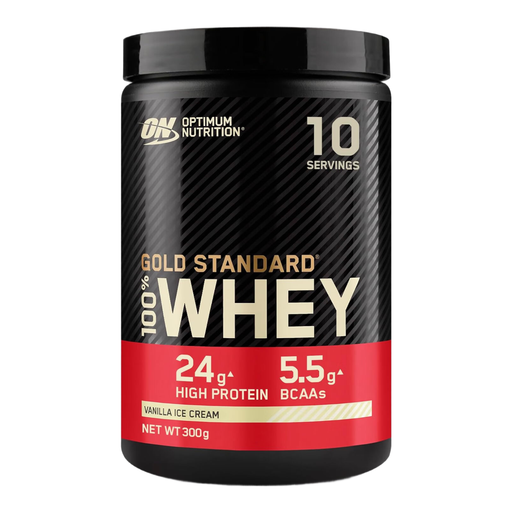
Why this choice suits this profile: With 10 stated servings and 24 g of protein per 30 g serving, this format lets you try vanilla whey without starting with a large pack.
The number of servings and values per serving are stated, making it easier to calculate the cost of use before buying.
A blend of whey isolate, concentrate and hydrolysed whey, with 1 g of sugars and 1.3 g of fat per serving according to the product information provided.
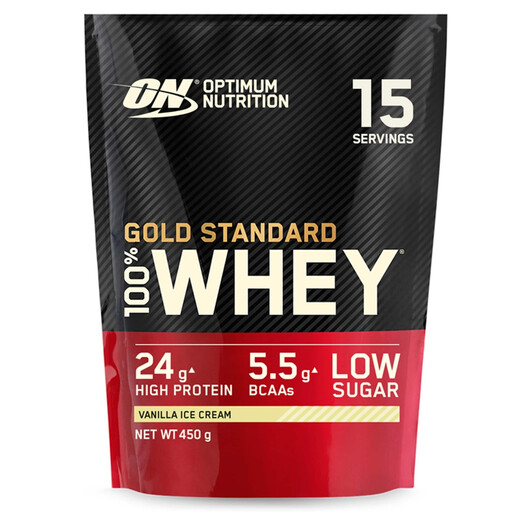
Why this choice suits this profile: The 15 stated servings offer a good balance between trying the flavour and using it regularly at home or at the gym.
The detailed composition makes it possible to distinguish the whey powder from the added ingredients and check for the presence of milk and soya.
The product information states 24 g of protein, 0.9 g of sugars and approximately 119 kcal per 30 g serving.
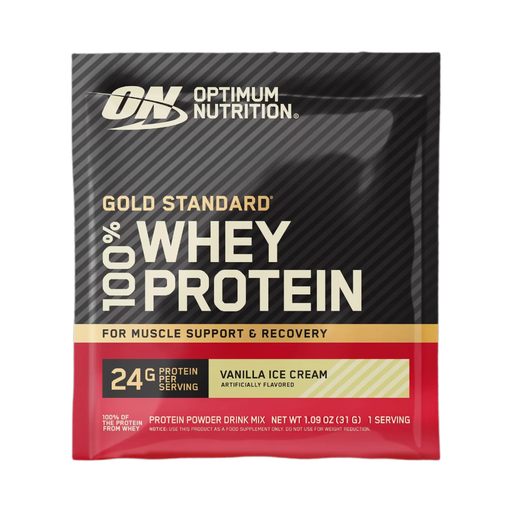
Why this choice suits this profile: Individual servings are convenient for travelling, running, journeys between home and the gym, or whenever you want to avoid carrying a large tub.
Each sachet contains a stated 31 g serving, helping to prevent dosing errors and removing the need to carry a scoop.
24 g of protein and 1 g of sugars per sachet according to the product information, prepared with 180 to 240 ml of liquid.
We have put together a complete, real-time updated list of products that fully meet these strict selection criteria and European safety regulations.
First pour 180 to 240 ml of cold water or milk into a shaker, add the powder, then mix or shake until smooth. Adding the liquid before the powder generally helps to prevent lumps. The texture depends on the amount of liquid and the formula used.
Refer to the date shown on the packaging. After opening, store the whey in a dry, cool and tightly sealed place. Moisture can cause clumps to form and make the mixture less smooth. Do not consume a product if its smell, appearance or packaging seems unusual.
It can help supplement the protein intake of an active person, particularly after a workout or as a snack. Muscle gain also depends on training, total energy intake, rest and diet. Always check the allergens and usage recommendations before buying.