For someone who already enjoys dark chocolate, a bar combining 70% dark chocolate with white chocolate offers a contrast between cocoa notes and sweetness. If they prefer white chocolate without any dark chocolate, choose a white bar instead. In either case, check the ingredients, allergens and sugars per 100 g.
Who would enjoy each type of bar?
For fans of dark and white chocolate
If they already enjoy dark chocolate, a bar combining 70% dark chocolate and white chocolate is a good match for someone who wants cocoa notes without giving up white chocolate. Carrefour France describes this combination in the Lindt EXCELLENCE Fusion bar.
For white chocolate fans
If they’re after a white chocolate bar with a milky, vanilla flavour, choose a recipe without dark chocolate. Lindt France presents EXCELLENCE Blanc Extra Velouté as an option of this kind.
For those who pay attention to ingredients
Before giving a bar as a gift, check the ingredients and allergen information for that exact product. The dark and white, plain white and hazelnut white chocolate recipes mentioned by Carrefour France and Lindt France don’t all contain the same ingredients.
What should you look for before choosing?
Start by considering whether the recipient prefers dark or white chocolate, then check the recipe and the label of the bar you have in mind.
| What to consider |
What to check |
Who is it for? |
| Dark and white chocolate contrast |
Whether the bar contains dark chocolate, and which component the cocoa percentage refers to. |
If I’m buying chocolate for someone who enjoys dark cocoa notes, I look for a recipe that genuinely combines dark and white chocolate. Around 29% of consumers would make this contrast their priority. |
| White chocolate sweetness |
The ingredients in a white chocolate bar and the flavours listed on its packaging. |
For someone who wants white chocolate above all, I’d avoid a dark chocolate component. This sweetness would be the main priority for around 22% of consumers. |
| Allergens and inclusions |
The ingredients list and any ‘may contain’ warnings for the exact product. |
If I don’t know about the recipient’s dietary restrictions, a recipe containing hazelnuts or other inclusions calls for a closer check. Around 21% of consumers would prioritise ingredients and allergens. |
| Sugars and nutritional values |
The ‘of which sugars’ figure per 100 g and, if needed, the other nutritional values. |
When I’m choosing between two bars, I want to compare their labels on the same basis rather than judging by appearance alone. Around 14% of consumers would prioritise checking nutritional information. |
| Gift format |
The net weight and presentation of the bar. |
Whether it’s a gift to enjoy alone or share, I choose a format that suits the occasion and the recipient’s preferences. Around 14% of consumers would put this criterion first. |
Common mix-ups to avoid
-
Confusing the cocoa in white chocolate with the flavour of dark chocolate
A cocoa content listed on a white chocolate bar doesn’t mean it contains dark chocolate. The contrast we’re talking about here comes from an explicit combination of both types, as in the Lindt EXCELLENCE Noir 70 % & Blanc bar featured by Carrefour France.
If the recipient enjoys dark chocolate, look for it in the product name and check what the stated percentage refers to.
-
Assuming that no Nutri-Score means the label is incomplete
In France, the Ministry of the Economy says that displaying the Nutri-Score is optional. The DGCCRF distinguishes this logo from the nutritional declaration required for relevant pre-packed foods.
To compare two bars, look in particular at the sugars and fat per 100 g. Use the Nutri-Score as an additional guide if it appears on the packaging.
-
Relying on the name alone when choosing a nut bar
A white chocolate bar with hazelnuts has a different recipe from a plain white chocolate bar. Ingredients and warnings about possible traces vary from one recipe to another.
Check the packaging of the exact product before giving it as a gift, particularly if you know about the recipient’s allergies or need to clarify them.
Brands to consider
Lindt
Two documented bars cater to different preferences: EXCELLENCE Noir 70 % & Blanc for a dark and white chocolate combination, and EXCELLENCE Blanc Extra Velouté for white chocolate.
- Carrefour France describes the first as a combination of 70% dark chocolate and white chocolate.
- Lindt France states that the Blanc Extra Velouté bar contains at least 30% cocoa. This doesn’t mean it contains a dark chocolate component. Check the allergens for each recipe.
Nestlé
The white chocolate Les Recettes de l’Atelier Noisettes bar is worth considering if the recipient enjoys chocolate with inclusions.
- The Carrefour France product listing states that this recipe contains 14.7% roasted hazelnuts.
- It lists milk and hazelnuts, and warns that it may contain traces of eggs, gluten and other nuts.
Carrefour
Carrefour Original offers a 200 g white chocolate bar, giving you a different format from the other products mentioned.
- The Carrefour France product listing mentions cocoa butter and milk powders in this recipe.
- The listing warns that it may contain traces of gluten, eggs, soya and nuts. Check the label on the product you’re giving as a gift.
White chocolate bars with inclusions on Joybuy
These two bars are white chocolate with inclusions. If you’re specifically looking for a contrast with dark chocolate, check that another recipe explicitly mentions a dark chocolate component.
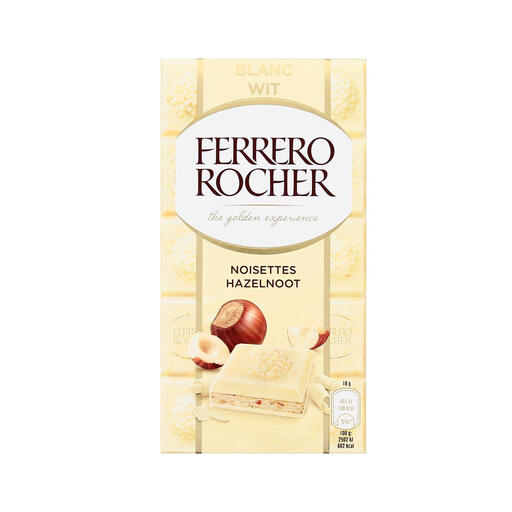 Image unavailable
Ferrero Rocher White Block 90 g
Worth considering if you’re looking for a white chocolate and hazelnut bar rather than a dark and white chocolate combination. It weighs 90 g; the recipe lists milk, hazelnuts and soya, and may contain traces of other nuts. Check the packaging if the recipient has allergies.
View on Joybuy
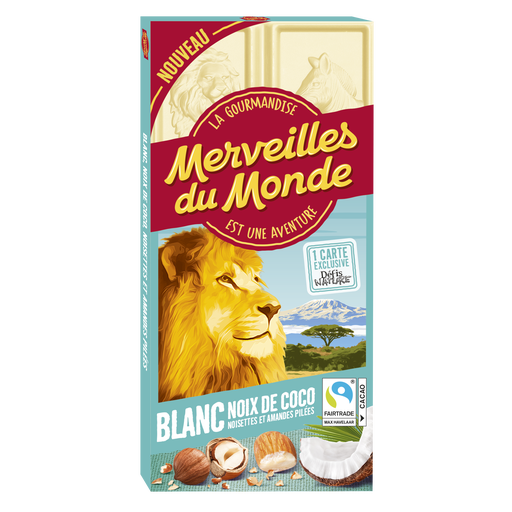 Image unavailable
MERVEILLES DU MONDE white chocolate, almonds, hazelnuts and coconut 100 g
This 100 g bar is for someone who wants white chocolate with several inclusions, rather than a dark chocolate component. It contains almonds and hazelnuts, so check the ingredients list and allergen information on the packaging before giving it as a gift.
View on Joybuy
Frequently asked questions
How do I choose a ‘dark’ bar for someone who likes white chocolate?
Look for a recipe that explicitly combines dark and white chocolate, then check which component the cocoa percentage refers to. If they prefer the sweetness of a white chocolate bar on its own, a recipe without dark chocolate is a better match.
Is Nutri-Score compulsory on chocolate bars in France?
No. The French Ministry of the Economy says that Nutri-Score is optional. For relevant pre-packed foods, the nutritional declaration required by the DGCCRF includes information that lets you compare sugars per 100 g.
Which allergens should I check before giving white chocolate as a gift?
Read the ingredients and any ‘may contain’ warnings on the exact bar. Depending on the product, the recipes mentioned by Lindt France and Carrefour France include milk, soya or hazelnuts, as well as various warnings about possible traces.
Does the French levy on sugary drinks apply to chocolate bars?
No. The official French public finance bulletin describes a levy on non-alcoholic drinks, not chocolate bars. If sugar content is important to your choice, check the nutritional declaration for each bar instead.


