
Livraison le jour même ou le lendemain

Qualité garantie

Débloquez vos offres de bienvenue: Livraison GRATUITE | Jusqu'à -80 % | 30 jours d'essai gratuits à JoyPlus
Téléchargez l'application
Vacuum storage bags serve two very different purposes: reducing the volume of clothes in a wardrobe and limiting food’s contact with air. In both cases, choosing the wrong product can quickly make them awkward to use.
The first trap is to focus solely on the promise of saving space. A bag that is too thin, overfilled or placed near a sharp object can be punctured in no time. Another point to check is the closure. A misaligned zip or a valve that is not compatible with your vacuum cleaner can cause air to escape gradually. In the kitchen, not all storage bags are suitable for food contact or cooking.
Before placing your order, take the time to distinguish between vacuum storage bags, hanging covers for jackets and suits, compression bags for clothes and solutions designed for a food vacuum sealer.
For clothes, blends of polyamide (PA) and polyethylene (PE) offer a common balance between flexibility and strength. A double-zip closure, colour indicator or dedicated clip makes it easier to check that the bag is airtight.
Also look carefully at the dimensions. A bag that is too small forces you to compress textiles excessively and can distort a jacket or duvet. Conversely, an XXL model must fit comfortably in your wardrobe, under a bed or in a car boot.
Hanging covers are particularly practical for coats, suits and dresses. They make use of the available height in your wardrobe and generally include hooks. However, avoid filling them beyond the recommended capacity and do not allow coat-hanger corners to press against the wall of the bag.
Some bags connect to a domestic vacuum cleaner using a one-way valve. Others require a dedicated pump. Before buying, check the valve diameter and type, as well as whether an adapter is included or required.
For food, a vacuum sealing machine that can extract air and create a heat seal will be more versatile. “Dry” and “moist” modes let you adapt the suction to solid foods as well as marinades or preparations containing plenty of liquid. A seal-only function can also be useful for closing a bag without removing all the air.
Food vacuum bags must be explicitly designed for food contact. The KitchenCook CUISIOSEAL_BAG roll, for example, is advertised as BPA- and phthalate-free and compliant with European Regulation No. 10/2011 on plastic materials intended to come into contact with food. It is presented as suitable for freezing, refrigeration, reheating in a microwave — with care — and sous-vide cooking at up to 100 °C.
However, this does not mean it can be used anywhere: a roll intended for sous-vide cooking is not suitable for a conventional oven, grill, direct flame or hob. In the microwave, pierce the bag or open one corner slightly to prevent steam from building up.
For hygiene reasons, a bag that has contained meat, raw fish or fatty foods must not be reused. Also maintain the cold chain: vacuum sealing does not replace refrigeration or freezing.
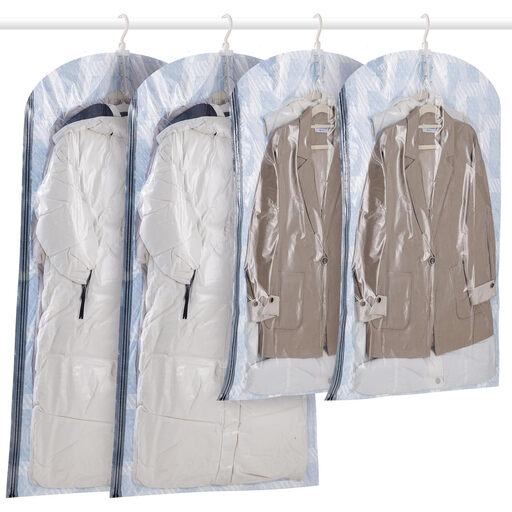
Why this choice suits this profile : With two long bags and two medium-sized bags, this set is ideal for getting started with storing jackets, dresses, suits and coats in a family wardrobe.
The valve is advertised as compatible with a standard vacuum cleaner, eliminating the need to buy a dedicated pump. The two-colour zip lets you check the closure visually before vacuuming.
4-piece set, hanging design, transparent body and five-ring hooks.
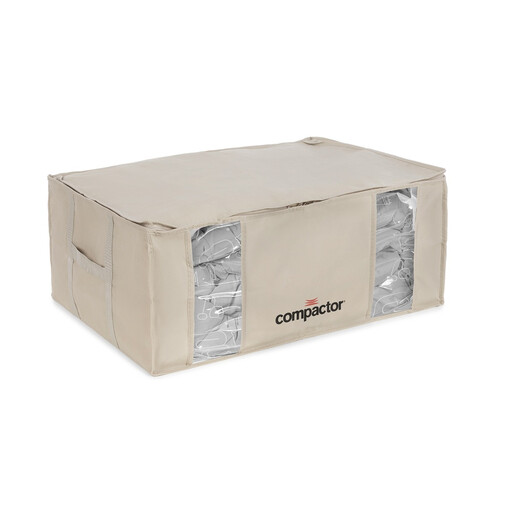
Why this choice suits this profile : To store duvets, pillows and other bulky textiles without creating an untidy bundle, this semi-rigid structure retains a more defined shape, even when the bag is not full.
The box-style format prevents the shapeless bundle effect associated with overly flexible bags. However, with XXL dimensions of 65 × 45 × 27 cm, you will need to check that you have enough available space.
Semi-rigid 3D structure, non-woven cover and PE/PET material described by the manufacturer as recyclable.
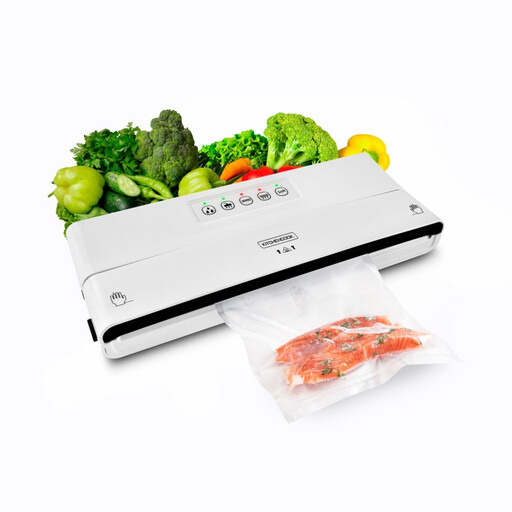
Why this choice suits this profile : This model is aimed at households that regularly package food and want to move from pre-cut bags to rolls suitable for sous-vide cooking.
Dry, moist and seal-only modes prevent you from applying the same treatment to every type of food. The removable collection tray also makes cleaning easier after handling moist preparations.
Advertised power of 120 W, 300 mm sealing width, built-in roll cutter and external suction port.
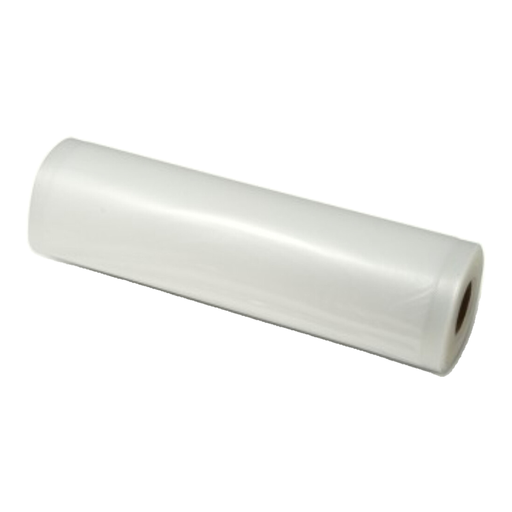
Why this choice suits this profile : The roll lets you cut bags to suit the size of your portions, leftovers or preparations intended for sous-vide cooking.
The food-contact marking and advertised maximum temperature of 100 °C confirm its intended use, unlike a storage bag designed for textiles.
Micro-channel embossing, 22 cm width, 5 m length and advertised compatibility with external-suction machines.
We have put together a complete, real-time updated list of products that meet these strict selection criteria and European safety regulations.
For textiles, leave a little space around the closure and keep zips, buckles and metal coat hangers away from the wall of the bag. Clean the bags with a slightly damp cloth, then allow them to dry completely before folding them away. Even a tiny puncture can be enough to let air back in.
In the kitchen, position the opening flat in the sealing area and do not fill the bag right to the edge. With a machine such as the Fagor FG2249, select dry or moist mode depending on the preparation. Its advertised power is 80 W, with a stated suction pressure of 60 kPa and an independent sealing function. Allow the machine to cool down between cycles and never immerse the main unit in water.
Yes, provided the bag has a valve designed for use with a domestic vacuum cleaner. Check that the connector is compatible and close the zip fully before extracting the air. Hanging vacuum storage bags can then remain attached in the wardrobe.
It depends on the material, closure, fill level and storage conditions. Check the valve and zip regularly, particularly after moving the bag. Avoid sharp objects, rough surfaces and sources of heat.
Some manufacturers allow reuse for dry or already processed foods. However, a bag that has contained raw meat, raw fish or fatty food must be discarded after use to reduce the risk of cross-contamination.