
Livraison le jour même ou le lendemain

Qualité garantie

Débloquez vos offres de bienvenue: Livraison GRATUITE | Jusqu'à -80 % | 30 jours d'essai gratuits à JoyPlus
Téléchargez l'application
Vacuum storage bags can free up valuable space in a wardrobe, suitcase or cupboard. But some purchases can quickly become disappointing: a leaking closure, a valve that is incompatible with the pump, a bag that is too small for the clothes you want to store, or plastic that tears at the first snag from a zip.
Before comparing prices, start by distinguishing between vacuum storage bags for clothes, hanging garment bags, travel compression bags and appliances designed for food. They are not intended for the same uses and do not have the same requirements.
Promising to save space does not mean that a bag can hold a mountain of laundry. If it is overfilled, it will not close properly and may quickly reinflate. Dimensions are therefore more useful than slogans: a 40 × 60 cm size is more suitable for shirts and T-shirts, while a 90 × 55 cm model can hold jumpers or coats, depending on their thickness.
Some models connect to a vacuum cleaner, while others work with a manual vacuum pump or a dedicated electric pump. If the valve is not suitable, removing the air can become an endless task, or even impossible. When travelling, bags that also allow compression by rolling are often more practical: there is no need for a power socket or a vacuum cleaner.
Storage bags for clothes are not intended for contact with food. They protect clothes from dust, certain insects and ambient moisture, but they are not a substitute for a food vacuum sealer or a bag designed for food storage. For kitchen use, check the accessories supplied, whether there is a ‘moist’ mode and the manufacturer’s recommendations.
Choose the size according to what you plan to store:
The zip must be properly engaged along its entire length. Some models include a visual indicator: a useful detail that lets you check at a glance that the bag is fully closed.
Bags are generally made from PE, PET, PA or a combination of several polymers. Thicker material will withstand rubbing better, although it will not be completely immune to sharp objects. Remove metal hangers, protruding buckles and any accessory that could puncture the plastic.
Keep the bag away from flames and sources of heat. To avoid damaging the closure, also take care not to fold it sharply around the valve.
When choosing a vacuum sealer, compare the maximum sealing width, the available modes and how easy it is to clean. A 300 mm sealing bar is suitable for many bags and rolls intended for domestic use. A removable tray is particularly useful if a small amount of liquid is accidentally drawn in.
The ‘dry’, ‘moist’, ‘seal only’ and ‘vacuum then seal’ functions are designed for different uses. Do not pour soup or a large quantity of liquid directly into the chamber. It is better to freeze the liquid beforehand or follow the instructions carefully.
For electrical appliances sold in France, check that they include the required regulatory information, instructions in French, electrical specifications suitable for the 220–240 V supply and disposal guidance for the WEEE recycling scheme.
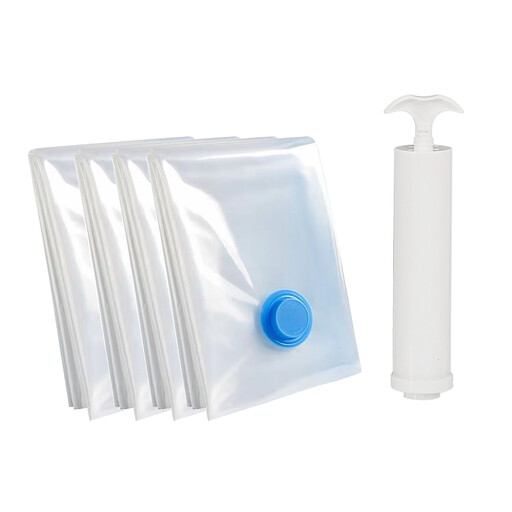
Why this choice suits this profile: With five bags and a hand pump, this set is an easy way to start vacuum storage without investing in an electric appliance.
The supplied pump reduces the risk of incompatibility with an external valve. You still need to respect the bag’s maximum capacity.
Five bags and a hand pump included. A medium size suited to everyday laundry.
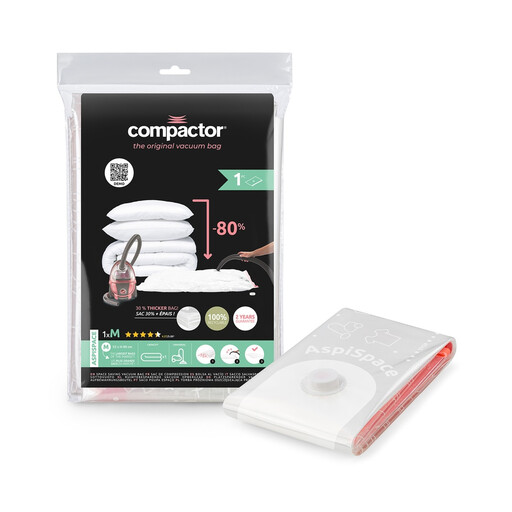
Why this choice suits this profile: Measuring 90 × 55 cm and with a capacity of 70 l, this bag is designed for regularly storing jumpers, coats and duvets in a wardrobe or a dedicated seasonal-clothing area.
The stated dimensions and capacity make it easier to choose the right bag before buying. However, the closure and valve must still be handled without forcing them.
Nylon/polyethylene material advertised as 30% thicker. Valve compatible with vacuum-cleaner extraction.
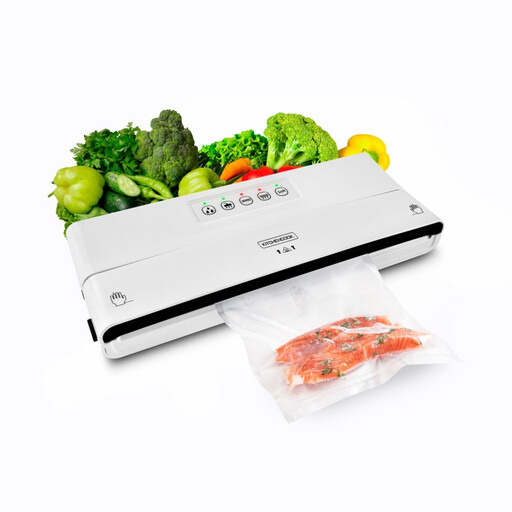
Why this choice suits this profile: This appliance is aimed at households that regularly prepare food portions and want to make bags to the required length.
The dry, moist and seal-only modes let you adapt operation to the contents. The removable tray makes cleaning easier after use.
Advertised power of 120 W, 300 mm sealing width, integrated roll cutter and external suction port for compatible containers.
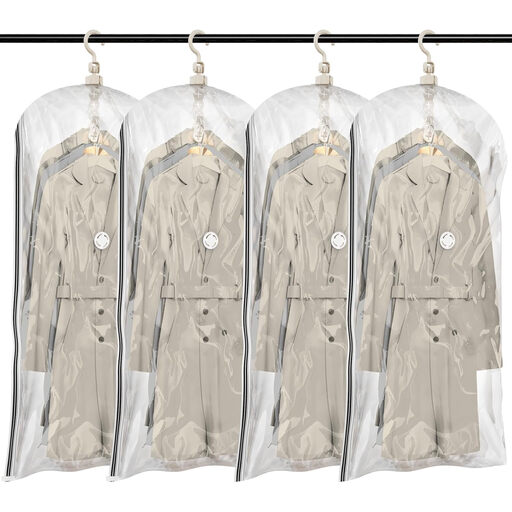
Why this choice suits this profile: Their long format is suitable for suits, dresses, jackets and coats that need to remain hanging in a wardrobe.
The colour-changing zip lets you check the closure visually. The valve, which has no separate cap, also reduces the risk of losing a small component.
Pack of four 134.6 × 70.1 cm garment bags. PA/PE material and closure clips included.
We have put together a complete, regularly updated selection of products that meet these demanding criteria, as well as European safety requirements.
There is no need to vacuum-pack every item of clothing as tightly as possible: moderate compression helps reduce creasing, particularly on shirts, jackets and delicate fabrics.
It depends on the bag’s material, the quality of its closure and the storage conditions. Inspect it regularly, especially after a change in temperature. For delicate clothes, avoid prolonged compression and air the fabric before wearing it.
No. Valves and their diameters can vary from one model to another. Always check the compatibility specified by the manufacturer. When travelling, a manual roll-compression bag or a set with a dedicated pump means you can manage without a vacuum cleaner.
Consumption depends on the appliance’s power and the length of each cycle. An 80 W or 120 W machine generally operates in short bursts, but you also need to factor in the cost of compatible rolls or bags. So compare the price of consumables, the sealing width and the ‘dry’ and ‘moist’ modes, rather than looking only at the price of the machine.