DIYers cleaning up after a small renovation
After drilling, sanding or tidying up at home, the type of dust, sawdust and small debris will determine which appliance and accessories you need.


For everyday dust, small pieces of rubble, leaves or water after household DIY, start with a drum vacuum cleaner whose instructions specifically state that it can handle the waste you need to collect. It must explicitly be designed to vacuum liquids. If the dust could come from a hazardous material, identify the risk before cleaning: a standard wet and dry vacuum cleaner alone is not enough to ensure a safe method.
After drilling, sanding or tidying up at home, the type of dust, sawdust and small debris will determine which appliance and accessories you need.
Leaves, gravel, wet dirt or water mean checking what the vacuum can handle, as well as the tank capacity and how far you can reach from the socket.
If a material could contain crystalline silica, asbestos or another hazardous substance, choosing a vacuum cleaner comes after identifying the risk and putting suitable preventive measures in place, as the INRS advises.
Start by identifying the waste and surfaces you need to clean. Then compare the setup specified in the instructions, the amount to be cleared and how easy the vacuum is to move.
Worth considering: for ordinary dry debris and liquids, provided the model is approved for both uses.
Bear in mind: depending on the model, it may take up more storage space than a domestic vacuum cleaner.
Worth considering: for regular use in a workshop or with a power tool, when the dust assessment justifies the class of the model you choose.
Limit: an L or M class rating does not replace identifying the material or taking other preventive measures.
Best reserved for: dirt and surfaces specifically permitted by its instructions, once larger debris has been removed.
Limit: don't assume it can handle rubble, leaves or water.
| Criteria | What to check | For my needs |
|---|---|---|
| Type of waste | Check the instructions to see which dry waste is permitted and whether the vacuum is suitable for liquids. For leaves and small pieces of rubble, also check the diameter of the tube and hose, a point highlighted by UFC-Que Choisir. | I need to collect leaves, debris or water: the shape of the vacuum alone doesn't confirm that it can handle them. |
| Capacity and manoeuvrability | Match the tank capacity to the amount you need to clean and the space available for storage. Compare the cable and hose lengths, as well as the weight if you need to carry the vacuum. | When cleaning a garage or patio, I want to reach the work area and be able to move and store the vacuum easily. |
| Fine dust | Identify the material before choosing a dust class. For repeated use, check the stated class of the exact model, its filter setup and whether the filter has a cleaning function. | After sanding or in a workshop, I want to avoid treating all dust as if it posed the same risk. |
| Material-related risks | If you're unsure whether the dust could be hazardous, stop cleaning and have the risk assessed. The INRS advises that prevention depends on the type of dust; a standard vacuum cleaner is not, on its own, a suitable solution. | If I don't know what material has been worked on, I need to clarify the risk before using a vacuum cleaner. |
| Wet vacuuming | Confirm that the model can handle the liquids in question, then follow its instructions on the bag, filter and emptying. You can't assume it's suitable just from the shape of the tank. | To remove water or wet dirt, I need clear instructions for the model I've chosen. |
Electrical power doesn't tell you which liquids, debris or dust the vacuum can handle. Nor does it replace choosing a dust class that's suitable for the material.
First work out what you need to collect, then check the instructions, accessories, tank and, if necessary, the stated dust class.
According to the INRS, the risks from dust depend in particular on its type; crystalline silica and asbestos require specific precautions.
If you're unsure, stop cleaning, have the material identified and follow the appropriate preventive measures. Don't use a domestic vacuum cleaner or a standard drum vacuum as a decontamination solution.
Which liquids a vacuum can handle, and how its bag and filter should be set up, depend on the model. A vacuum designed for dry waste doesn't become suitable for water simply because of its shape.
Before wet vacuuming, check the instructions for the exact model, particularly to find out which parts need to be fitted or removed and how to empty it.
UFC-Que Choisir highlights how bulky drum vacuum cleaners can be. Weight and cable or hose length also matter when you need to cover a garage or outdoor area.
Check the distance between the socket and the area you need to clean, then look at the vacuum's dimensions and weight before deciding where to store it.
These examples illustrate different uses. The features mentioned apply to the ranges or models specified, not to every vacuum cleaner from each brand.
Nilfisk France offers a range of wet and dry vacuum cleaners for dry dirt and liquids, as well as specialist models for hazardous dust.
The range includes vacuum cleaners for workshops and building sites, including models with a stated dust class.
STIHL France offers wet and dry vacuum cleaners for a range of uses around the home and in the workshop.
These two Vacmaster models are wet and dry options for household cleaning. Before using them after DIY, check their instructions to see which debris they can handle, how to set them up for liquids and what guidance applies to dust.
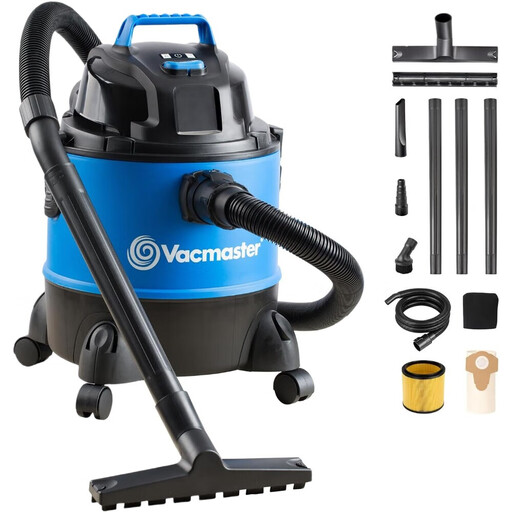 Image unavailable
A wet and dry option for everyday dirt around the home or in the garage, with a stated tank capacity of 20 L. The product title also lists a suction power of 200 AW. Before vacuuming rubble, leaves or water, check the permitted waste, accessories and filter setup in the instructions; don't assume it's suitable for hazardous dust.
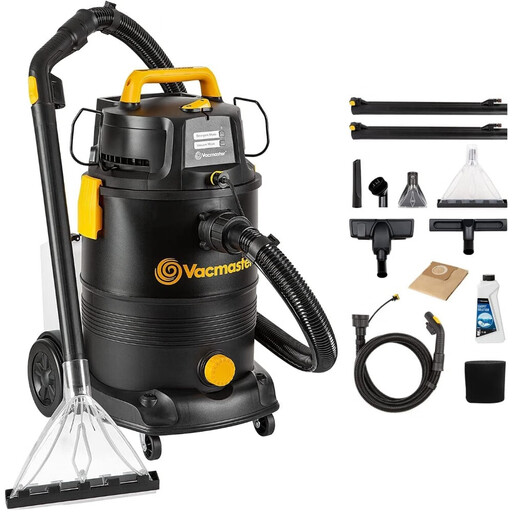 Image unavailable
Its stated 30 L tank capacity is worth comparing with the amount of dirt you need to collect and the storage space you have available. The title describes it as a wet and dry vacuum cleaner; check the instructions to see which surfaces, liquids, debris and accessories are permitted. Don't assume it's suitable for potentially hazardous dust.
Don't assume it can: only use it for dirt permitted by its instructions. Nilfisk France distinguishes its wet and dry vacuum cleaners from standard domestic models for waste such as gravel or sawdust, so check the model you own before cleaning.
Check that the instructions permit this type of waste, then compare the diameter of the tube and hose. UFC-Que Choisir notes that wider components can be useful for rubble and leaves. Also consider the tank capacity, reach and weight for the area you need to clean.
No. Choose a model that is explicitly stated to be suitable for liquids. Before use, follow the instructions for the exact model to find out which liquids it can handle and how to set up the bag and filter.
No. The stated class of a vacuum cleaner needs to be considered alongside the dust actually produced and the work being done. The INRS advises that risks depend on the type of dust and recommends suitable preventive measures, including extraction at source for crystalline silica.
Don't use a standard wet and dry vacuum cleaner to remove it. The INRS states that asbestos may still be present in buildings in France, despite being banned in 1997. If you're unsure, stop cleaning, have the risk assessed and follow the appropriate preventive procedure.