
Livraison le jour même ou le lendemain

Qualité garantie

Débloquez vos offres de bienvenue: Livraison GRATUITE | Jusqu'à -80 % | 30 jours d'essai gratuits à JoyPlus
Téléchargez l'application
Running out of space is a daily frustration, whether you live in an apartment, a student dorm, or are simply trying to optimise your home. On paper, the promise of a vacuum storage bag is incredibly appealing: a spectacular space-saving solution for storing duvets, seasonal clothing, and linens. In reality, however, the experience is often disappointing, with bags that reinflate after a few weeks or tear during their very first use.
As a product expert at Joybuy, my role is to help you see things more clearly. Let's break down the 3 most common pitfalls and the criteria that truly matter for finally achieving effective closet organisation.
Before you fall for a tempting price, it's crucial to understand the weaknesses that can turn a good idea into an instant regret.
To avoid these pitfalls, here are the key technical points you absolutely must check. This is what separates a gimmicky product from a long-lasting investment.
The plastic's composition is the primary indicator of quality. High-performance models use a combination of Polyamide (PA) and Polyethylene (PE).
A bag made only of PE will be more fragile and less airtight over time. Check for this dual PA+PE composition in the product specifications. The film's thickness, measured in microns (?m), is also a good indicator: a thicker film (around 85 ?m, for example) will naturally be more durable.
The seal's effectiveness depends on two critical points:
The format should obviously match your storage needs:
Here are a few options that meet specific needs, taking into account the quality criteria we've just discussed.
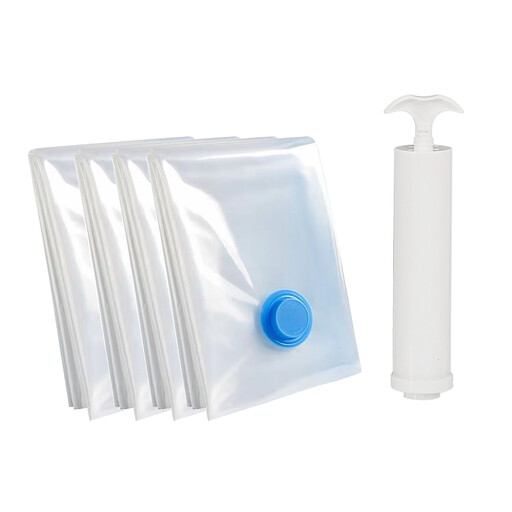
Why we chose it: This set is an excellent starting point for anyone looking to get into vacuum storage without breaking the bank. It's perfect for clothes, towels, or pillows.
The included hand pump immediately solves the vacuum compatibility problem. It's a perfect all-in-one solution to get started.
A complete, ready-to-use kit, ideal for students or for occasional storage needs.
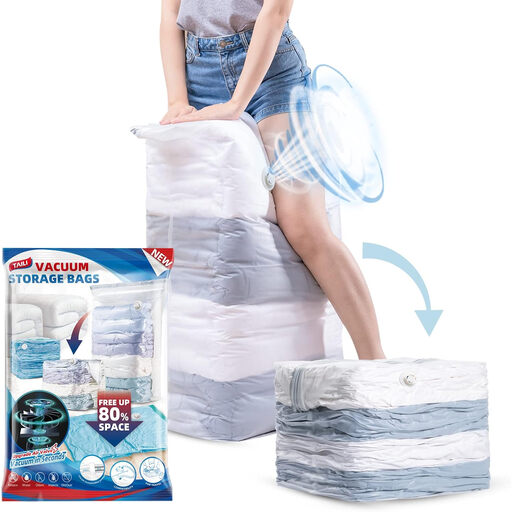
Why we chose it: The "cube" format is designed for closet organisation. Its freestanding structure makes it easy to fill with bulky items like duvets or winter coats, and its flat bottom allows for stable stacking.
Its PA+PE composition is a guarantee of durability. Its patented capless valve is compatible with most vacuums and speeds up the compression process, reducing handling errors.
Its cube shape maximises both vertical and horizontal storage space, something a flat bag can't do.
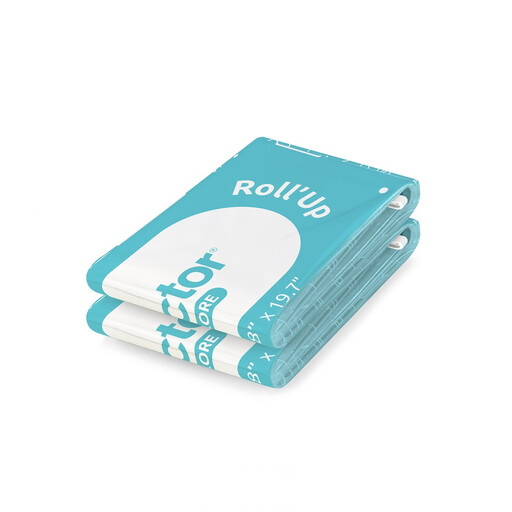
Why we chose it: Designed specifically for luggage, this bag requires no equipment. You simply roll it to expel the air, making it the perfect solution for optimising space in a suitcase or backpack.
This clever system completely bypasses the pitfalls of valves and compatibility. It's simple, reliable, and requires no accessories.
Completely self-sufficient and ultra-lightweight, it's the ultimate on-the-go solution for all your travels.
We've put together a complete selection of products that meet these quality criteria.
To finish, let's answer the questions we get asked most often.
For most textiles (cotton, synthetics), there is no risk. However, it's not recommended to compress delicate materials like silk, leather, or clothing with fragile embellishments. For down or feather items (duvets, puffer jackets), they will regain their loft after being aired out, but maximum compression for very long periods (more than a year) is not advised.
A good quality product, when sealed correctly, should maintain its vacuum for at least an entire season (3 to 6 months). If a bag reinflates in a few days, meticulously check the zip closure and ensure the valve is clean. If the problem persists, it's likely a sign of a manufacturing defect or a micro-puncture.