
Livraison le jour même ou le lendemain

Qualité garantie

Débloquez vos offres de bienvenue: Livraison GRATUITE | Jusqu'à -80 % | 30 jours d'essai gratuits à JoyPlus
Téléchargez l'application
Overflowing wardrobes, winter duvets taking up an entire closet, a suitcase that won’t close before a big trip… a lack of space is a real daily headache. The vacuum storage bag has emerged as a simple and effective miracle solution. However, the market is flooded with products making tempting promises that often don't hold up.
To prevent a good deal from turning into a wasted purchase, here are the pitfalls to avoid.
Knowing how to spot these weak points is the key to investing in a storage solution that will truly deliver on its promises.
To avoid any nasty surprises, three technical criteria deserve your full attention. The performance and longevity of your vacuum storage bag depend on them.
A bag's durability comes down to its composition. The most resilient models combine two materials: Polyethylene (PE) and Polyamide (PA). The former ensures it is airtight, while the latter provides flexibility and better resistance to punctures and tears. A bag made with this duo is your guarantee that you can reuse it season after season. This physical barrier also provides excellent protection against dust mites, as well as dust and moisture, preserving your textiles for the long term.
Effective compression relies on two key elements: the zip and the valve.
Choosing the right size is essential for optimal space-saving in your closet or for under-bed storage.
To help you make the right choice, we have selected products that meet specific needs, based on their technical qualities and design.
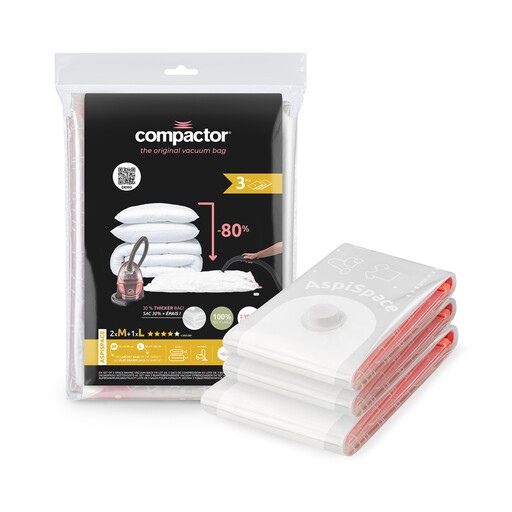
Why we chose it: Ideal for those who want to store winter clothes and a duvet without any hassle. This set offers immediate versatility to free up closet space with each change of season.
The universal valve is designed by Compactor, a brand specialising in storage, which minimises the risk of incompatibility. The zip is designed to withstand multiple uses.
The pack of 3 sizes (2 M, 1 L) allows you to meet several storage needs (clothing, bedding) with a single purchase.
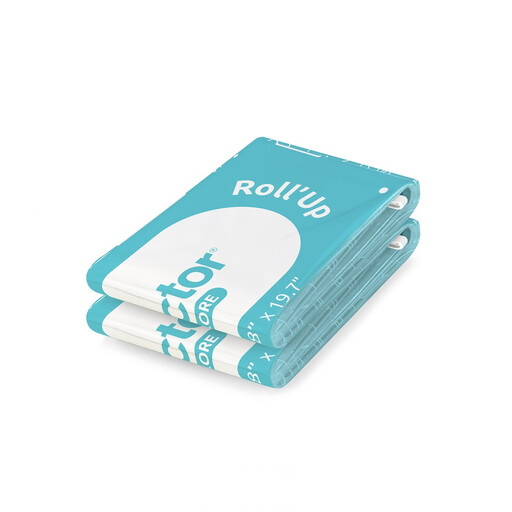
Why we chose it: Designed for those who want to maximise space in a cabin suitcase or backpack. This system allows you to pack more clothes without the need for a vacuum or pump.
It bypasses the valve compatibility issue, as compression is done manually by rolling the bag. The simplicity of the mechanism makes it very reliable.
No accessories are needed. Just fill, seal, and roll to expel the air. Perfect for on-the-go use.
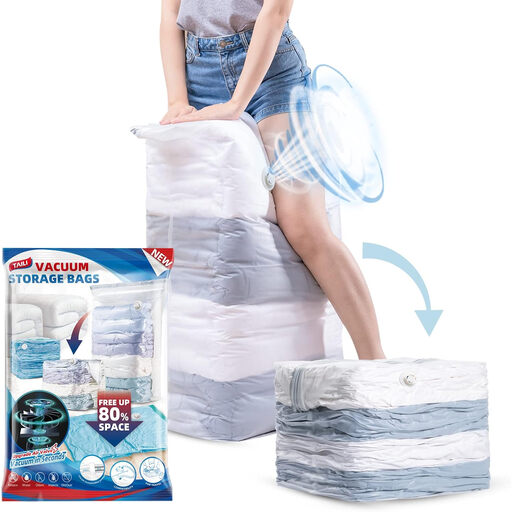
Why we chose it: For those with large volumes to store (multiple duvets, blankets, coats) who want perfectly organised storage. The cube format is a major asset for organising closets or under-bed spaces.
The self-standing structure makes it easy to fill without assistance. The PA+PE material is designed to withstand the pressure of bulky textiles, and the valve is optimised for rapid air removal.
The cube format creates stable, stackable storage blocks, unlike classic flat bags that form shapeless, hard-to-organise bundles.
Explore our complete selection of products that meet our criteria for quality and durability, all compliant with current standards.
For the vast majority of textiles like cotton, wool, or synthetic fibres, there is no risk. However, for very delicate materials such as silk, leather, or items filled with high-quality feathers or down, full and prolonged compression can damage the fibres or their natural loft. For these fragile items, it's best not to remove 100% of the air.
A good quality bag, properly sealed and without any punctures, should remain compressed for several months, or even a full year. If you notice a bag reinflating in a few days or weeks, first check that the zip is perfectly sealed along its entire length. If the problem persists, the valve is likely faulty or a micro-puncture has formed on the bag.
Most bags are designed to work with the standard nozzle of canister vacuums. However, compatibility is not always guaranteed with stick vacuums or models without a flexible hose. To get around this issue, you can opt for a multi-pack of storage bags that includes a pump (manual or electric) or choose roll-up models that require no equipment.