
Livraison le jour même ou le lendemain

Qualité garantie

Débloquez vos offres de bienvenue: Livraison GRATUITE | Jusqu'à -80 % | 30 jours d'essai gratuits à JoyPlus
Téléchargez l'application
Overflowing wardrobes, winter duvets taking over an entire shelf, a chronic lack of space... Sound familiar? The vacuum storage bag is often touted as the miracle solution. Its promise: to reduce the volume of your linens and clothes by up to 80% simply by sucking out the air.
Yet, the experience is often disappointing: a bag that reinflates after just two days, plastic that tears during the first use, or a valve that's incompatible with your vacuum cleaner. As product experts, our mission is to help you separate the truly effective solutions from the marketing gimmicks. Here is our guide to avoiding the pitfalls and choosing the vacuum storage bag that will deliver on its promises.
Before you fill your shopping cart, watch out for these three deal-breakers that make a bag unusable in the long run.
For wardrobe space-saving that lasts, focus on these three technical points. This is what separates a successful purchase from a guaranteed disappointment.
Don't just rely on the thickness advertised in microns. A bag's true durability lies in its composition. The highest-performing models combine two types of plastic:
A bag made with this PA + PE duo will therefore be far more durable and reliable than a model made of simple PE, even if it's advertised as being very thick.
A perfect seal depends on two elements:
The format of your garment compression bag should be tailored to your storage space.
Rather than a simple product list, we've matched our recommendations to user profiles to help you find the solution that truly fits your needs.
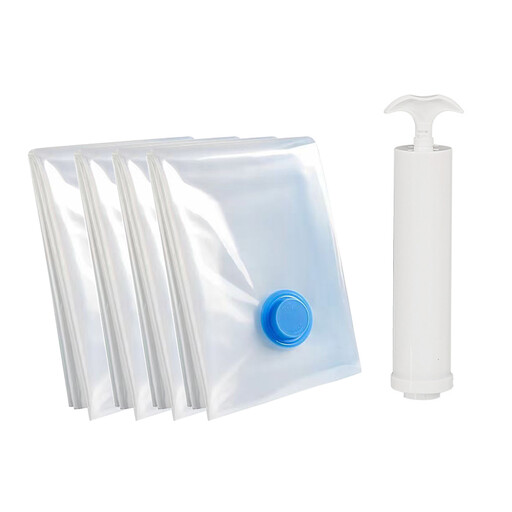
Why we recommend it: This pack is the perfect turnkey solution for seasonal storage needs: storing one or two duvets, a few winter coats... The included manual pump makes it ready to use right out of the box, no fuss.
By including a manual pump, it immediately eliminates the risk of incompatibility with a vacuum cleaner. This is the classic first-time buyer's trap.
A complete and affordable starter kit, perfect for a first try or a one-off need for duvet storage.
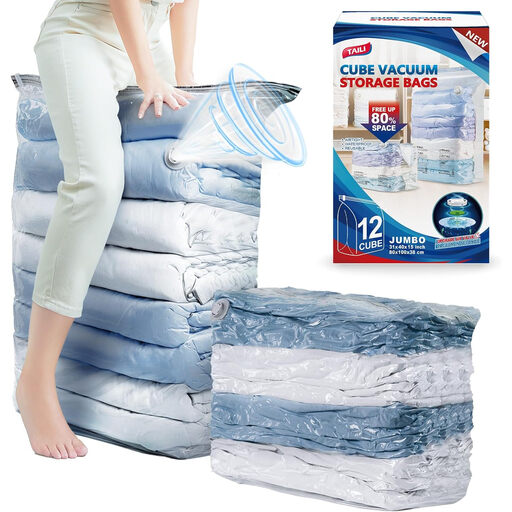
Why we recommend it: For those who want to completely reorganise closets, cellars, or attics. This 12-pack of cube-format bags is designed for heavy-duty, organised storage. Each large-format storage bag can hold several duvets or a mountain of clothes.
Its durable PA + PE material and modern valve are designed for repeated use, limiting the risk of tearing and re-inflation. The cube format avoids the shapeless 'pancake' effect and facilitates neat stacking.
Massive storage capacity and a stable structure for maximum wardrobe space-saving and perfect organisation.
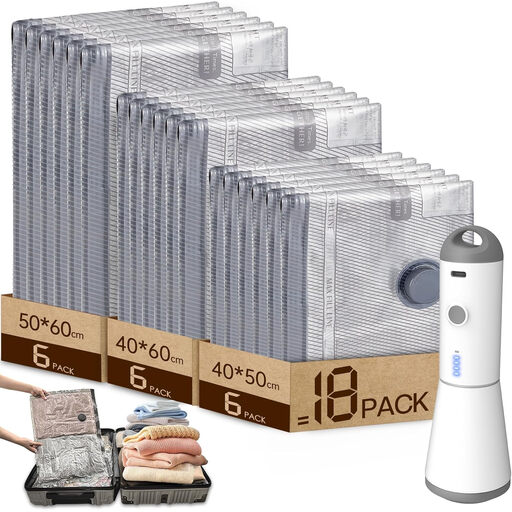
Why we recommend it: Mobility is key here. This kit includes a small, compact, and USB-rechargeable cordless electric pump. It's the perfect solution for travellers, students in dorm rooms, or anyone who moves frequently and doesn't always have a canister vacuum on hand.
It solves the problem of compatibility and vacuum cleaner dependency once and for all. The dedicated pump ensures effective compression anywhere, anytime.
Maximum portability. A true garment compression bag designed to optimise suitcase space or make moving easier.
Discover our full selection of products that meet our criteria for quality and durability.
For most textiles, the risk is minimal. However, you should be cautious with delicate, high-quality materials like down or feathers. Extreme and prolonged compression (more than a year) could eventually compact the fibres and cause them to lose their loft. The best practice: open and re-vacuum the bags every 6 to 12 months to allow the textiles to "breathe".
A good quality bag (PA+PE material, double zip) should maintain its vacuum for several months, or even up to a full year. If it reinflates in a few days or weeks, it's a sign of a micro-leak at the valve or the closure. Our tip: before sealing, make sure the zip is perfectly clean (free of dust or threads) and run the slider across it several times to ensure a perfect seal.
In theory, yes. Most valves are designed for the round nozzles of classic canister vacuums. In practice, the rectangular or specially shaped nozzles of some stick vacuums (like those on Dyson models, for example) don't always allow for a proper seal. That's why checking compatibility or opting for a kit with an included pump (manual or electric) remains the safest bet.