
当日/次日达

品质保障

开启新人专享福利: 全场免邮 | 低至 2 折 | 免费试用 30 天 JoyPlus 会员
下载 Joybuy
Whether you live in a small apartment, a student dorm, or are simply preparing for the great seasonal wardrobe switch, the problem is always the same: overflowing closets. The winter duvet takes up a crazy amount of space, and optimizing every nook and cranny becomes a mission. The vacuum storage bag emerges as the miracle solution. But be warned, not all bags on the market are created equal, and a poor choice can quickly turn into a waste of time and money.
To avoid falling into the trap, let's review the most common pitfalls.
To make the right choice, focus on a few technical features that make all the difference between an effective product and a disappointing gadget.
The durability of a clothing compression bag depends on its composition. The most reliable models are made from a blend of Polyamide (PA) and Polyethylene (PE).
This winning combination creates a solid barrier against moisture, dust, and tears, allowing for multiple reuses. A bag made solely of PE will often be more rigid and brittle.
There is no room for compromise here. Opt for models with a double-slider zipper (or double zip), often supplied with a sealing slider tool. This mechanism ensures a much more hermetic seal than a single zipper.
As for the valve, check its compatibility. Modern valves are designed to fit most standard household vacuum cleaners. Some innovations, like cap-free valves or manual compression systems, offer welcome convenience, especially for turning the bag into a portable suitcase organizer.
The choice of format is purely strategic for maximum space optimization.
Rather than an endless list, here are three solutions that check all the quality boxes and meet specific needs.
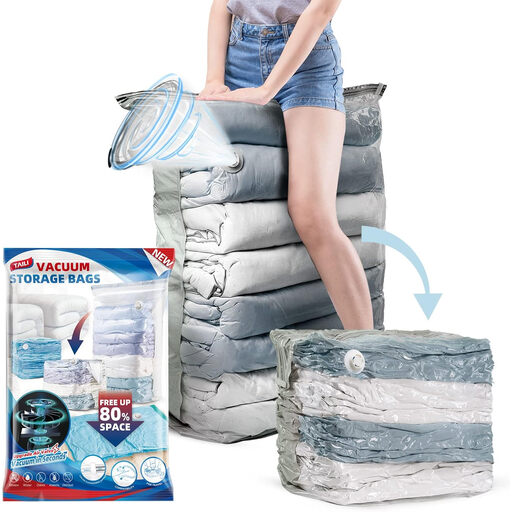
Why we love it: Perfect for storing the bulkiest items like duvets, blankets, and winter coats. Its cube shape creates stable storage blocks that are easy to stack in an attic, a basement, or on top of a wardrobe.
Its PA+PE composition ensures excellent tear resistance. The double-slider zipper with a slider tool and the cap-free valve compatible with standard vacuums prevent air leaks and unpleasant surprises.
Its freestanding cube structure makes it incredibly easy to fill, even on your own. Once compressed, it forms a compact block that optimizes vertical storage.
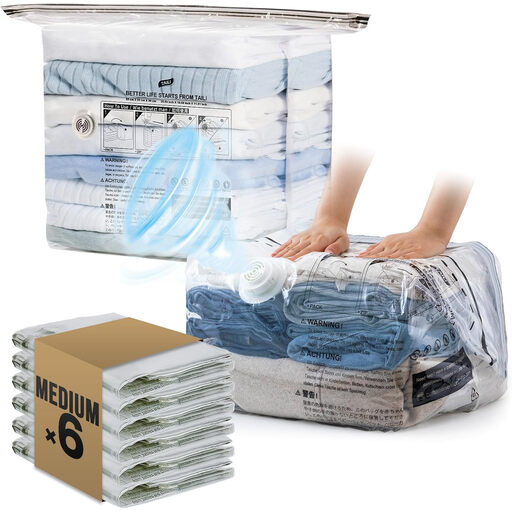
Why we love it: Designed for those who want to optimize every square inch of their suitcase or backpack. Its medium size is perfect for a carry-on, and its manual compression technology makes it usable anywhere, without needing a vacuum cleaner.
It bypasses the incompatible valve trap with its patented manual compression system—just press to seal. The double-slider zipper guarantees an airtight seal, even on the go.
No vacuum or pump needed! Simply press the bag to expel the air, making it a truly self-sufficient and incredibly effective suitcase organizer.
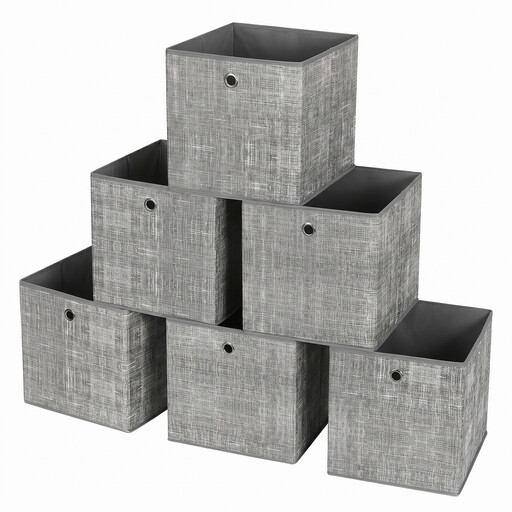
Why we love it: For those who need easy and regular access to their belongings (clothes, toys, books), without the hassle of compression. This fabric storage box offers a structured and aesthetically pleasing solution.
As an alternative, this storage cube is free from the leak or puncture problems common to vacuum bags. Its cardboard and non-woven fabric structure is designed for stability and daily use.
Access to contents is instant. They are foldable and can be stored flat when not in use. Their dimensions (30x30x30 cm) are compatible with most modular shelving units.
Discover our complete and up-to-date selection of products that meet our quality criteria and safety standards.
How long does a vacuum storage bag stay compressed? A high-quality bag with a double-slider zipper and an effective valve should maintain compression for several months. The exact duration depends on the quality of the seal and the absence of micro-punctures. For long-term storage, it's advisable to check the compression status every 3 to 4 months.
Can you reuse a clothing compression bag? Absolutely. Quality models made of PA+PE are designed to be reused many times. To maximize their lifespan, handle them with care, avoid contact with sharp objects, and ensure the zipper and valve remain clean and free of debris.
Does vacuum storage damage clothes or duvets? For most textiles like cotton, wool, or synthetics, vacuum storage is safe. It can cause wrinkles, but these usually disappear after washing or with a quick pass of a garment steamer. However, be cautious with delicate items containing feathers or down: it is recommended not to remove 100% of the air to preserve the loft of the fibers.