
Livraison le jour même ou le lendemain

Qualité garantie

Débloquez vos offres de bienvenue: Livraison GRATUITE | Jusqu'à -80 % | 30 jours d'essai gratuits à JoyPlus
Téléchargez l'application
The promise of a floor that's vacuumed and mopped in a single pass is certainly tempting. Say goodbye to the double duty of vacuuming then mopping! However, the vacuum mop market is saturated with marketing claims that often lead to disappointment. Before you invest, it's crucial to understand the pitfalls to avoid so you can make a choice that's genuinely right for your home and your habits.
To cut through the noise, focus on the few features that make a real difference in day-to-day use.
The choice of form factor depends primarily on your needs and your standards.
Yes, and without the slightest hesitation. A floor cleaner worthy of the name must be equipped with two separate tanks: one for clean water (and detergent) and another for dirty water. This is non-negotiable to avoid simply spreading dirt around, as you would with a traditional mop rinsed in increasingly filthy water. Some models go even further by incorporating hot water washing to better dissolve grease and tough stains.
Your floor types and the presence of pets are decisive factors.
Here are a few models that meet specific needs, selected based on our criteria for performance and practicality.
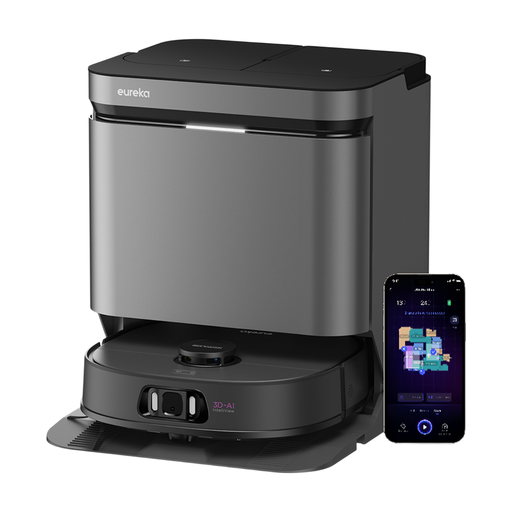
Why it stands out : This robot is built for the most demanding homes. Its station washes the mop pads with hot water (75°C), and its anti-tangle technology is a real asset for those in a daily battle against pet hair on hard floors and carpets.
Its fully automated station (emptying, washing, drying) significantly reduces manual maintenance. The ScrubExtend technology allows the mop pads to extend to clean along baseboards, tackling the blind spot problem.
High suction power (16,200 Pa) and a special anti-tangle brush for pet hair. Hot water mop washing for impeccable hygiene.
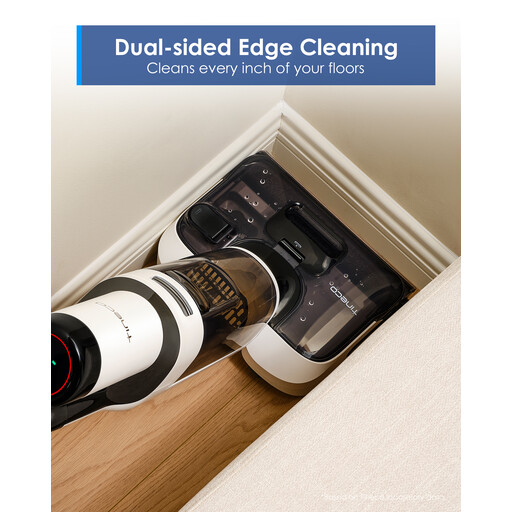
Why it stands out : For those with low furniture or complex layouts, this stick vacuum is the ideal solution. Its body can recline 180° to lie completely flat, giving it access to areas unreachable by most of its competitors.
It tackles the blind spot problem head-on by sliding under sofas, beds, and dressers. Its edge-to-edge cleaning is designed to leave no uncleaned margin along baseboards.
Extra-flat 180° reclining design for total access under furniture. Up to 40 minutes of runtime and 70°C FlashDry self-cleaning.
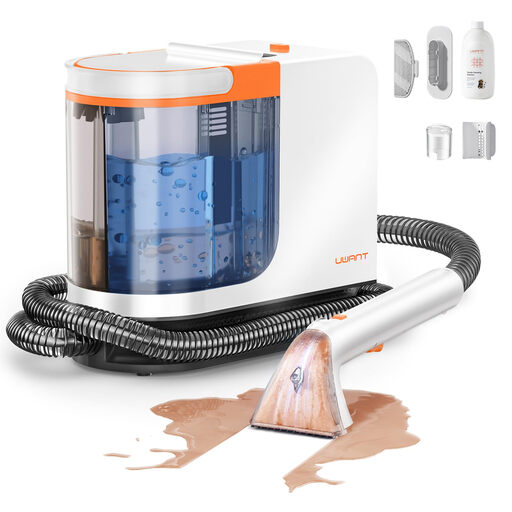
Why it stands out : Note: this is not a hard floor cleaner, but a specialised upholstery and carpet cleaner. For those whose priority is to sanitise carpets, sofas, or car seats, this injection-extraction device is far more powerful than a simple 2-in-1.
Its strength is that it doesn't promise to do everything. It's an expert tool that excels at its mission: deep cleaning fabrics. It thus avoids the disappointment of a multi-function model that is often mediocre at cleaning textiles.
Strong extraction power (12,000 Pa) to suction up dirty water. Hot water mode (up to 60°C) to dissolve stains. Compact and easy to transport.
We have compiled a complete selection of products that meet our quality requirements and European standards.
For regular maintenance, the answer is yes. A dual-tank model cleans with constantly fresh water, which is significantly more hygienic. However, for a very old, set-in stain, a good manual scrub may still be necessary as a supplement.
The advertised runtime (often between 25 and 40 minutes for a stick model) is almost always calculated in eco mode. On max power, it can drop by half. To extend the battery's lifespan, avoid letting it discharge completely and do not store it in a place subject to extreme temperatures. For robots, they return to charge on their own, so runtime is less of an issue, except for very large areas that need to be cleaned in a single cycle.
No, "zero maintenance" is a myth. The station of a self-cleaning robot vacuum empties the dust and washes the mop pads, but you will still need to: 1) empty the dirty water tank, 2) refill the clean water tank, and 3) change the station's dust bag (every few weeks). Occasional cleaning of the base and the robot's brushes remains essential to ensure its long-term effectiveness.