For deep cleaning a large home with a mix of surfaces, a cylinder vacuum cleaner is a sensible place to start. Que Choisir considers it suitable for larger homes, provided you choose brushes that match the floors and furniture you need to clean. A model with a bag is a good choice if you’d rather remove dust without emptying a bin directly. A bagless model means you won’t need to buy bags, but you will need to empty the bin and maintain the filters. A stick vacuum or robot can help with cleaning between deep cleans, but won’t automatically replace your main appliance for this purpose.
Who is this type of vacuum for?
For a large home with a mix of surfaces
If your home has hard floors, carpets, furniture and bedding to clean, start by choosing a main appliance that can handle all these tasks, rather than one designed just for quick clean-ups. Que Choisir tests several floor types separately, so check the results for your floors and the accessories supplied.
If you want to limit contact with dust
If you’d rather not empty a dusty bin, look at bagged cylinder vacuums and their closure systems. Que Choisir says removing a bag exposes you to less dust than cleaning out a bagless container. You’ll still need to check which consumables are compatible with your chosen model.
For easier cleaning between deep cleans
If you already have a main appliance, a stick vacuum or robot can help with smaller jobs in between. Choose an additional appliance based on the areas you need to reach. For a stick vacuum, check the run time in the mode you plan to use.
What should you look for?
For a large home, start with the surfaces you need to clean, then compare models based on how they collect dust and how easy they are to move around. Que Choisir tests suction performance on different floor types, among other things. Motor power alone won’t tell you which model to choose.
| What to consider |
What to check |
Who is this important for? |
| Different surfaces |
Compare test results for your floor types and check which brushes and nozzles are included. |
With parquet, carpets and furniture to clean, I want results that suit each surface, not just a stated power rating. Around 36% of consumers would make this their top priority. |
| Dust and consumables |
Check how to empty the bin or remove the bag, how to maintain the filters and whether consumables are compatible. |
I’d rather remove a sealed bag than empty a bin, even if that means buying compatible bags. This would be the top priority for around 29% of consumers. |
| Moving and storage |
Consider the operating radius, weight and storage options in relation to the layout of your home. |
If I need to move between several rooms or carry the appliance up stairs, ease of movement matters as much as storage. Around 21% of consumers would make this their first consideration. |
| Cleaning between deep cleans |
For a stick vacuum, check the run time in the mode you’ll use. For a robot, consider obstacles and which areas it can reach. |
Between deep cleans, I want to tidy certain areas without getting out my main appliance. Around 14% of consumers would put this need first. |
Mistakes to avoid
-
Choosing based on the motor’s wattage
This figure alone doesn’t tell you how well a vacuum will clean parquet, tiles or carpets. The floorhead and brushes also affect how it performs in everyday use.
Check test results for the types of floor in your home and see which accessories are actually included.
-
Assuming a bagless model needs no maintenance
You’ll need to empty the bin and maintain the filters. According to Que Choisir, this can expose you to more dust than removing a sealed bag.
Before choosing a model, check the instructions for details on emptying the bin and compatible filters.
Remember to allow time to clean the bin and filters, too.
-
Overlooking the bag reference
Bags from the same brand won’t necessarily fit all its models. For example, Miele limits compatibility of the CO HyClean Pure Guard M1 to Guard M1 models.
Check the exact reference of your vacuum cleaner and make sure you know which bags and filters fit before you buy.
-
Expecting a stick vacuum or robot to do the same deep clean
A stick vacuum’s run time depends on the mode you use. A robot can keep some floor areas clean, but it won’t clean furniture or bedding on its own.
First decide which appliance will handle your deep cleans, then choose an additional one to help with the jobs you’d otherwise have to do between sessions.
Brands to consider
These examples highlight features to compare on specific models. A brand’s stated specifications don’t describe its entire range.
Electrolux
The bagged Pure D8 PD82-4ST cylinder vacuum gives you some useful points to compare, including operating radius and accessories for a larger home.
- Electrolux lists a 12 m operating radius, a 3.5 L bag, an all-floor brush and a parquet brush for the PD82-4ST.
- Check suction test results for your floor types: these specifications don’t tell you how well it will clean them.
Rowenta
These two models let you compare the differences between bagged and bagless cylinder vacuums.
- Rowenta lists a 4.5 L bag and a 12 m operating radius for the G-Force Silence RO6136EA. The brand gives the G-Force Cyclonic Silence RO7C66EA a 2.5 L bin and a 9 m operating radius.
- The bagless model needs its bin emptied and filters maintained. Compare the accessories and performance on your floors separately.
Bosch
The Série 6 ProAnimal BGS41PET1 is an example of a bagless cylinder vacuum to consider if you’re happy to maintain the bin and filters.
- Bosch lists a 2.4 L bin, a 10 m operating radius and a washable HEPA filter for this model.
- These specifications alone aren’t enough to judge how well it will clean carpets or the different floors in your home.
Miele
The Guard range includes bagged cylinder vacuums with different features to consider, depending on your floors and the accessories you need.
- Miele offers variants including Guard Parquet, Cat & Dog and Silence.
- Miele specifies the CO HyClean Pure Guard M1 bag for Guard M1 models. Check the consumable’s reference rather than relying on the brand name alone.
Bagged cylinder vacuums on Joybuy
These two bagged models are options to consider if you’re choosing a main appliance for a large home. If you’re comparing them with a bagless model, also think about emptying the bin and maintaining the filters before deciding how you’d prefer to collect dust.
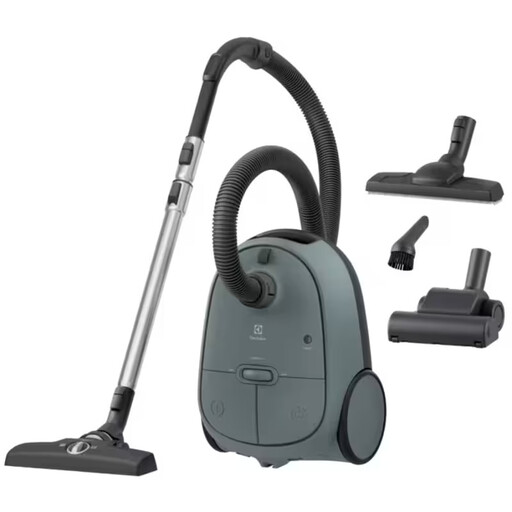 Image unavailable
Electrolux 600 EB61C4OG bagged vacuum cleaner
Consider this as your main cylinder vacuum if you’d rather replace a bag than empty a bin. If your home has carpets, furniture and hard floors, check which brushes are included and look for model-specific suction test results on these surfaces.
View on Joybuy
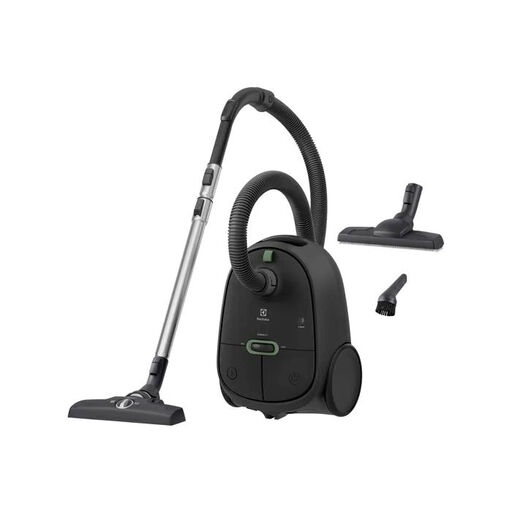 Image unavailable
Electrolux EB61C2GRN bagged vacuum cleaner, black
Worth considering as your main vacuum if you want a bagged cylinder model. The product name specifies a 550 W motor, but that figure alone doesn’t tell you how well it will clean. Check test results for your floors and make sure it comes with the accessories you need for carpets, furniture and bedding.
View on Joybuy
Frequently asked questions
Does a bagged vacuum cleaner reduce contact with dust when you empty it?
According to Que Choisir, removing a bag exposes you to less dust than cleaning out a bagless container. If this is a priority for you, check the closure system and make sure compatible bags are available, noting their reference.
Which accessories do I need for parquet, carpets and furniture?
Look for a brush suited to hard floors, a tool for carpets and nozzles that work well on the furniture and crevices you need to clean. Que Choisir tests several floor types separately, so look for results that are relevant to your home and check which accessories come with the model you’ve chosen.
How should I maintain a vacuum cleaner used for deep cleans?
Empty the bin or replace the bag, maintain the filters and clean the brushes according to the model’s instructions. ADEME also recommends avoiding vacuuming up plaster, as it can damage the appliance.
What should I do with an old vacuum cleaner in France?
If it’s still usable, consider repairing it or giving it a new lease of life first. ADEME also suggests donating or reselling it. If you need to dispose of it, check the local collection options for electrical equipment in your area.


