Homes with several types of flooring
You move between hard floors, rugs or carpets, and then sofas and bedding. The brushes and attachments suited to these surfaces matter more to your choice than motor power alone.


For regular, thorough cleaning in a large home, a corded cylinder vacuum is a sensible place to start. Que Choisir recommends this type for larger areas, although its weight and manoeuvrability are worth considering. The choice between a bagged and bagless model mainly depends on how you prefer to deal with dust and maintenance. A cordless stick vacuum is also worth comparing if stairs or storage are a bigger concern, but check its run time in the mode you’ll use.
You move between hard floors, rugs or carpets, and then sofas and bedding. The brushes and attachments suited to these surfaces matter more to your choice than motor power alone.
You want to finish cleaning without repeatedly changing sockets, emptying the vacuum or recharging it. Reach, bag or bin capacity, and the weight you have to move all become important.
You often need to carry the vacuum up and down stairs or store it in a small space. A cordless stick vacuum can make it easier to get around, but compare its run time and bin capacity with your needs.
When choosing between a bagged cylinder vacuum, a bagless cylinder vacuum and a cordless stick vacuum, start with the factor most likely to interrupt or complicate a full clean.
Worth considering: if you regularly clean several rooms and would rather replace a bag than empty a bin.
Bear in mind: you’ll need to move a corded vacuum around and keep compatible bags in stock.
Worth considering: if you want a corded vacuum but don’t want to use bags.
Bear in mind: you’ll need to empty the bin and maintain the filters, as well as deal with the usual challenges of moving a cylinder vacuum around.
Worth considering: if stairs and freedom of movement are particularly important to you.
Bear in mind: run time depends on the mode you choose, and you may need to stop to recharge or empty the bin.
| Feature | What to check | Who it matters to |
|---|---|---|
| Cleaning different surfaces | Check which brushes are included for hard floors, rugs or carpets, as well as the attachments for upholstery. Compare tests carried out on the types of flooring in your home. | If I move from wooden floors to rugs and then sofas, I want an attachment suited to each surface. Around 33% of consumers would make versatile cleaning their top priority. |
| Cleaning without interruptions | Compare the reach and the capacity of the bag or bin. For a stick vacuum, check the run time in the mode you need and how long it takes to charge. | When I clean several rooms, I want to minimise stops to change sockets, empty the vacuum or recharge it. This would be the priority for around 27% of consumers. |
| Maintenance and dust | Find out how to remove the bag or empty the bin, and check how to maintain the filters and whether compatible consumables are available. | I prefer to know what maintenance is involved and how I’ll need to handle the dust. Around 20% of consumers would make this their top consideration. |
| Moving and storage | Check the weight when ready to use, how easy it is to handle on the stairs and how much storage space it needs. | If I often carry the vacuum between floors, I want it to be easy to handle and store. Nearly 20% of consumers would prioritise this. |
This figure alone doesn’t tell you how well a vacuum will clean wooden floors, rugs or carpets. The floorhead and how well it suits the surface matter too.
Look for tests covering the types of flooring in your home and check which brushes come with the model you’re considering.
Que Choisir points out that a stick vacuum’s advertised maximum run time is measured at low power. It may not reflect how long the vacuum will last in the mode you use on rugs or carpets.
Before planning a full clean with a stick vacuum, check the run time for each mode, the charging time and the bin capacity.
If the battery runs out before you finish, you may have to stop and recharge.
A bagged cylinder vacuum needs compatible bags, while a bagless model requires you to empty its bin. Both types also need their filters and brushes to be looked after.
Before choosing, check the reference for compatible consumables and the maintenance instructions for the model.
In France, vacuum cleaners are among the product categories covered by the repairability index, according to the ministry responsible for ecological transition. A claim about a brand or product range doesn’t replace information about the specific model you’re buying.
Check the index shown for the new model and separately confirm that its filters, brushes or batteries are available, depending on its features.
The brand offers bagged and bagless cylinder vacuums to compare if you want to prioritise capacity or reach.
A brand to look at for bagged cylinder vacuums if capacity and attachments for different floors are among your priorities.
Worth considering if you want to compare a cordless stick vacuum with a cylinder model and ease of movement and storage are particularly important.
This selection includes bagged and bagless cylinder vacuums, a corded stick vacuum and cordless stick vacuums. Compare them based on the surfaces you need to clean, how often you move between rooms and the interruptions you’re happy to accept.
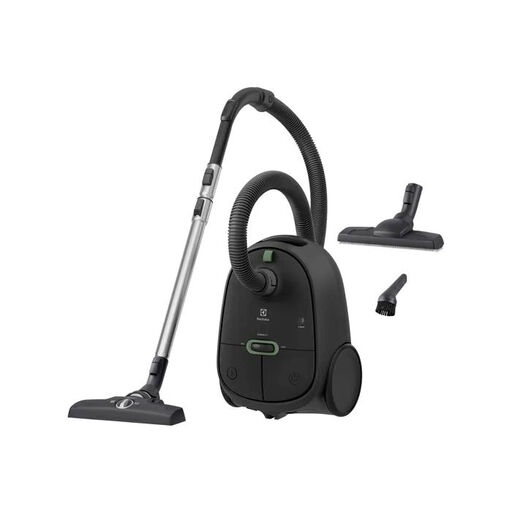 Image unavailable
Worth a look if you need to clean several rooms, particularly those with hard floors and parquet.
Listed with 12 m reach, a 3.5 L bag, a multi-surface brush and a parquet brush. The stated net weight is 6.77 kg, so bear this in mind if you often carry the vacuum, and check the reference for compatible bags.
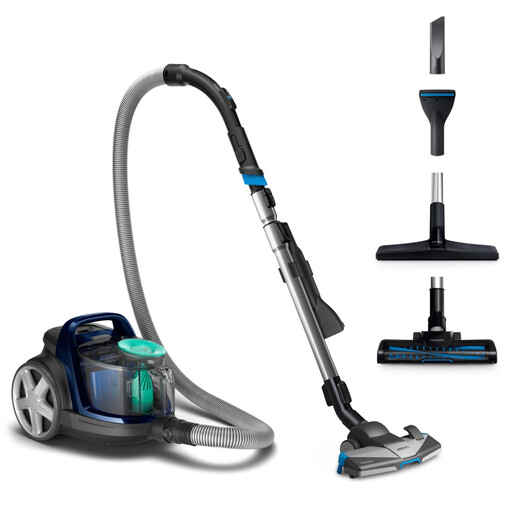 Image unavailable
Worth comparing if you want a bagless cylinder vacuum for different types of flooring and upholstered furniture.
Listed with TriActive+ and Turbo brushes and a furniture attachment, along with 9 m reach, a 1.5 L bin and a stated weight of 4.5 kg. In a large home, consider how often you’ll need to change sockets and empty the bin, then check how to maintain the filter.
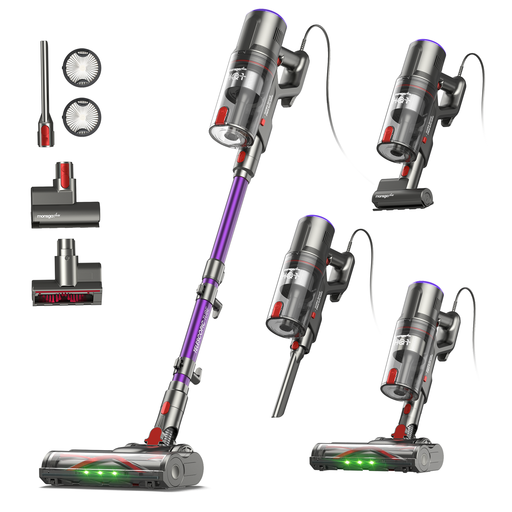 Image unavailable
Worth considering if you prefer a stick vacuum but don’t want to recharge a battery.
Listed with a 7 m cable, a 1.8 L bin and powered brushes for floors and mattresses. The stated weight is 1.3 kg. Measure the distance between your sockets, as the cable length won’t necessarily be the same as the total distance you can cover without unplugging the vacuum.
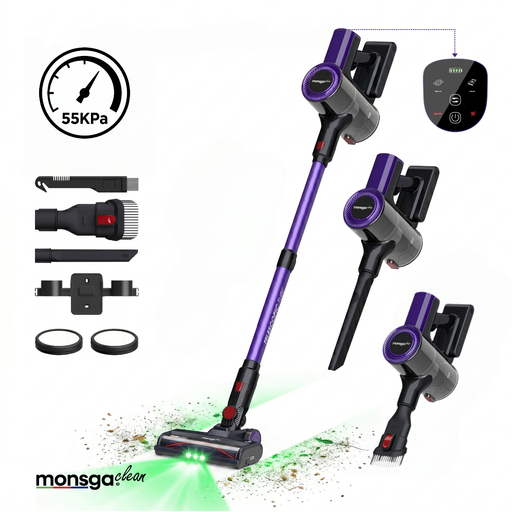 Image unavailable
Worth comparing if you want to move between rooms without a cord, while still having a 1.8 L bin.
Listed with up to 45 minutes of run time and an anti-tangle brush. Before planning a full clean, check the run time in the mode suited to your rugs or hard floors, as well as the charging time.
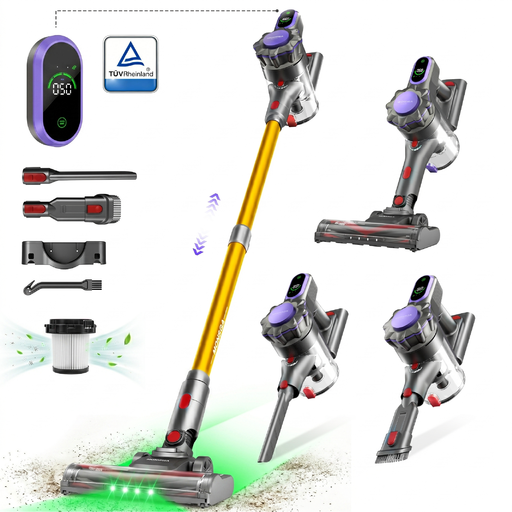 Image unavailable
Worth a look if you often move the vacuum between rooms or floors and want to compare a stick model with cylinder vacuums.
Listed with a weight of 1.2 kg, a removable battery and a 700 mL bin. The advertised run time of up to 55 minutes applies to bare-floor mode. Check the run time in carpet mode and allow for the possibility of emptying the bin during a long cleaning session.
Yes, a bagged cylinder vacuum is worth comparing for a full clean, particularly if you’d rather replace a bag than empty a bin. However, check which brushes are included for each type of flooring, as well as the vacuum’s reach and weight. Having a bag doesn’t, on its own, tell you how well it will clean your floors.
Follow the manufacturer’s instructions for replacing the bag or emptying the bin, maintaining the filters and clearing the brushes. These tasks apply to both bagged and bagless models, so check the guidance for your specific model.
Check the repairability index shown for the model you’re considering. According to the ministry responsible for ecological transition, vacuum cleaners are among the product categories covered by the index in France. Also check that the parts and consumables needed for that model are available; a general claim by a brand won’t necessarily apply to every model.
If it still works or can be repaired, consider having it repaired, donating it or selling it on, as recommended by ADEME. If it needs to be thrown away, find out whether a retailer can take it back or where you can drop it off at an electrical equipment recycling point.