Homes with a large floor area and mixed flooring
You clean hard floors, rugs or carpets, as well as furniture and high-up areas, as part of the same routine. Complete coverage with the right accessories matters more than maximum portability.


For the main clean of a large home with several types of flooring, a cylinder vacuum is generally the most practical choice when continuous coverage, suction power and accessories are the priorities. A cordless stick vacuum is better suited to quick clean-ups, while a robot vacuum can automate clear areas without necessarily replacing manual cleaning of stairs, furniture and awkward corners.
You clean hard floors, rugs or carpets, as well as furniture and high-up areas, as part of the same routine. Complete coverage with the right accessories matters more than maximum portability.
You want an appliance that is easy to get out for everyday messes, or automation for clear areas, while still considering a stick vacuum’s battery life and a robot vacuum’s navigation limitations.
You would rather plan for emptying, bags, filters, brushes and spare parts than compare only the stated power or the equipment supplied initially.
Start by defining the surfaces you need to clean and how long a full clean takes, then check the accessories, useful battery life and maintenance routine for your chosen format.
| Priority | What to check | Your needs |
|---|---|---|
| Floor coverage | Check that the head is suitable for each type of flooring, and look for a parquet brush, long crevice tool and accessories for furniture or high-up areas. With a robot vacuum, also examine its coverage of edges and corners. | I want to clean hard floors, rugs, furniture and awkward corners without leaving a significant part of the home untouched. |
| Useful battery life | Compare battery life in eco, standard and powerful modes, as well as charging time. UFC-Que Choisir reports that, at maximum power, a stick vacuum’s battery life falls to around ten minutes on average in its tests. | For rugs and heavily soiled areas, I need the battery to last in the mode I actually use, not just in the most economical mode. |
| Maintenance and consumables | Check the collection system, access to the dust bin, filters and brushes, as well as the references for compatible parts. ADEME states that the repairability index applies to vacuum cleaners. | I prefer an emptying, cleaning and consumables replacement routine that I can keep up over time. |
| Ease of handling | Assess the weight, cable and operating radius of a cylinder vacuum; for a stick vacuum, consider its format and battery; for a robot vacuum, look at the location of the dock, thresholds and obstacles. | I want to move from room to room, reach under furniture or schedule regular cleaning with an effort level suited to my home. |
Maximum battery life is often quoted for a low-power mode, while rugs, carpets and embedded dirt require more power. In its tests, UFC-Que Choisir records an average of around ten minutes at maximum power.
Check battery life at each power level and estimate how long your most demanding clean will take. Also confirm whether a second battery is compatible before relying on one.
The design of the vacuum head, airflow and suction pressure all affect results on different surfaces. According to UFC-Que Choisir, these factors cannot be summed up by the stated motor power alone.
Make sure the supplied brush is suitable for every type of flooring in your home, and prioritise comparable results on hard floors, rugs and carpets where these are available.
Bags, filters, brushes and dust bins all affect everyday use. Clogged filters or brushes can reduce performance, and a stick vacuum also needs regular maintenance to keep working effectively.
Before buying, check the references for bags or filters, the cleaning instructions and access to spare parts. Consult the repairability index when it is displayed.
Rugs, edges and corners are among the surfaces assessed by UFC-Que Choisir. A robot vacuum’s operation also depends on the dock, charge level, brush condition and surrounding environment.
Identify thresholds, rugs, cables, spaces under furniture and inaccessible areas before buying. Keep a manual solution for stairs, textiles, high-up surfaces and awkward corners if these areas are part of your routine.
In France, Miele offers bagged cylinder vacuum cleaners, with some models presented by the brand as suitable for large hard-floor areas or mixed flooring.
Rowenta offers bagged and bagless cylinder vacuum cleaners, cordless stick vacuums and robot vacuums, making it possible to compare several formats from one manufacturer.
Roborock is worth considering if your aim is to automate cleaning on accessible floors and you have space for a dock.
These Joybuy options cover bagged cylinder, cordless stick and robot vacuum formats to consider for maintaining a large home with varied flooring.
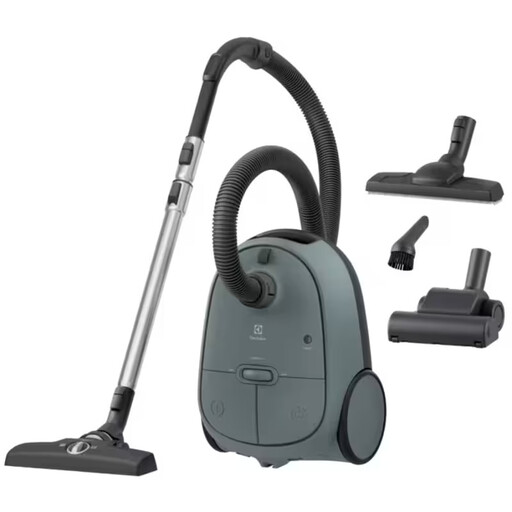 Image unavailable
Corded option for deep cleaning, with all-floor, parquet and turbo brushes.
3.5 L bag, stated 12 m operating radius, 9 m cable, telescopic tube and washable filter.
At 7.2 kg and with a cable, it may be less convenient between floors; check the reference for compatible bags and its performance on carpets if these make up most of your flooring.
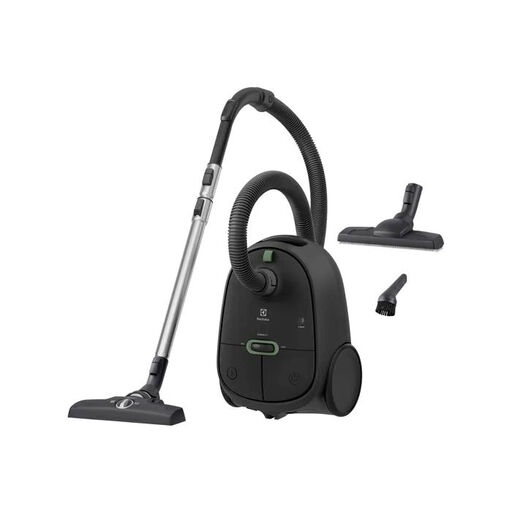 Image unavailable
Bagged cylinder vacuum designed for continuous cleaning of hard floors and parquet.
Stated 12 m operating radius, 3.5 L bag, telescopic tube, all-floor and parquet brushes, washable filter and full-bag indicator.
Its corded format and 6.77 kg weight require some organisation on the stairs; check the box contents for furniture, high-up area and crevice accessories.
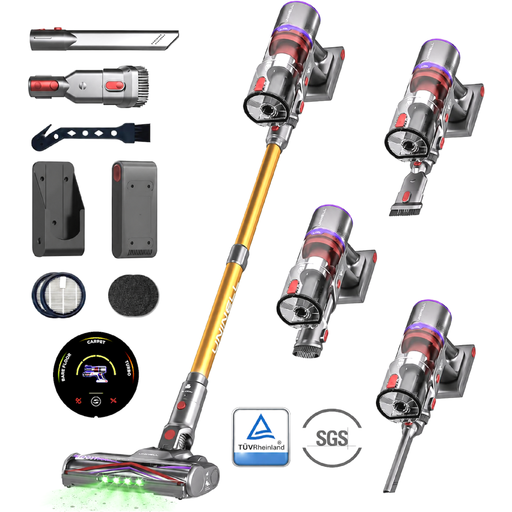 Image unavailable
Cordless stick vacuum for quick clean-ups on hard floors, rugs, furniture, stairs and awkward corners.
Removable battery, stated battery life of up to 65 minutes, 180° flat-reclining brush, LED lighting, 700 mL dust bin, crevice tool and upholstery tool.
Check the battery life in carpet mode or at high power before using it as your only appliance, along with the availability of a second battery and replacement filters.
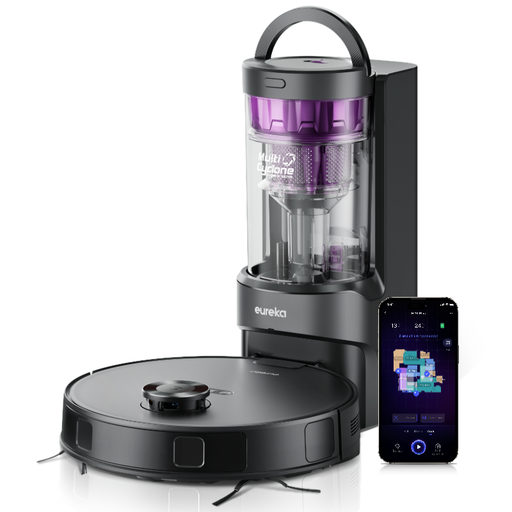 Image unavailable
Robot vacuum to consider for scheduling maintenance of clear areas between manual cleans.
LiDAR navigation, 3D obstacle avoidance, mapping, no-go zones, carpet detection, 10 mm mop lift and stated operation of up to 180 minutes.
Allow space around the dock and remove cables, small objects and tasselled rugs. Check which consumable is actually required for dust collection.
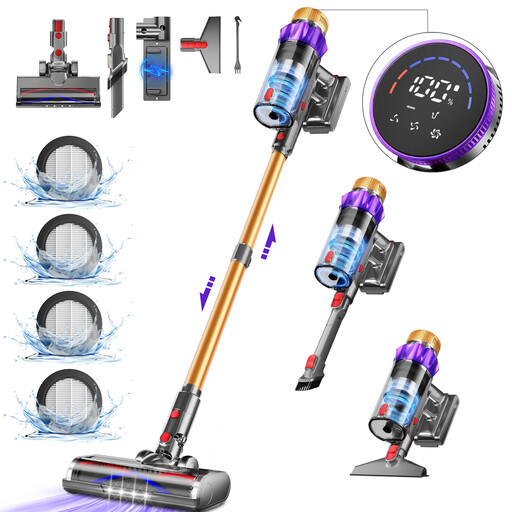 Image unavailable
Cordless stick vacuum suitable for frequent cleaning of hard floors, rugs, pet hair and areas beneath furniture.
Removable battery, three power levels, stated battery life of up to 70 minutes, 1.8 L dust bin, steerable head, LED lighting and washable filters.
Ask for the battery life at each power level, charging time and the conditions for adding an extra battery. The dust bin, filters and roller require regular maintenance.
Yes, when it needs to handle the main clean across several surfaces for an extended, uninterrupted period. UFC-Que Choisir describes cylinder vacuums as particularly suitable for large areas; a stick vacuum remains useful for quick clean-ups or as a supplement, provided its battery life at the required power matches your routine.
Choose a bagged model if you prioritise the suction performance recorded in UFC-Que Choisir tests and less exposure to dust when handling it. A bagless model avoids the need to buy bags, but requires the dust bin to be emptied and the filters and brushes to be maintained regularly.
Do not rely on the maximum battery life alone, as it is generally measured at low power. For rugs or heavily soiled areas, check the battery life in powerful mode: UFC-Que Choisir reports an average of around ten minutes at maximum power in its tests.
Not automatically. Check how it performs on rugs, edges, corners, thresholds and cluttered areas, and make sure the dock is powered and maintained. A manual appliance remains useful for stairs, textiles, furniture, high-up areas and awkward corners.
Check access to the filters, brushes and dust bin or bag, as well as the availability of compatible parts. ADEME recommends considering repair, donation or a suitable drop-off point at the end of the appliance’s life, and checking the repairability index when available.