People who are mindful of noise
You want to minimise disruption during regular cleaning sessions. A dB(A) figure is only useful if you know which model and operating mode it refers to.


For everyday cleaning in a flat, compare the noise levels quoted for specific models in comparable operating modes, then choose a format that suits the way you clean. A cylinder vacuum with a low stated noise level is suitable for full cleaning sessions if you have space to store it; a cordless stick vacuum makes quick clean-ups easier, while a robot automates regular runs. Check the battery life, or, for a robot, how noisy its docking station is.
You want to minimise disruption during regular cleaning sessions. A dB(A) figure is only useful if you know which model and operating mode it refers to.
You want a vacuum that’s easy to get out and put away for quick clean-ups. However, according to UFC-Que Choisir, the convenience of a stick vacuum should be weighed against its battery life in the power mode you use and the types of floor you need to clean.
You’re considering scheduled runs and can make room for the robot and, if needed, its docking station, while ensuring you can access the brushes and dust container for maintenance.
First decide whether you want full cleaning sessions, quick clean-ups or automated runs. Then check the noise level in the mode you’re actually likely to use.
Consider it: for your main clean if a specific model has a low stated noise level in the mode you need.
Bear in mind: the body, hose and cable take up space; a model with a bag also needs replacement bags.
Consider it: for frequent quick clean-ups if you have a convenient place to store and charge it.
Bear in mind: according to UFC-Que Choisir, you’ll need to strike a balance between high suction power, low noise and battery life.
Consider it: for scheduled, regular runs on floors that are clear enough.
Bear in mind: the robot still needs maintenance, and you should consider the noise from any self-emptying station separately.
| Priority | What to check | Who it suits |
|---|---|---|
| Noise while cleaning | Check the dB(A) level and the mode it refers to. Also check the noise from the brush and, for a robot, the docking station. | If vacuuming could disturb the people I live with or my neighbours, I’d prioritise manageable noise over maximum suction power on every run; around 33% of consumers with this concern would put quiet operation first. |
| Storage and quick clean-ups | Measure the available space and check the weight when ready to use, as well as where you’ll charge it, if needed. | In a small home, I want to be able to get the vacuum out for a quick clean-up and put it away easily afterwards; this convenience would be the priority for around 27% of consumers with this concern. |
| Full cleaning sessions | Check that the brush suits your floors, the usable capacity and, for a cylinder vacuum, the operating radius. | If I have several types of flooring to clean, I’d rather finish a session without too many interruptions, even if the appliance takes up more room; around 20% of consumers with this concern would prioritise a thorough clean. |
| Automated runs | Check the scheduling options, the space needed for the docking station, and access to the dust container and brushes. | If I can clear the floors before a run, I’d like to spend less time handling a vacuum while still taking responsibility for maintaining the robot; around 20% of consumers with this concern would put automation first. |
A figure measured in quiet mode doesn’t necessarily tell you how noisy the vacuum will be in a high-power mode or while a docking station is emptying. Figures from different manufacturers aren’t enough on their own to predict how disruptive a vacuum will feel.
For each model, note which mode the stated dB(A) figure applies to, and check the motorised brush and docking station cycles separately.
The battery life quoted for low power may not reflect how long it will run during cleaning in a high-power mode. UFC-Que Choisir says that the stick vacuums it tested lasted around ten minutes on average at full power.
Check the run time in the mode that suits your floors and the terms for replacing the battery.
A docking station takes up space, and the dust container, brushes and wheels still need to be looked after. Automation doesn’t eliminate all the hands-on work.
Measure the space you have in mind, make sure you can reach the parts that need cleaning, and check that the app is compatible if you plan to use it.
The features below apply to the ranges and models mentioned, not to every vacuum cleaner made by each brand.
The Silence Force range includes cylinder vacuums with and without bags to consider for a main clean where noise matters.
The bagged BGB6SIL1 cylinder vacuum has a stated noise level and a power control on the handle.
The brand’s cordless stick vacuums may suit people who prioritise quick clean-ups and easy storage.
The brand’s robots with docking stations show why it’s important to distinguish between scheduled cleaning and emptying.
The brand’s usage tips are useful when checking the settings and maintenance needs of a connected robot.
These two Lubluelu robots are designed for automated upkeep. If you’d rather have a main vacuum to use for a full cleaning session or a stick vacuum for quick clean-ups, use the criteria above to compare those formats.
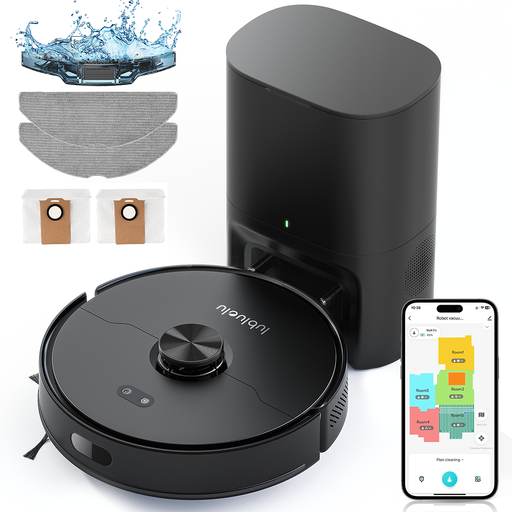 Image unavailable
Consider it for scheduling regular runs when your floors are clear. The model has a stated suction power of 4,000 Pa, laser navigation, storage for 5 maps and app control.
The stated 55 dB applies to standard mode. Check whether this mode meets your cleaning needs, and find out about battery life and maintenance before you choose.
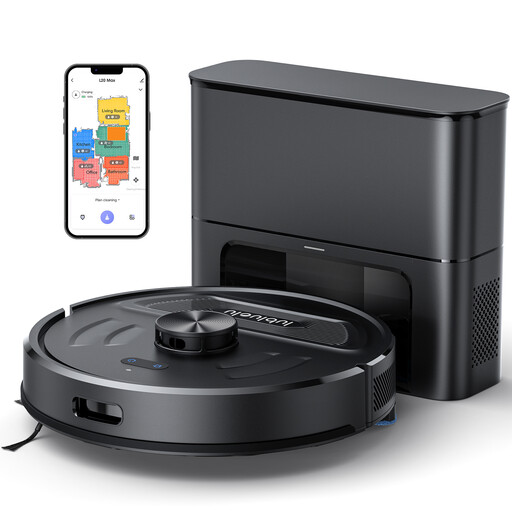 Image unavailable
Consider it if you want to automate cleaning runs and have an emptying station. The model has a stated suction power of 4,000 Pa, laser navigation, storage for 5 maps and app control.
Check separately which mode the stated 55 dB applies to and how noisy the docking station is. Make room for it, too, and consider the maintenance involved.
No. Check the model, power mode and the conditions the figure relates to. UFC-Que Choisir points out that, with a stick vacuum, the motorised brush and the characteristics of the sound can also affect how disruptive it feels.
It can be a good choice if quick clean-ups and easy storage are your priorities, provided its battery life in the power mode you need and its brush suit your floors. UFC-Que Choisir says that the stick vacuums it tested lasted around ten minutes on average at full power, and that suction can be more limited on thick carpets.
Not necessarily. UFC-Que Choisir reports that results vary depending on the type of floor. A robot can take care of regular runs, but you’ll still need to empty or maintain its dust container and consider the areas it finds harder to clean.
Use a lower-power mode when the state of your floors allows, and keep the brushes and wheels clear. Ecovacs says super or intensive mode is significantly noisier than standard mode. If your robot has an emptying station, remember to take this separate cycle into account, too.