
Livraison le jour même ou le lendemain

Qualité garantie

Débloquez vos offres de bienvenue: Livraison GRATUITE | Jusqu'à -80 % | 30 jours d'essai gratuits à JoyPlus
Téléchargez l'application
A pair of UV400 sunglasses can be your companion in the city, behind the wheel, while travelling or cycling. But the "UV400" label alone isn't enough to make the right choice. Between promises of total protection, fragile frames and lenses that aren't comfortable to wear, a poorly chosen pair can quickly end up at the back of a drawer.
Here are the criteria to examine before comparing foldable sunglasses, sports styles, polarised options or cat-eye frames.
The UV400 label indicates that the lenses are designed to block ultraviolet radiation up to 400 nm, according to the manufacturer's specifications. However, it says nothing about the lens tint or its ability to reduce reflections.
On the road, by the water or in front of glass surfaces, polarised sunglasses can reduce particularly annoying glare. An anti-reflective coating works differently: it cuts down reflections on the lens surface and can make vision more comfortable. These two technologies don't replace one another.
A very dark lens doesn't automatically guarantee sufficient UV protection. Check for the regulatory marking, the filter category and the compliance information.
For everyday use in the UK, categories 2 and 3 are generally the most versatile, depending on light conditions. Category 4 is very dark and not suitable for driving. When cycling, your sunglasses also need to stay firmly in place as the light changes or your effort increases.
A cat-eye or aviator frame can perfectly complement an outfit. However, if it's poorly fitted, it may press on your temples, slide down your nose or obstruct part of your field of vision. For lightweight sunglasses, pay close attention to the lens width, arm length and bridge width.
TR90 frames are popular for their lightness and flexibility. That doesn't make them indestructible, though: the hinges, lenses and surface coatings still need a degree of care.
Look for a clear UV400 indication, the CE marking where applicable, and a sufficiently detailed product description. The figures provided by manufacturers should be taken as the model's stated characteristics, not as a guarantee valid in every situation.
Nylon, polycarbonate and TAC lenses don't offer exactly the same properties. Polycarbonate is often used for sports sunglasses due to its impact resistance as claimed by manufacturers. For intensive use, also check the standards and certifications mentioned in the product description.
For wearing several hours at a time, look for:
Foldable sunglasses slip easily into a bag or glove compartment. However, their hinges should be operated in the intended direction without forcing the mechanism.
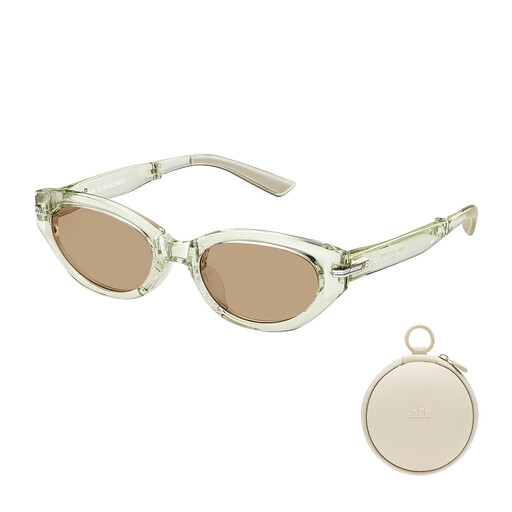
Why this choice suits this profile: A versatile option for discovering UV400 sunglasses, with a lightweight, foldable cat-eye frame suitable for daily wear, driving and travel.
The description mentions a foldable TR90 frame, soft nose pads and an OAR anti-reflective coating – features that address issues of portability, slipping and glare.
Nylon lenses stated as UV400, five-point spring hinges and dimensions suited to a standard face shape.
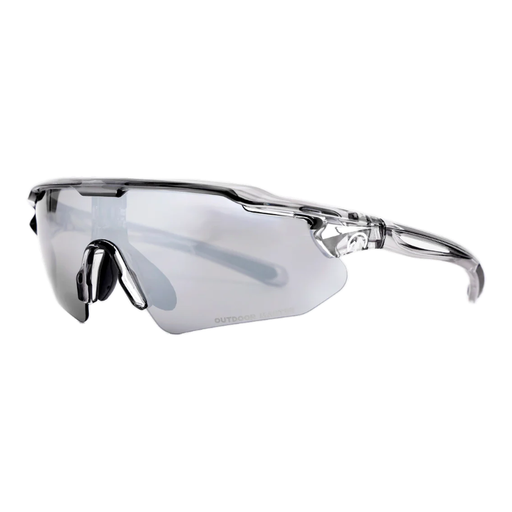
Why this choice suits this profile: This model combines photochromic and polarised lenses, adjustable nose pads and a lightweight frame for moving from the road to outdoor activities.
The combination of technologies is clearly stated, making it easier to distinguish light adaptation from glare reduction – two functions that are often confused.
Stated weight of 26 to 29 g, polycarbonate lenses, UV400 protection and an inner frame designed to accommodate prescription lenses.
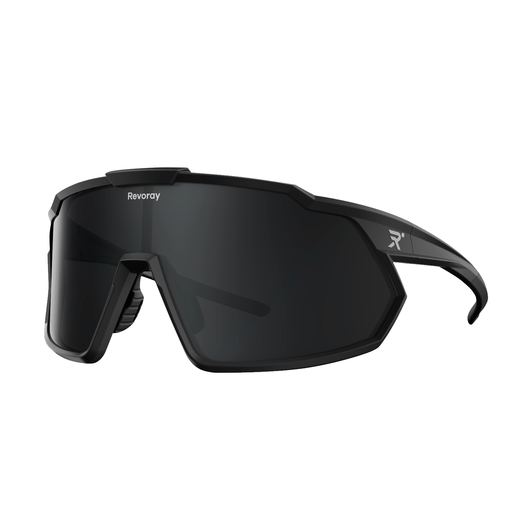
Why this choice suits this profile: A model designed for cycling, regular commutes and outings where stability, peripheral vision and stated durability matter more than urban style.
The description details the grip provided by the silicone nose pads and arms, as well as the water-repellent and oleophobic coatings, rather than just promising lightness.
Polarised TAC lenses, stated light transmission of approximately 15.2%, weight of around 33 g and declared UV400 protection.
We've put together a comprehensive, real-time updated list of products that meet these strict selection criteria as well as European safety regulations.
How long a pair lasts depends on how often you wear them, scratches and the care you give the hinges. To keep them in good condition:
UV400 protection relates to ultraviolet rays. Driving also depends on the filter category, the tint and the visibility offered by the lenses. Check the product marking and avoid category 4 lenses at the wheel.
They serve different needs. Polarisation reduces certain reflections, while photochromic technology changes the lens tint depending on UV exposure. For driving, check how the lenses behave behind the windscreen.
Replace them when the lenses are scratched or distorted, or when the frame no longer stays in place properly. A loose hinge can also affect the fit and reduce comfort, even if the UV400 marking is still visible.