
Livraison le jour même ou le lendemain

Qualité garantie

Débloquez vos offres de bienvenue: Livraison GRATUITE | Jusqu'à -80 % | 30 jours d'essai gratuits à JoyPlus
Téléchargez l'application
Choosing a new pair of sunglasses can be a daunting task. Between marketing jargon and technical specs, it's easy to get lost. Yet the goal is simple: find the pair that effectively protects your eyes, matches your style and activities, and does it all without making you pay for unnecessary features.
Before we present our selection, let's review the most common pitfalls to avoid any buyer's remorse.
To avoid falling into these traps, focus on a few objective technical criteria. They are the true test for evaluating the quality and suitability of a pair of sunglasses.
This is THE essential criterion for your eye health. The UV400 label guarantees that the lenses block 99% to 100% of ultraviolet rays with a wavelength up to 400 nanometres, which covers all UVA and UVB rays. In Europe, the CE mark on sunglasses requires compliance with this standard. Always remember to check for it.
The comfort and lifespan of your glasses largely depend on their frame.
Beyond basic protection, lens treatments enhance visual comfort in specific situations.
To help you see things more clearly, here's how these criteria apply to a few models tailored for specific needs.
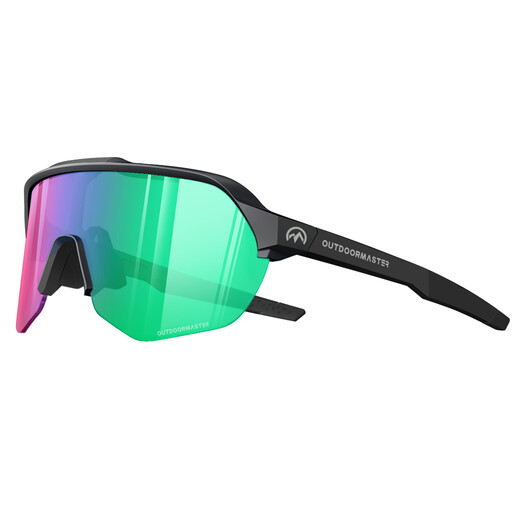
Why it's a great choice: Built for action, they combine a robust yet lightweight frame with high-performance lenses. A must-have for fishing, golf, or driving, where glare reduction is crucial.
Its TR90 frame ensures excellent durability against impacts, while its UV400 polarised lenses offer total protection and a crisp view, far beyond a simple tint.
The included interchangeable lenses allow you to adapt to low-light conditions, offering outstanding versatility.
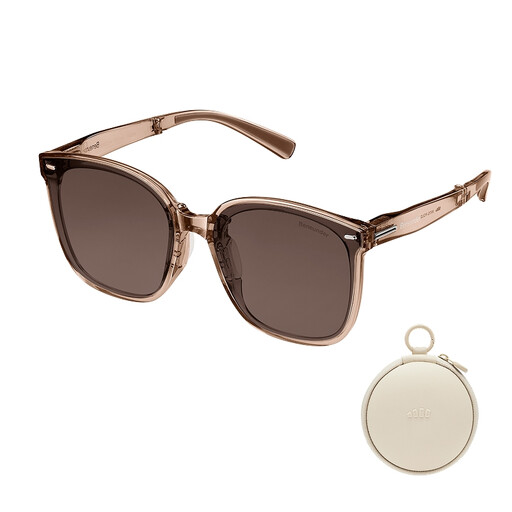
Why it's a great choice: For those who are conscious of every square inch in their bag, these foldable sunglasses are the solution. They combine a trendy oversized women's sunglasses style with maximum portability.
Their patented foldable design doesn't sacrifice sturdiness, thanks to the TR90 frame. The UV400 protection and anti-reflective coating are all present, ensuring first-class visual comfort.
Ultra-compact when folded (35 mm thick) and feather-light (26 g), they slip into any pocket or bag.
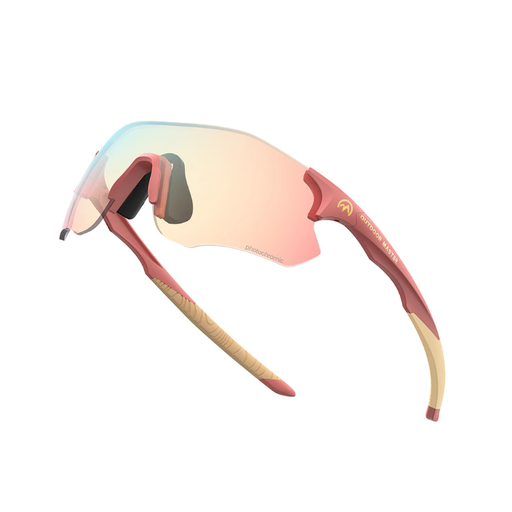
Why it's a great choice: For cyclists and runners who move between sunny areas and shady patches, photochromic technology is a game-changer. No more fumbling with your glasses or taking them off.
This model avoids the fixed-tint trap by automatically adjusting to ambient light. Its shape-memory TR90 frame ensures a secure and comfortable fit during exercise.
The photochromic lenses shift from Category 0 (clear) to Category 3 (dark), ensuring optimal vision in all conditions.
Discover our complete and up-to-date selection of products that meet our strict selection criteria and European safety standards.
They are two distinct technologies that address different needs. UV400 protection is an essential safety barrier: it shields your eyes from invisible and harmful ultraviolet rays. Polarised lenses, on the other hand, are a comfort technology that reduces glare caused by reflected light. Ideally, a good pair of sunglasses combines both.
Yes, and the difference is significant. Standard plastic (like polycarbonate) can become brittle over time and with temperature changes. TR90, however, is a shape-memory material: it can be twisted or bent and will always return to its original shape. It is also more impact-resistant and lighter, making it much more comfortable to wear for long periods.
That's an excellent point. Most photochromic lenses react to UV rays. The problem? Modern car windscreens block almost all of these same rays. As a result, many standard photochromic models will not darken, or will darken very little, inside a vehicle. For driving, it is therefore often wiser to opt for polarised sunglasses with a fixed tint (Category 2 or 3).