
Livraison le jour même ou le lendemain

Qualité garantie

Débloquez vos offres de bienvenue: Livraison GRATUITE | Jusqu'à -80 % | 30 jours d'essai gratuits à JoyPlus
Téléchargez l'application
Whether you’re cycling, driving, hiking or relaxing by the water on holiday, UV400 polarised sunglasses seem to tick all the boxes. Yet certain details that are often overlooked can turn a promising pair into an uncomfortable, impractical accessory that’s ill-suited to your activity.
Before you place your order, keep three common pitfalls in mind:
The UV400 label means the lenses are claimed to filter ultraviolet radiation up to 400 nm. On its own, it doesn’t guarantee reduced glare. Polarisation primarily works on reflective surfaces such as water, snow, wet tarmac or car bodywork.
To choose anti-glare sunglasses, check both features separately. Visible light transmission (sometimes given as the VLT percentage) also provides a useful benchmark: a VLT of 12 % lets through far less light than a VLT of 48 %. Very dark lenses are pleasant under blazing sun, but become less practical as light levels drop.
For driving, prioritise clear vision and a frame that stays securely in place. Polarised lenses can reduce certain reflections, but should not be worn at night if the product page advises against it.
TR90 is a material commonly used to make lightweight sunglasses. The models featured here weigh between approximately 25.5 g and 29 g, depending on the version. This low weight can reduce pressure on your nose and ears during extended wear.
However, weight isn’t everything. You should also check:
Polarised cycling sunglasses with an adjustable nose bridge and wraparound lenses will generally stay in place better on rough roads. A foldable pair, on the other hand, prioritises storage and portability.
Fogging often occurs during intense exercise, in cool weather, or when the frame sits very close to your face. A ventilated design encourages airflow, without guaranteeing a total absence of condensation.
Anti-fog sports sunglasses therefore deserve careful scrutiny: look at the lens shape and the presence of ventilation openings. If you frequently move between sun, cloud and shaded areas, photochromic sunglasses can be a practical solution. Interchangeable lenses offer another option: they let you switch to a lighter tint when brightness drops, provided you handle them with care.
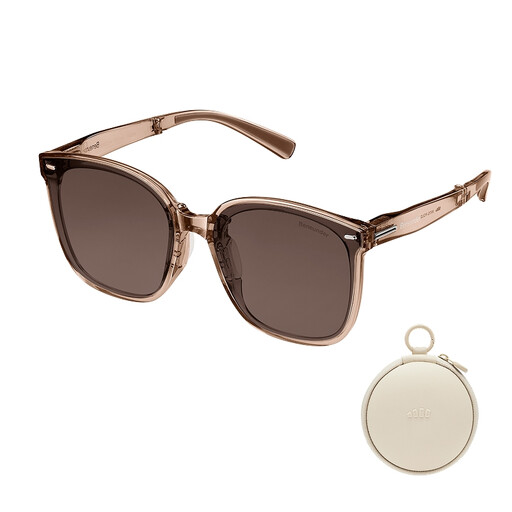
Why this suits this profile: this model is ideal for everyday use, urban commutes and travel thanks to its foldable design and claimed weight of 26 g. Several colour options are available to match your preferences.
The product page states UV400 protection and an anti-reflective coating. The foldable format also reduces the chance of leaving your sunglasses at home due to lack of space.
TR90 frame, three-fold design, claimed folded thickness of 35 mm and protective lens treatment.
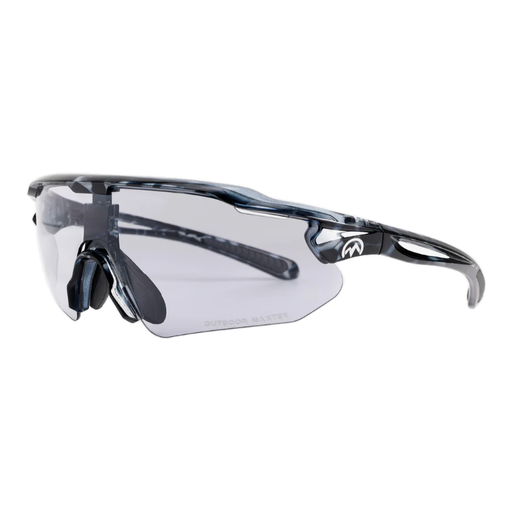
Why this suits this profile: regular cyclists and travellers who frequently move from full sun to shaded sections will appreciate the combination of photochromic and polarised lenses.
The tint, claimed to adapt to light intensity, addresses the problem of changing brightness. The adjustable nose pads also allow you to fine-tune the fit.
TR90 frame, polycarbonate lenses, claimed weight of 26 to 29 g and enhanced peripheral vision according to the product page.
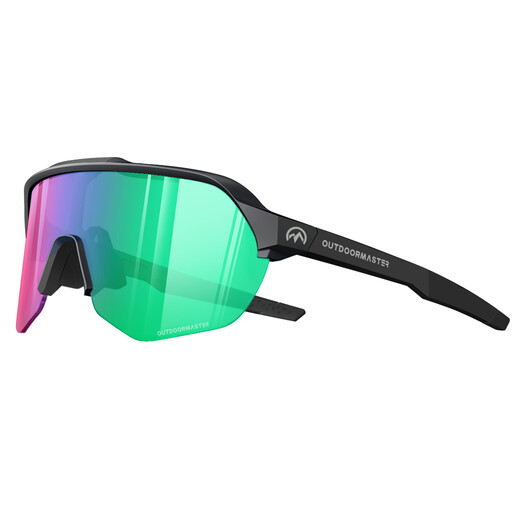
Why this suits this profile: this pair targets activities such as fishing, golf, sailing, baseball, cycling and daytime driving. A spare clear lens is included.
The interchangeable lenses mean you don’t have to keep a dark tint when the weather turns overcast. The supplied hard case helps prevent scratches during transport.
TR90 frame, polarised lenses claimed as UV400, clear lens included and a VLT rate of 48 % for this version.
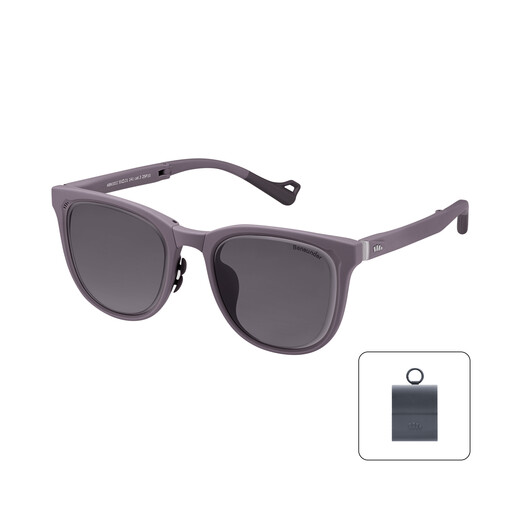
Why this suits this profile: its Boston silhouette and foldable design make it ideal for daily commutes, trips and storage in a small bag.
The adjustable arms and dual-axis nose pads minimise issues caused by an approximate fit. The claimed treatments also simplify daily maintenance.
TR90 frame, nylon lenses with claimed UV400 protection, anti-reflective, oleophobic and scratch-resistant treatments.
We’ve put together a comprehensive, real-time selection of products that meet these demanding criteria as well as European safety regulations.
The lifespan of your sunglasses depends mainly on impacts, scratches and how you store them. Clean the lenses with a clean microfibre cloth, without any abrasive product, then place the pair in its case. Avoid putting the lenses directly on a table or leaving your sunglasses on a car dashboard in full sun.
Replace the pair if the lenses are scratched or warped, or if the frame no longer holds properly. A damaged lens can impair visibility, even if UV protection is still stated on the packaging.
They can be suitable for daytime driving if their tint, light transmission and fit are appropriate for that use. Always check the manufacturer’s warnings. Very dark models, or those advised against in low light, should not be worn at night.
Polarised lenses reduce certain reflections, while photochromic lenses adjust their tint according to brightness. A single pair can combine both technologies, as is the case with some polarised cycling sunglasses. However, their behaviour may vary depending on conditions and the environment.
Choose a ventilated frame, adjust the nose pads correctly, and avoid wearing the sunglasses too close to your face if it blocks the ventilation openings. Wipe the lenses with a clean microfibre cloth and follow the care instructions. Good ventilation reduces the risk of fogging, but cannot eliminate it in every situation.