
Livraison le jour même ou le lendemain

Qualité garantie

Débloquez vos offres de bienvenue: Livraison GRATUITE | Jusqu'à -80 % | 30 jours d'essai gratuits à JoyPlus
Téléchargez l'application
A pair of UV400 folding sunglasses can quickly become the essential accessory to keep in a bag, glovebox or suitcase. But mentions like “UV400”, “sport” or “unbreakable” aren’t enough to make the right choice. Fragile hinges, lenses that are too dark for driving, or a frame that doesn’t suit your face shape – a few small details can turn a practical purchase into a wasted expense.
The Joybuy Product Recommendation Officer’s selection is therefore based on concrete criteria: stated protection level, materials, weight, dimensions, lens type and intended use. Here are the points to check before comparing models.
The UV400 label means the lenses filter ultraviolet rays up to 400 nm. It does not, however, mean they are polarised. Polarised sunglasses use a different technology, designed to reduce glare reflected from water, roads or windows.
For fishing, sailing or very bright journeys, polarisation can make a real difference. That said, it doesn’t replace the need to check the conformity marking and the filter category stated on the product.
A very dark lens isn’t necessarily more protective. The visible light transmission, sometimes shown as VLT, also deserves your attention. Some OutdoorMaster models, for example, display a VLT of 12%, 17% or 48% depending on the version. A very low tint may suit strong outdoor light, but it demands extra caution behind the wheel, especially in tunnels or when conditions change quickly.
For sunglasses for driving, always check the manufacturer’s guidance and the filter category. Tinted lenses must not be worn at night.
A lightweight frame often improves comfort, but its weight alone isn’t enough to judge its durability. TR90 is valued for its flexibility and lightness. A frame made from this material still needs careful handling, particularly when it’s foldable. Nylon or polycarbonate lenses can offer impact resistance as stated by the manufacturer, but that doesn’t replace protection designed for industrial use.
Look for a clear indication of UV400 protection, along with the compliance information on the product page and packaging. Mentions like “99.9% of UV rays” or “glare reduction” correspond to the features communicated by the brand – they don’t necessarily constitute an independent general guarantee.
An anti-glare or anti-reflective treatment can improve visual comfort in certain situations. It doesn’t automatically change the lens’s filter category.
Lightweight sunglasses can be easy to forget you’re wearing during a whole day outdoors. However, how well they stay in place also depends on the bridge shape, arm length and your face shape. Before ordering, compare:
Some Beneunder models feature adjustable arms or dual-axis nose pads. OutdoorMaster sports models include, depending on the reference, adjustable nose pads and silicone elements.
A pair of sunglasses for travel needs to pack away easily, but its folding mechanism doesn’t replace a case. The Beneunder FD421 uses a three-part construction, with a stated folded thickness of 3.5 cm and a weight of 26 g. The Boston FD01h model shows, according to its product page, a folded thickness of around 2.9 cm and a weight of 27.5 g.
Clean the lenses with a microfibre cloth, never with paper or an abrasive household cleaner. Store them in their case and avoid leaving them in a car exposed to high heat.
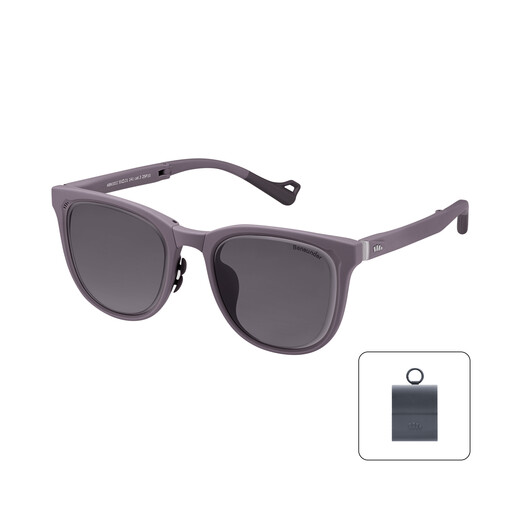
Why this model stands out: Its Boston-style silhouette pairs easily with everyday outfits, while its folding design lets you slip it into a bag or glovebox.
The product page mentions a flexible TR90 frame, arms adjustable to three positions, and anti-reflective, oleophobic and scratch-resistant treatments.
Nylon lenses stated as UV400, a claimed weight of 27.5 g and dual-axis butterfly nose pads.
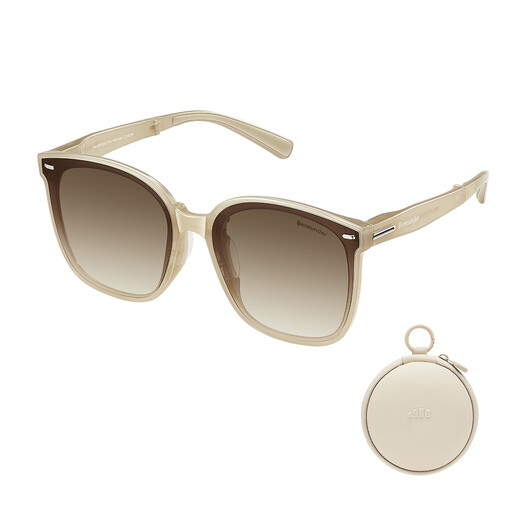
Why this model stands out: Its oversized shape and range of colours should suit those looking for easy-to-carry sunglasses.
At just 3.5 cm thick when folded, the model takes up very little space. Its TR90 frame also avoids the need for a heavier metal structure.
A claimed weight of 26 g, UV400 nylon lenses, an anti-reflective treatment and several colour options including beige, black, pink and light grey.
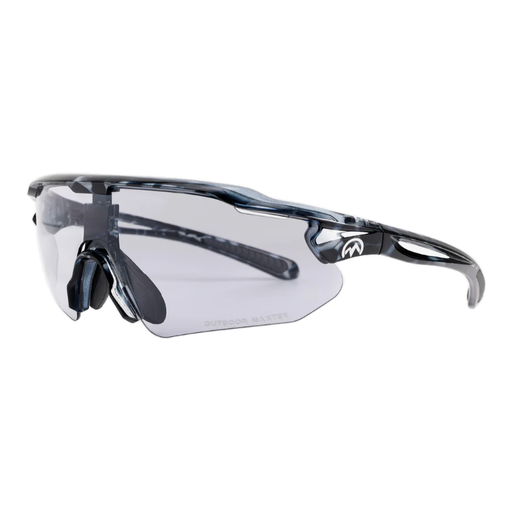
Why this model stands out: It’s designed for cycling, golf and outdoor activities that demand a secure fit and good adaptation to changing light conditions.
The product page mentions adjustable nose pads, memory-retention arms and a ventilated design intended to reduce fogging.
Lenses stated as photochromic, polarised and impact-resistant, with a weight between 26 and 29 g depending on the version.
We’ve put together an updated selection of products that meet these criteria, with detailed information to help you compare styles, lenses and uses.
They can be suitable during the day if the filter category, tint and conformity marking are appropriate. Make sure your vision remains clear enough in shaded areas and tunnels. Tinted lenses must not be worn at night.
No. Polarisation reduces certain reflections, while photochromic technology changes the lens tint depending on the light level. A model can combine both technologies, but you need to confirm this on its product page.
Fold and unfold the glasses by handling the arms as intended, without forcing the hinges. Clean the lenses with a microfibre cloth, use a hard case and replace the pair if the lenses become heavily scratched or damaged.