
Livraison le jour même ou le lendemain

Qualité garantie

Débloquez vos offres de bienvenue: Livraison GRATUITE | Jusqu'à -80 % | 30 jours d'essai gratuits à JoyPlus
Téléchargez l'application
A pair of UV400 folding sunglasses can easily slip into a bag, glovebox or suitcase. But not all compact frames are created equal. Between promises of protection, fragile hinges and sometimes vague dimensions, some purchases can quickly disappoint.
Before comparing models, there are three pitfalls to avoid:
UV400 protection means the lenses are designed to filter ultraviolet rays up to 400nm, according to the information provided by the manufacturer. This is the first thing to check for outdoor use, travel or driving in bright conditions.
However, these different features should not be confused:
Sunglasses described as "anti-glare" are not necessarily polarised anti-glare sunglasses. It is better to consult the technical specifications than to deduce the technology used from a simple marketing claim.
TR90 is a lightweight, flexible polymer often used for frames intended for everyday wear. In this selection, the Beneunder models feature a TR90 frame, with folding versions designed to take up minimal space.
To choose lightweight sunglasses, also consider:
A flexible frame alone does not guarantee good comfort. A model that is too wide may slip, while one that is too narrow can put pressure behind the ears.
The main advantage of a pair of travel sunglasses is measured once the frame is folded. The Beneunder FD421 model, for example, is stated to have a three-part fold, a thickness of 35mm when closed and a weight of 26g. The Boston FD01h model has a folded thickness of 1.15 inches, approximately 2.9cm, and a weight of 0.97 ounces, approximately 27.5g.
To avoid unpleasant surprises, check whether a case is included and always store the lenses with a microfibre cloth. Also avoid placing the sunglasses lens-side down on a table or in a bag full of metal objects.
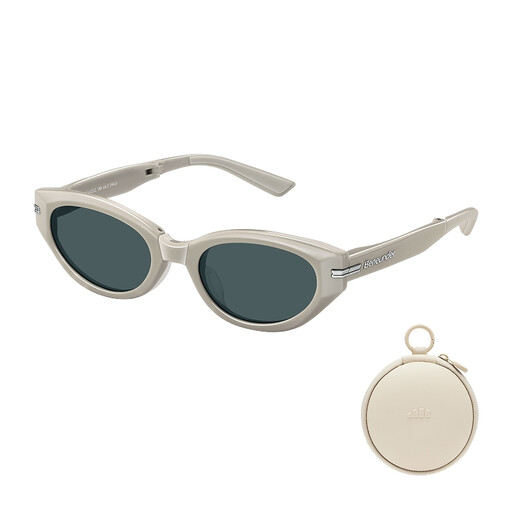
Why this choice suits this profile: The grey and brown cat-eye silhouette works well for everyday wear, while the foldable format tucks easily into a bag or glovebox.
The specification mentions a foldable TR90 frame, five-point spring hinges and soft zones at the nose and temples.
High-definition nylon lenses, UV400 protection and OAR anti-reflective coating as stated in the product specification.
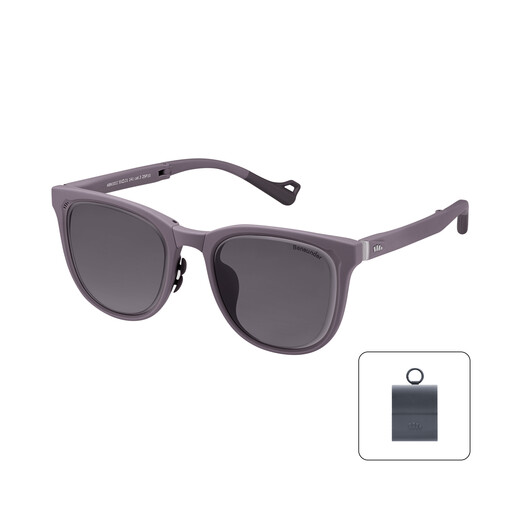
Why this choice suits this profile: The Boston shape offers a smart, versatile look, with several adjustment options to tailor the fit to different face shapes.
The three-position adjustable arms and dual-axis nose pads mean you don't have to put up with an approximate fit.
UV400 nylon lenses with anti-reflective, oleophobic and scratch-resistant coatings as stated by the manufacturer.
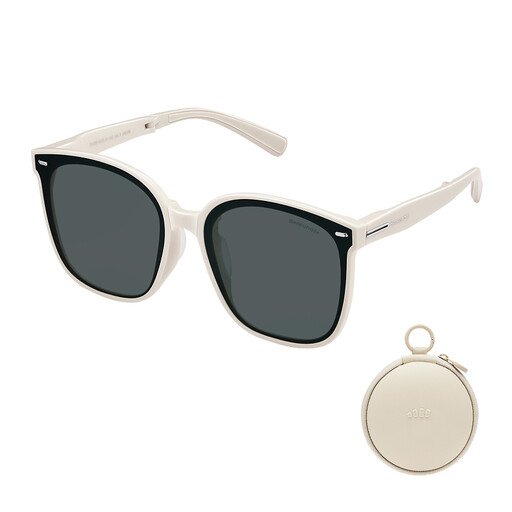
Why this choice suits this profile: The large lenses are ideal for those who want wider visual coverage for commutes, holidays and outdoor activities.
The stated weight of 26g and folded thickness of 35mm provide concrete benchmarks for size, rather than relying on a simple promise of lightness.
TR90 frame, three-part fold, UV400 lenses and OAR anti-reflective coating with glare reduction as stated in the specification.
We have put together a comprehensive, real-time updated selection of products that meet these strict criteria as well as European safety requirements.
Fold the frame gradually, without forcing the arms and without reversing the intended folding direction. To preserve the lenses and their surface treatments:
The lifespan depends on how often they are folded, storage conditions and exposure to knocks. A deep scratch or a hinge that becomes loose are good signs that it is time to replace the pair.
They can be practical for driving in bright conditions, provided the tint, filter category and product marking are suitable for this use. The UV400 label alone does not indicate polarisation or the sun filter category. Check the model's specification before buying and avoid wearing them when the light is insufficient.
The UV400 label indicates filtration of ultraviolet rays up to 400nm. Polarised sunglasses, on the other hand, use a filter designed to reduce certain directional reflections. The same pair can combine both features, but the technical specification must explicitly mention polarisation.
Use a rigid or semi-rigid case, fold the frame completely and keep the lenses away from keys and metal objects. Cleaning with a microfibre cloth also helps to limit micro-scratches caused by dust.