
Livraison le jour même ou le lendemain

Qualité garantie

Débloquez vos offres de bienvenue: Livraison GRATUITE | Jusqu'à -80 % | 30 jours d'essai gratuits à JoyPlus
Téléchargez l'application
A pair of UV400 foldable sunglasses slips easily into a pocket, a travel bag or a glove compartment. But not all compact frames are created equal. Fragile hinges, poorly documented protection or lenses that are too dark for driving – an accessory designed to simplify your life can quickly end up at the back of a drawer.
Here are the points to consider before choosing sunglasses for everyday wear, commuting, travel or outdoor activities.
The UV400 label means the lenses filter ultraviolet radiation up to 400 nm. It does not, however, mean they reduce reflections on the road, water or snow. To limit glare, look instead for polarised lenses or an anti-reflective coating that is clearly stated.
Polarisation can improve visual comfort during the day, but it does not replace UV protection. These two features address different needs.
A foldable design is only truly practical if the hinges remain flexible and the frame holds its shape. Forced opening, storing without a case or folding in the wrong direction can accelerate wear and tear.
A model with reinforced hinges, a flexible frame and a rigid case will give you greater peace of mind, whether for travel or daily commutes.
Very dark lenses do not necessarily filter UV rays better. When driving, the tint and the amount of visible light transmitted also matter. Sunglasses that are too dark can impair your perception in shaded areas or when entering a tunnel.
For driving, check the manufacturer's guidance and avoid wearing sunglasses at night. The products presented here are not designed for direct sun observation or for work requiring industrial protection.
UV400 protection is an essential criterion for sunglasses intended for outdoor use. Check the product page to confirm this is stated, then verify the compliance information, the CE marking where required and any solar category indications.
A phrase such as "blocks at least 99.8% of UV rays", when it appears on a product page, should be understood as data provided by the manufacturer. It does not constitute medical advice.
TR90 is a flexible polymer frequently used to make lightweight sunglasses. It generally offers good flexibility and withstands everyday wear and tear well. The final quality, however, also depends on the hinges, the arms and the assembly.
For prolonged wear, check the weight, the frame width, the arm length and the presence of nose pads or anti-slip zones. A lightweight frame should not slide off at the slightest movement.
Polarised lenses reduce certain reflections from horizontal surfaces. They are particularly useful for fishing, sailing, cycling or daytime driving. Anti-reflective, oleophobic and scratch-resistant coatings can also make maintenance easier, without making the lenses unbreakable.
For sport, choose sport sunglasses that offer a secure fit and impact-resistant lenses. For travel, compactness, the case and ease of cleaning may be more important than a very dark tint.
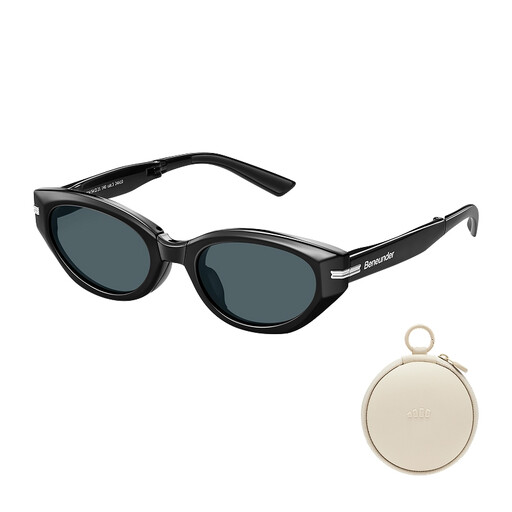
Why this choice suits this profile: Its black cat-eye silhouette pairs easily with everyday outfits, while the foldable design keeps it compact in a bag or glove compartment.
The product page mentions a foldable TR90 frame, five-point spring hinges and compact storage.
High-definition nylon lenses, stated UV400 protection and OAR anti-reflective coating according to the product page.
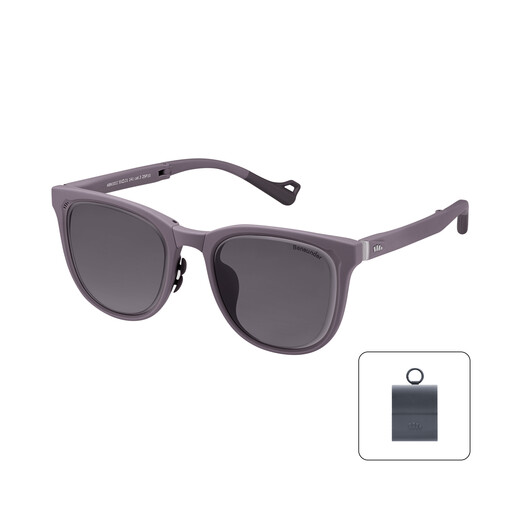
Why this choice suits this profile: Its Boston shape and adjustable arms cater to those seeking a refined finish and a more personalised fit.
The folding design is paired with three-position adjustable arms and dual-axis nose pads, rather than just a compact frame.
TR90 frame, nylon lenses with stated UV400 protection and anti-reflective, oleophobic and scratch-resistant coatings according to the description.
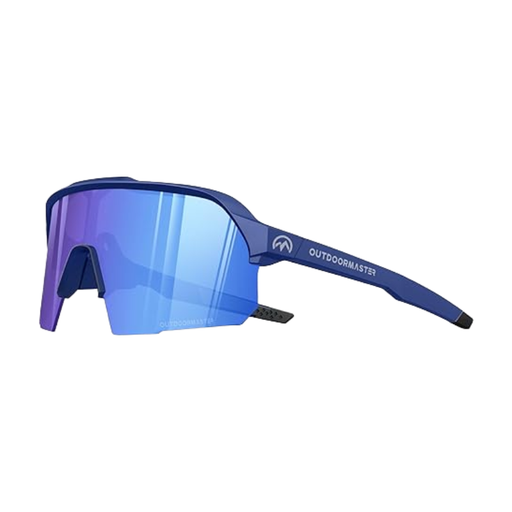
Why this choice suits this profile: This model is designed for cycling, golf, fishing, sailing or daytime driving, with a design intended to stay securely in place during outdoor activities.
The memory-shape TR90 frame and rigid case reduce risks associated with movement and transport.
Polarised lenses with stated UV400 protection, interchangeable clear lens and cleaning cloth included.
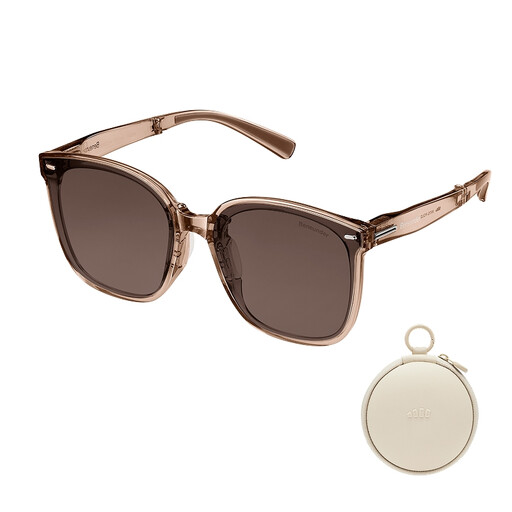
Why this choice suits this profile: Its oversized shape covers a large area of the face, while the foldable design makes it easy to store during journeys and holidays.
The product page specifies a three-part fold, a thickness of 35 mm when folded and a stated weight of 26 g.
Nylon lenses, stated UV400 protection and OAR anti-reflective coating claimed to reduce reflections.
We have selected a comprehensive, real-time updated list of products that meet these demanding criteria as well as European safety regulations.
They can be suitable for daytime driving, provided the tint, solar category and visibility remain appropriate. Driving sunglasses should reduce glare without hindering your ability to read signs or perceive contrasts. Do not wear standard sunglasses at night and always check the manufacturer's warnings.
It all depends on the quality of the hinges, how often you fold them and how you care for them. Clean the lenses with a microfibre cloth, avoid household cleaning products and store the sunglasses in their case. Replace them if the lenses become scratched, warped or damaged.
No, they are not essential, but they can reduce certain reflections on the road, water or glass surfaces. For travel, compare the stated UV400 protection, weight, folding mechanism, lens durability and whether a case is included.