
Livraison le jour même ou le lendemain

Qualité garantie

Débloquez vos offres de bienvenue: Livraison GRATUITE | Jusqu'à -80 % | 30 jours d'essai gratuits à JoyPlus
Téléchargez l'application
Protecting yourself from the sun is essential, but finding the right accessory can be a real challenge. The UV protection umbrella seems like an easy solution, but the market is flooded with models whose promises often fall short. To avoid buyer's remorse, it's crucial to know the most common pitfalls.
Who hasn't cursed at an umbrella that flips inside out at the first gust of wind, or a supposedly "compact" model that devours half your handbag? To avoid these unpleasant surprises, here are the points to check before you buy.
To ensure you're investing in an umbrella that combines protection, durability, and practicality, here are the technical specifications to scrutinise.
The only true indicator of effective sun protection is the Ultraviolet Protection Factor (UPF) rating. A UPF 50+ umbrella is the absolute gold standard: its canopy blocks over 98% of UVA and UVB rays. This is what separates a simple parasol from a genuine shield against the sun's harmful effects. Insist on this rating on the product sheet.
An umbrella's longevity depends entirely on its frame. The best models combine materials that are both lightweight and robust.
For daily use, a mini travel umbrella or an ultra-compact model is ideal. Keep an eye on these three points:
There's an ideal umbrella for every profile. To help you find yours, here are our recommendations, categorised by use case.
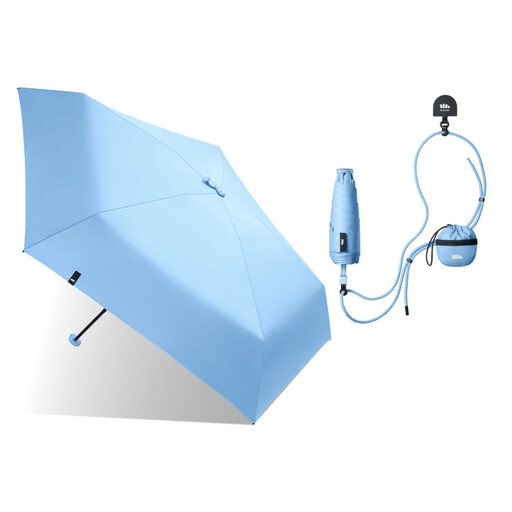
Its strong suit: Designed for those who count every gram. Its feather-light weight (around 150g) and ultra-slim profile (around 5cm) mean it can be slipped into a jacket pocket or a small bag and completely forgotten.
It directly tackles the trap of deceptive compactness. Here, the small dimensions aren't a marketing gimmick—they are the very core of the product.
Absolute portability thanks to its carbon and aluminium alloy frame and its ultra-light 20D canopy, all without sacrificing UPF 50+ protection.
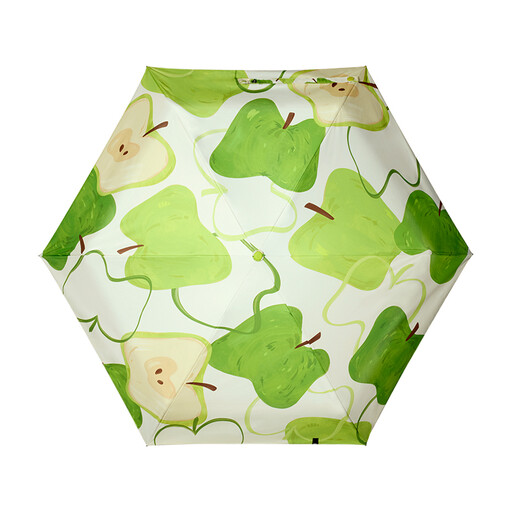
Its strong suit: The perfect ally for those who want a sun and rain umbrella. It combines UPF 50+ protection with a water-repellent treatment for express drying. Special mention for its clever carrying case, which can be held by hand or worn as a crossbody.
It avoids the fragility trap with its robust fibreglass and aluminium alloy frame, supported by 6 reinforced ribs for excellent wind resistance.
Versatility and durability. Its dual sun/rain purpose and solid construction make it a reliable travel companion in any weather.
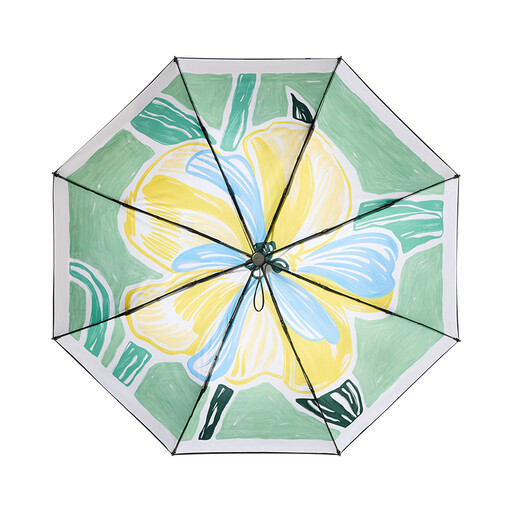
Its strong suit: Aimed at those who want zero compromise on coverage. With its wide 99 cm diameter canopy, it fully covers the body. Its double-layer canopy even optimises thermal insulation for a welcome cooling effect.
It shatters the trap of symbolic protection. Its double-layer canopy and wide span guarantee sun and thermal protection that is well above average.
Coverage and thermal comfort. Its large dome protects the entire body, while the double-layer canopy acts as a highly appreciated heat shield under a scorching sun.
Explore our complete selection of umbrellas that meet our strictest quality and performance criteria.
A standard black umbrella provides shade and reduces the feeling of heat, but its fabric filters very few, if any, ultraviolet (UV) rays. In contrast, a UV protection umbrella has a special coating or a dense weave certified UPF 50+, which guarantees it blocks over 98% of harmful rays. The protection, therefore, comes not from the colour, but from the canopy's technology.
To preserve your umbrella's properties, the golden rule is to always let it dry completely open after a downpour. This prevents mould and the degradation of the coating. To clean it, a simple damp cloth is sufficient; never use harsh detergents. Finally, store it in its sleeve to protect it from dust and friction.
No, absolutely not. A sun protection umbrella is an excellent shield, but it is in no way a substitute for good sunscreen. Don't forget that UV rays are reflected by many surfaces (sand, water, concrete...). For optimal protection, the best strategy is to combine an umbrella, sunscreen, sunglasses, and protective clothing.