
Livraison le jour même ou le lendemain

Qualité garantie

Débloquez vos offres de bienvenue: Livraison GRATUITE | Jusqu'à -80 % | 30 jours d'essai gratuits à JoyPlus
Téléchargez l'application
The sun is out in full force, but it can quickly turn into a nightmare for your skin. While our grandmothers' parasols have an old-fashioned charm, the modern UV protection umbrella has established itself as a smart and essential accessory for everyone from busy city dwellers to long-haul travellers. The problem? The market is flooded with marketing promises that rarely hold up in the real world.
To avoid buyer's remorse, you need to learn how to spot the deals that are too good to be true. Here are the three traps to avoid to ensure you invest in a model that will genuinely protect you, season after season.
To avoid falling for the hype, rely on objective technical criteria. This is the only true guarantee of the quality and durability of your future sun and rain umbrella.
The non-negotiable criterion is the Ultraviolet Protection Factor (UPF). Forget vague promises. Demand UPF 50+ certification, the highest existing protection grade. It guarantees that the fabric blocks over 98% of UVA and UVB rays. This performance is achieved through high-density canopies and specific treatments, notably a black inner lining (the famous black coating), which absorbs light and heat for a welcome cooling sensation.
The lifespan of a folding umbrella depends on its skeleton. Entry-level models often use basic metal ribs that bend at the first gust of wind. For a truly wind-resistant umbrella, opt for frames that combine lightness and strength:
The number of ribs (usually between 6 and 8 for a compact model) also contributes to the overall stability.
For daily use or travel, every gram and centimetre counts. A compact umbrella must live up to its promise.
Keeping an eye on these two figures will help you avoid the classic disappointment of a travel umbrella... that gets left at the hotel because it's too bulky.
To move from theory to practice, here are a few models that perfectly illustrate these criteria, each suited to a different user profile.
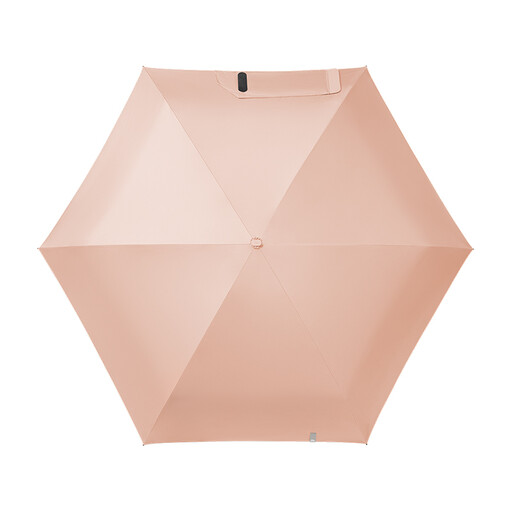
Why we love it: Designed for those who count every gram. Weighing in at 170g and measuring just 15.5 cm when folded, it's completely unnoticeable in a handbag or jacket pocket. The perfect ally for daily commutes and spontaneous outings.
It avoids the "false compactness" trap with numbers that speak for themselves: its feather-light weight and tiny dimensions are real, without compromising on protection.
Unbeatable portability, combined with certified UPF 50+ protection and a solid aluminium and fibreglass frame.
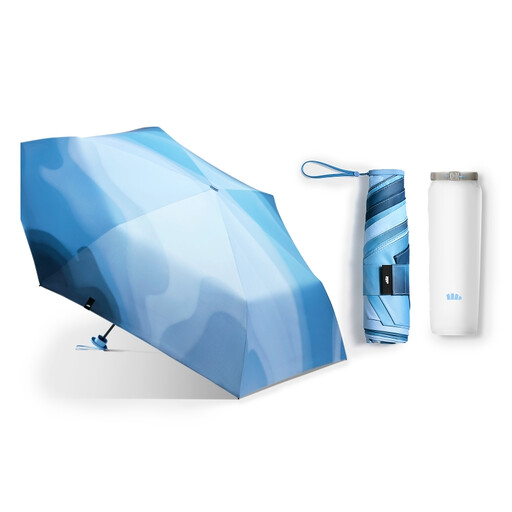
Why we love it: The ideal companion for those seeking a balance between a comfortable canopy size and rock-solid durability. Its reinforced aluminium alloy and fibreglass frame is built for the wind, while its water-repellent canopy and waterproof sleeve make it a perfect 2-in-1 for sun and rain.
It tackles the "hidden fragility" trap by relying on a reinforced frame and quality materials. A reliable solution so you don't have to buy a new umbrella for every trip.
Durability and versatility. Its design makes it capable of handling varied conditions, making it an excellent travel umbrella.
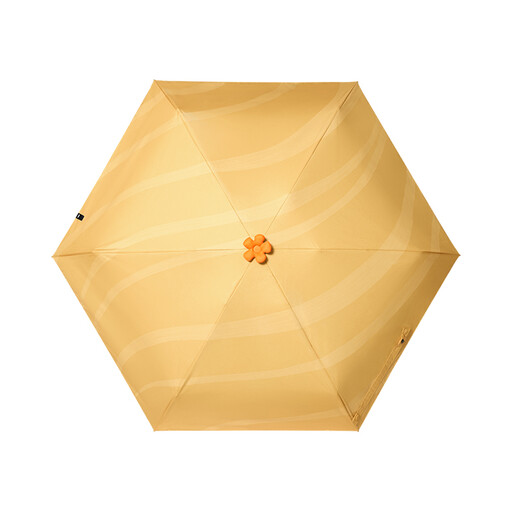
Why we love it: For those who see an umbrella as a fashion statement in its own right. Its 3D floral design and original cactus-shaped crossbody case add a touch of flair without sacrificing protection and strength.
It proves that an original design doesn't mean it's flimsy. By incorporating a solid aluminium alloy and fibreglass frame, it doesn't sacrifice durability for style.
A standout design and a clever carrying case that transform a practical object into a true fashion piece.
We have selected a full range of products that meet all our criteria for quality and performance.
Yes, and the difference is significant. A standard umbrella puts you in the shade, which is pleasant, but its canopy lets a large portion of UV rays pass through. In contrast, a UV protection umbrella with UPF 50+ certification is designed with a fabric and coating that block over 98% of UVA and UVB rays. The protection for your skin is therefore real and measurable.
It's simple, but crucial. After a downpour, always let it dry completely open to prevent rust on the frame and mildew on the canopy. To clean it, a simple damp cloth is all you need. Above all, do not use detergents, as they could damage the UV-protective and water-repellent coatings. Once dry, store it in its sleeve to protect the fabric and mechanism.
Not necessarily! That's a common misconception. Wind resistance doesn't depend on weight, but on smart design and quality materials. Modern models that use fibreglass for the ribs and an aluminium alloy for the shaft are both very light and incredibly flexible. A good wind-resistant umbrella will bend in a gust without breaking, whereas a heavy but overly rigid model will snap clean.