
Livraison le jour même ou le lendemain

Qualité garantie

Débloquez vos offres de bienvenue: Livraison GRATUITE | Jusqu'à -80 % | 30 jours d'essai gratuits à JoyPlus
Téléchargez l'application
With summers becoming more intense, UV protection is no longer just about sunscreen. The UV protection umbrella has emerged as a smart and effective ally. The problem?: the market is flooded with models making sometimes dubious claims. To help you navigate your options, our editorial team has broken down the topic. Here are the pitfalls to avoid and the essential criteria for making the right choice.
Before you fall for the first model you see, it's best to be aware of the common mistakes that can turn a promising purchase into a major disappointment.
To ensure you're investing in a high-performance accessory that will stand the test of time, here are the three key points to examine closely.
The UPF rating measures the amount of UV radiation blocked by a fabric. A UPF 50+ umbrella is the gold standard for high protection?: it means the fabric blocks at least 98% of UV rays. Technologies like black inner linings (often called Black Coating) are designed to absorb light and heat, providing a noticeable cooling effect underneath the canopy.
A folding umbrella should be easy to carry, but also able to withstand the elements.
A good sun umbrella must also be a reliable ally against rain. Look for canopies with an effective water-repellent treatment that lets raindrops bead up and roll off without soaking the fabric. This ensures quick drying and preserves the longevity of the UV-protective coating.
Every user has different needs. Here are a few options that cater to specific user profiles, taking into account performance and practicality.
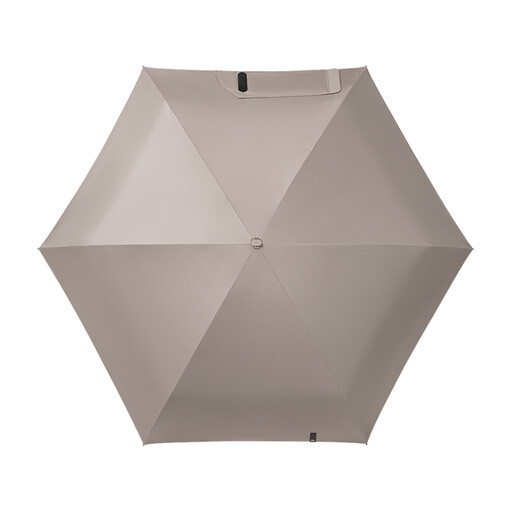
For whom ? Ideal for those who navigate city transit and need a solution that's unnoticeable in a bag or briefcase. Its flat profile and feather-light weight make it the perfect everyday companion.
It sidesteps the pitfall of false compactness. Despite its mini size (around 15.5 cm when folded), it provides certified UPF 50+ protection and is built on a solid aluminum and fiberglass frame.
Its ultra-flat "card" design and a weight of just 170 g make it incredibly portable. Perfect for both sun and rain.
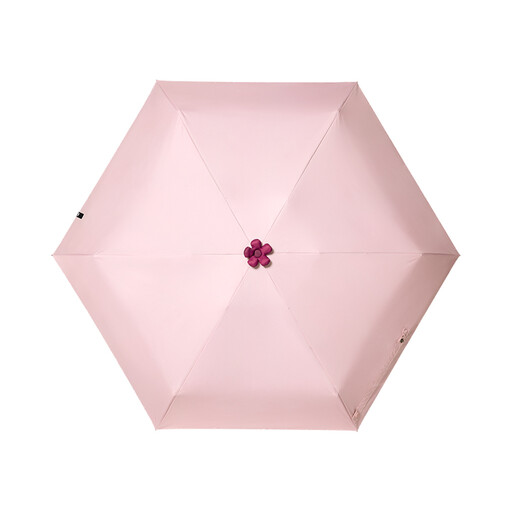
For whom ? For those who see their umbrella as a true fashion accessory. This model combines high technical performance with an original design, complete with a standout matching carrying pouch.
It avoids the trap of being a purely aesthetic gadget. Its 3D floral design isn't just for looks : the canopy features a water-repellent finish inspired by lotus leaves, making it formidably effective in the rain.
Its unique look with a cactus pouch that can be worn crossbody, and its total versatility for sun (UPF 50+) and rain.
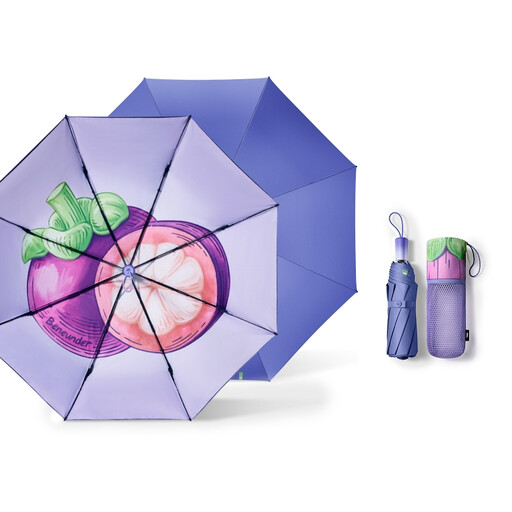
For whom ? For those who refuse to compromise on coverage area and sturdiness. It's the perfect model for long periods in the sun or for facing windy conditions with flawless protection.
It knocks out the fragile umbrella pitfall. Its reinforced frame of aluminum alloy and fiberglass is designed to withstand level 5 winds, while its extra-large canopy ensures maximum shade coverage.
Its double-layer canopy for enhanced protection and thermal insulation, and its very large span (nearly 99 cm in diameter).
Discover our complete selection of umbrellas that meet our standards for performance and durability.
The fundamental difference lies in the fabric and its treatment. A standard umbrella is designed to be waterproof, but its canopy generally allows a significant amount of UV rays to pass through. Conversely, a UV protection umbrella uses a denser fabric and/or a special coating (like a black coating) that is tested and certified to block UV rays, an effectiveness measured by the UPF rating.
Yes, and that's actually a mark of quality. The best models are versatile. The UV protection is provided by the nature of the fabric and its coating, while a water-repellent treatment on the surface handles rain. Using it in a downpour will not affect its ability to block UV rays, as long as you let it dry completely open before folding it away.
Maintenance is simple but essential. After every shower, always let it dry in the open position to prevent mold and rust. To clean it, a simple damp cloth with lukewarm water is enough?; avoid harsh detergents at all costs, as they could damage the coating. Finally, once it's dry, store it in its sleeve to protect the canopy and the mechanism.