
Livraison le jour même ou le lendemain

Qualité garantie

Débloquez vos offres de bienvenue: Livraison GRATUITE | Jusqu'à -80 % | 30 jours d'essai gratuits à JoyPlus
Téléchargez l'application
Protecting yourself from the sun is a given, but finding the right gear can be a real challenge. Between marketing promises and real-world performance, how many sun umbrellas end up being a disappointment due to a lack of effectiveness or durability? A poor choice isn't just a waste of money: it can leave you completely exposed when you need protection most. To avoid falling into this trap, here are the pitfalls to watch out for.
Here are the two classic mistakes that lead to a purchase you'll quickly regret:
To help you see things more clearly, our editorial team has broken down the features that truly make a difference.
To make an informed choice, ignore the marketing slogans and focus on objective data. Here are the three technical points to scrutinise.
The Ultraviolet Protection Factor, or UPF, is the global standard for measuring a fabric's effectiveness against UVA and UVB rays. Forget vague promises—demand a number!
A fabric certified as UPF 50+ offers excellent protection, blocking over 98% of UV rays. This performance is typically achieved through a high-density weave and specific coatings, such as a black inner lining that absorbs rays and reduces the sensation of heat. A standard rain umbrella, even a dark one, rarely achieves this level of filtration.
The durability of a sun umbrella depends entirely on its frame. Entry-level models often use low-grade metal ribs that bend at the slightest pressure.
For long-lasting performance, opt for a frame made of a fibreglass and aluminium alloy. Fibreglass provides the flexibility needed to withstand gusts without breaking, while aluminium keeps the umbrella lightweight. The number of ribs (usually 8 or 10) also plays a crucial role in the canopy's stability. A good UV umbrella should serve you well under the scorching sun as well as during a surprise shower.
The ideal format depends on your intended use.
Each user has different expectations. Here is a selection of products that meet specific needs, taking into account performance and durability criteria.
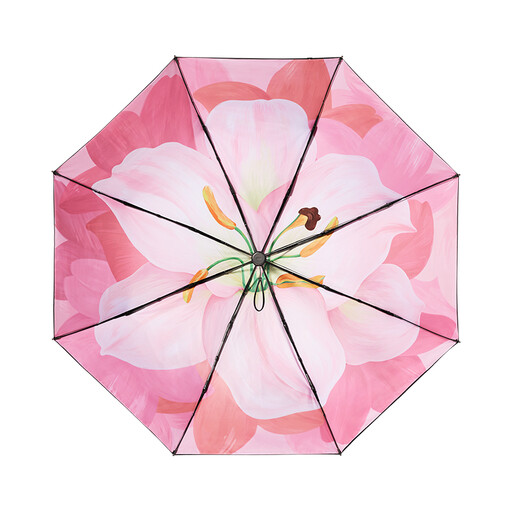
Why we love it: Perfect for anyone seeking an accessory that combines daily performance with elegance. Its interior floral pattern adds a touch of originality, while its manageable weight (370 g) and included sleeve make it easy to slip into a bag.
It goes far beyond a simple "UV protection" claim. The manufacturer states a UPF 2000+ rating (blocking 99.9% of UV rays) thanks to its L.R.C. black coating. Its fibreglass-aluminium alloy frame is designed to withstand gusts of wind.
Its dual-layer canopy insulates from heat, providing a pleasant cooling sensation. With a 99 cm diameter, it offers ample coverage.
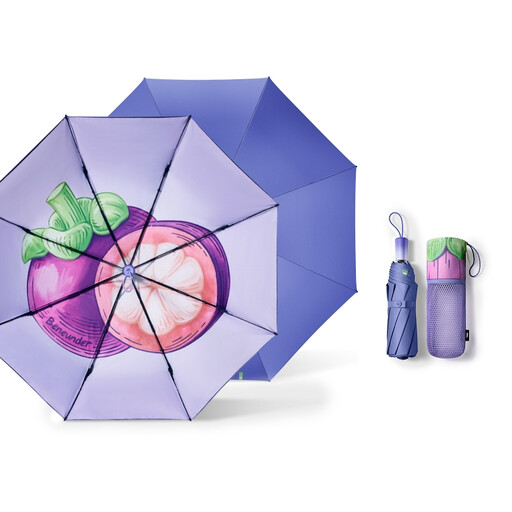
Why we love it: The choice for those who make no compromises on protection and robustness. It's built for long outdoor exposure and very sensitive skin, demanding a maximum UV barrier and heavy-duty durability.
No low-grade frame here. The manufacturer claims level 5 wind resistance thanks to a premium fibreglass-aluminium alloy structure, designed to stand up to the elements without flinching.
Its protective dual layer and extra-wide canopy ensure maximum shade, effective heat blocking, and a truly refreshing cooling comfort.
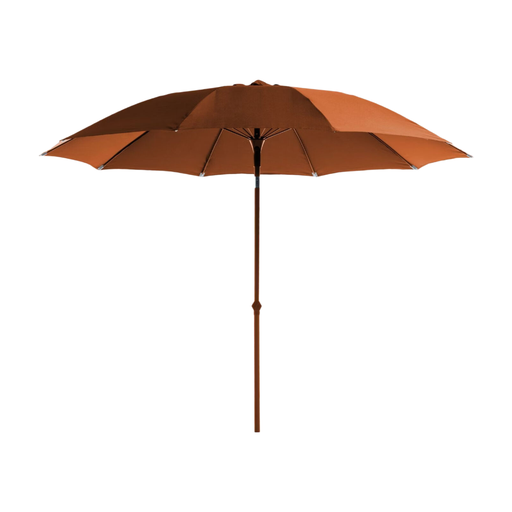
Why we love it: The perfect shading solution for a balcony, patio, or outdoor dining area. Its 2.70 m diameter is an excellent balance between coverage and footprint, while its tilting pole allows you to adapt to the sun's path.
Designed for stationary use, it doesn't forget about wind stability. The manufacturer recommends a suitable base weight (35 kg base sold separately), and its 10 fibreglass ribs ensure good structural integrity.
Its corrosion-resistant aluminium pole and water-repellent polyester canopy (180 g/m?) make it practical even during a light shower.
Don't these models tick all your boxes? Other solutions are available, especially for more specific needs like outfitting a large garden where a wider range is required.
The lifespan of a UV sun umbrella depends on the quality of its materials and, most importantly, its care. A sturdy fibreglass and aluminium frame can last for several seasons. The secret to preserving the canopy's protective coating: always let the umbrella air dry completely before folding it back into its sleeve. Then, store it in a dry place.
A UPF 50+ rating is the highest level of certification and is already a mark of excellence. It guarantees that less than 2% of UV rays reach your skin. For daily use and short periods of exposure, it's an excellent shield. For very sensitive skin or prolonged exposure, options like a dual-layer canopy can offer superior comfort and protection.
Start by measuring your available space to ensure that the parasol, once opened, won't obstruct a walkway or a patio door. A model with a diameter of 2.50 m to 2.70 m is generally a good fit for a balcony or small patio. Also, consider the height: a telescopic or tilting pole will give you much more flexibility to direct the shade throughout the day.