
Livraison le jour même ou le lendemain

Qualité garantie

Débloquez vos offres de bienvenue: Livraison GRATUITE | Jusqu'à -80 % | 30 jours d'essai gratuits à JoyPlus
Téléchargez l'application
Between the scorching sun and a surprise downpour that can ruin an outing, a good umbrella is an essential companion. The UV protection umbrella promises to prepare you for any weather, but finding a model that is effective, durable, and practical can often feel like an uphill battle. How many times has an umbrella that promised the world turned out to be a disappointment after just a few uses?
As a product expert for our editorial team, I'm here to separate fact from fiction. Follow this guide to avoid marketing traps and identify the features that truly matter, helping you choose an umbrella that will last for years, come rain or shine.
Umbrella marketing is full of promises that disappear at the first gust of wind. Here are the 3 classic mistakes to avoid:
To make the right choice, rely on technical specifications, not advertising slogans. Here are the 3 key points to verify.
The Ultraviolet Protection Factor (UPF) is THE gold standard for textiles. For uncompromising sun protection, demand UPF 50+ certification. This means the fabric blocks over 98% of UVA and UVB rays. The highest-performing models often feature a black inner coating (black coating) that not only maximises the UV block but also helps reduce the feeling of heat under the canopy.
An umbrella's durability depends primarily on its frame. Avoid the low-grade metal ribs found in entry-level models, which bend at the slightest breeze. For a good wind-resistant umbrella, look for a structure that combines:
A 5-fold folding umbrella will generally be more compact than a 3-fold model, but make sure the joints are high quality.
The ideal travel umbrella must strike the right balance between a light weight and a large coverage area. Here are a few benchmarks:
To illustrate these criteria in action, here is our selection of models that excel in their category while avoiding the classic pitfalls.
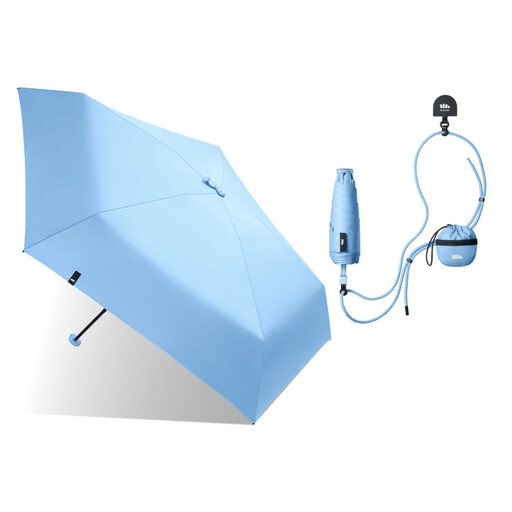
The Verdict: Designed for those who demand absolute portability. With a feather-light weight of around 150 g and a folded length of 17 cm, it's completely unnoticeable in a bag or coat pocket. The perfect companion for daily urban life.
It avoids the "light but flimsy" trap with its frame made of aluminium alloy and carbon fibre, materials that ensure strength without adding weight.
Its extreme portability (pencil format) and certified UPF 50+ protection, thanks to its L.R.C Black Coating.
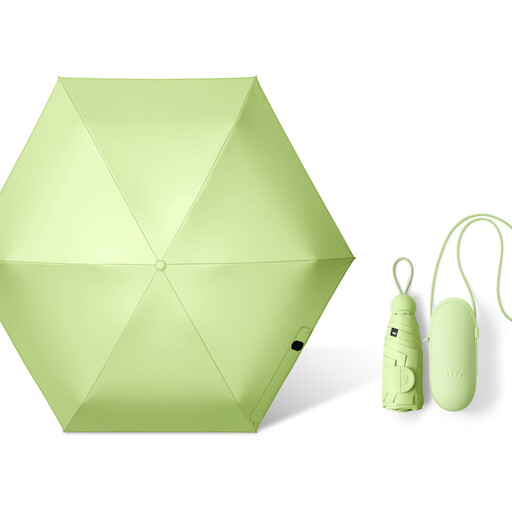
The Verdict: Ideal for travellers who need a reliable and clever accessory. Its rigid case allows you to store it, even when wet, without soaking the contents of your backpack.
It avoids the "compact but impractical" trap. Although it folds down to 19 cm, it opens to a 94.5 cm diameter, offering great coverage. Its capsule case solves the age-old problem of what to do with a wet umbrella.
The perfect combination of a compact and durable umbrella (frame made of fibreglass and aluminium) and a carrying case that is as practical as it is stylish.
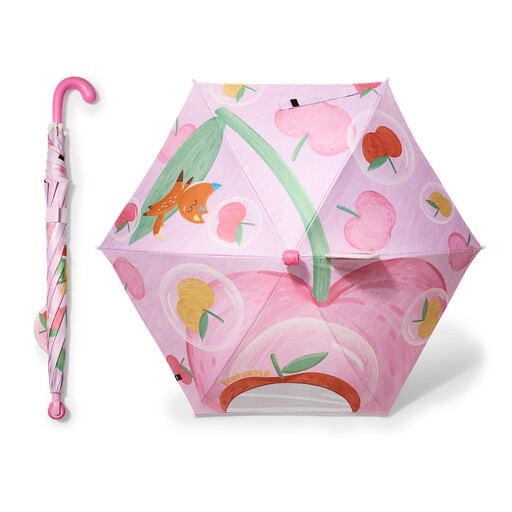
The Verdict: Because children's safety is non-negotiable. This model was designed entirely with them in mind: rounded, anti-injury tips, an easy-open and anti-pinch mechanism, and even a transparent window so they can see where they're going.
It never sacrifices safety for style. Unlike many children's models that are more like toys, this one offers real UPF 50+ protection and a sturdy fibreglass frame.
The 100% child-safe design (visibility window, rounded tips) combined with flawless sun and rain protection.
Discover our full selection of products that meet our quality charter and the most demanding standards.
It all comes down to certification and materials. A quality UV protection umbrella, especially one with a UPF 50+ rating, guarantees it blocks over 98% of UV rays. A classic parasol provides shade, but its simple fabric only partially blocks UV radiation. Furthermore, modern UV umbrellas are designed for dual sun and rain use, thanks to a canopy treated to be perfectly water-repellent.
A few simple but essential steps can make all the difference. After a downpour, shake it to remove excess water and always let it dry completely open, away from direct sunlight to avoid damaging the fabric. Never fold it up while it's still damp: you risk damaging the protective coating and encouraging mould growth. Once dry, store it in its sleeve to protect the canopy from friction.
Yes, and it's scientifically proven. This black (or very dark) coating on the inside of the canopy plays a crucial dual role. First, it absorbs any UV rays that might have passed through the outer layer of fabric, reinforcing the protection. Second, it absorbs light and heat reflected from the ground, creating a denser shade and a noticeably cooler feeling underneath the canopy.