
Livraison le jour même ou le lendemain

Qualité garantie

Débloquez vos offres de bienvenue: Livraison GRATUITE | Jusqu'à -80 % | 30 jours d'essai gratuits à JoyPlus
Téléchargez l'application
GPS, calls, music, podcasts... In the car, our smartphones are more in demand than ever. And nothing is more stressful than seeing the battery icon turn red mid-journey. The solution? A good USB car charger. But with the vast array of available models, it's hard to know where to start.
This guide is here to help you navigate your options. We'll break down the key criteria for choosing a reliable and high-performance USB cigarette lighter adapter, then present our selection of the best models for 2026, suited for every need and budget.
Before you buy, let's review the technical specifications that will truly make a difference in daily use.
Expressed in watts (W), power determines how fast your devices charge. While a standard 5W or 10W charger might be enough to maintain your battery level, you'll need to aim much higher to quickly recharge a modern smartphone.
Prioritise models that are compatible with fast-charging technologies:
A fast car charger of at least 18W is the bare minimum today for a comfortable experience.
Here, it all depends on your devices and your habits.
A model that combines a USB-A and a USB-C port offers the best of both worlds, ensuring maximum compatibility with your current and future devices.
Never compromise on safety. A good car phone charger must include protections against overcurrent, overvoltage, short circuits, and overheating. These safeguards protect not only your valuable devices but also your vehicle's electrical system. Also, remember to check compatibility with your socket's voltage (usually 12V for cars and 24V for trucks).
Here are three models that caught our eye for their performance, reliability, and excellent value for money.
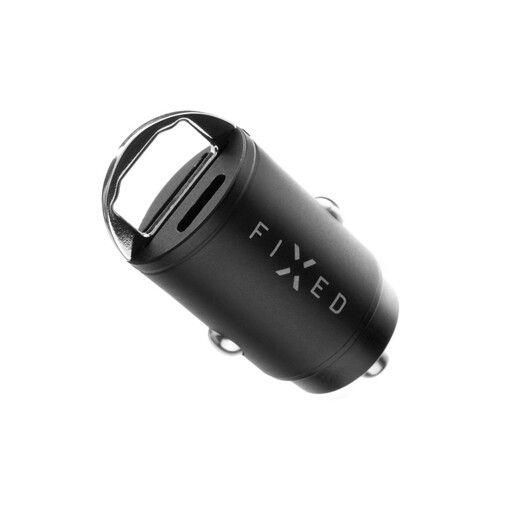
Why it stands out: This is the champion of versatility. With a total output of 30W, it combines a USB-C Power Delivery port with a USB-A Quick Charge 3.0 port. This is enough to charge almost any smartphone or tablet on the market at full speed. Its ultra-compact design allows it to blend seamlessly into any dashboard.
Pros:
Who is it for? For those who juggle modern devices (PD or QC compatible) and want a single, discreet solution to charge two devices at once without compromising on speed.
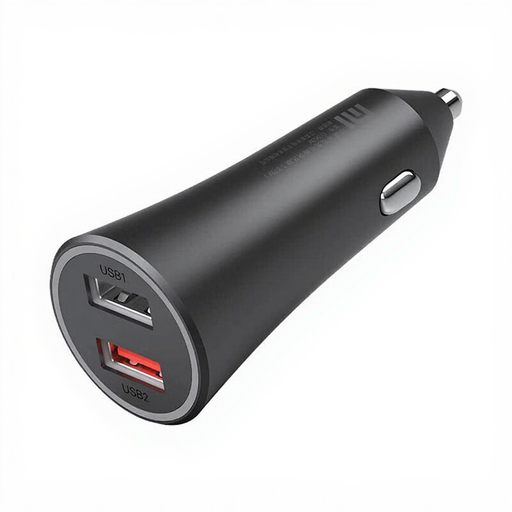
Why it stands out: This Xiaomi charger is all about power and style. It delivers a combined output of 37W across two USB-A ports. The red port, the faster of the two, can deliver up to 27W—a remarkable performance for USB-A. The finishing touch: its LED light ring, which is very handy for finding it in the dark.
Pros:
Who is it for? For owners of power-hungry Android smartphones who want maximum charging speed on one port while keeping a second one free. Its polished design will also appeal to those who appreciate stylish accessories.
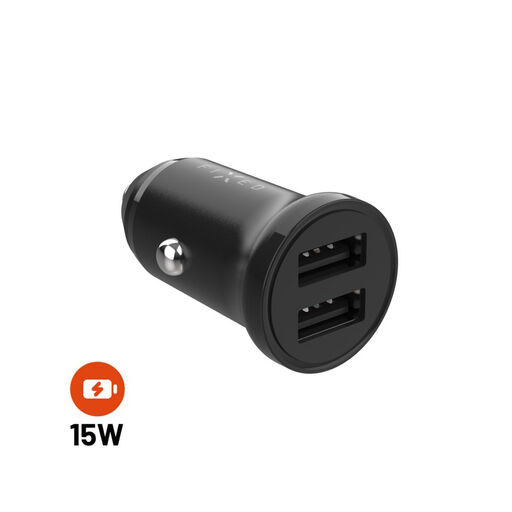
Why it stands out: This model gets straight to the point: simple, compact, and effective. With its two USB-A ports and a total output of 15W, it charges two devices simultaneously at a standard speed. Its best feature is its ultra-minimalist design, which makes it almost invisible once plugged into the cigarette lighter socket.
Pros:
Who is it for? For those with moderate charging needs who are looking for a simple, affordable, "plug-and-forget" solution to maintain the battery of their phone and a GPS, for example.
Our selection doesn't cover every scenario? Don't worry, the choice is vast, and many other configurations are available (more ports, different power outputs, etc.).
Explore our full range of USB car chargers to find the perfect one for you.
For a charge to be considered "fast" on a modern smartphone, aim for at least 18W per port. Models with 30W or more, via a USB-C PD port, are even more effective and can even power a tablet or a small laptop at a very decent speed.
In most modern cars, the cigarette lighter socket turns off with the ignition. You can therefore leave the charger plugged in without worry. However, in older models where the socket is always powered, it's wiser to unplug it during long periods of parking to avoid slowly draining the vehicle's battery.
A quality charger from a reputable brand with safety certifications (protection against overvoltage, overcurrent, etc.) is safe for your phone. The real risk comes from unbranded, uncertified chargers, which can supply an unstable current and irreversibly damage your devices' batteries.