
Livraison le jour même ou le lendemain

Qualité garantie

Débloquez vos offres de bienvenue: Livraison GRATUITE | Jusqu'à -80 % | 30 jours d'essai gratuits à JoyPlus
Téléchargez l'application
A cable that charges at a snail's pace, frays after just a few months, or refuses to work with your new laptop? It's an all-too-familiar scenario. And no wonder: navigating the jungle of standards and specifications to find the ideal USB-C to USB-C cable can quickly become a headache.
This guide is here to help you make sense of it all. We'll break down the essential criteria (power, durability, compatibility) to help you find the right model for your needs, whether it's for your smartphone, tablet, or laptop charger.
By the Joybuy product experts, 05/07/2026
Before diving into our top picks, here are three key things to check to ensure you make the right choice.
The key strength of USB-C is its ability to carry high power thanks to Power Delivery (PD) technology.
The golden rule: always check the maximum power supported by the cable. It must be equal to or greater than the power required by your device and charger.
A cable's sturdiness is the key to its longevity. A good, durable cable will save you from having to buy a new one every six months.
To deliver power greater than 60W (3A/20V), a USB-C cable must include an electronic chip known as an "E-Marker". This chip communicates with the charger and the device to negotiate the optimal voltage and current, ensuring a charge that is both fast and completely safe. The absence of this chip on a cable advertised as 100W is a major red flag.
We have selected models that have proven their worth in terms of performance, reliability, and versatility.
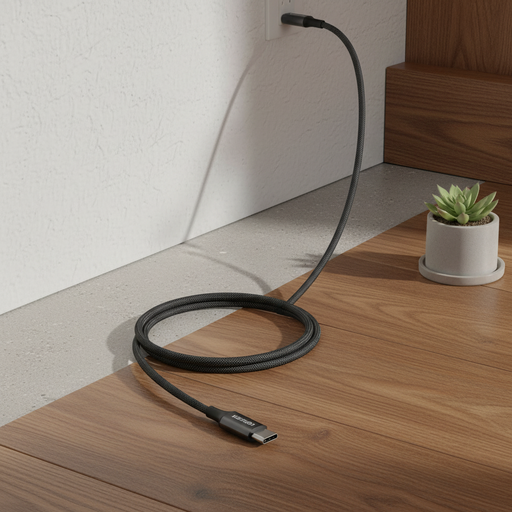
Why it stands out?: Its ability to deliver up to 100W makes it the Swiss Army knife of charging, capable of powering everything from a smartphone to a high-performance laptop.
Pros?:
Who is it for?? Professionals and laptop owners (MacBook, Dell, HP, etc.) who want a single fast-charging USB-C cable to unify the charging of all their devices, from their phone to their work computer.
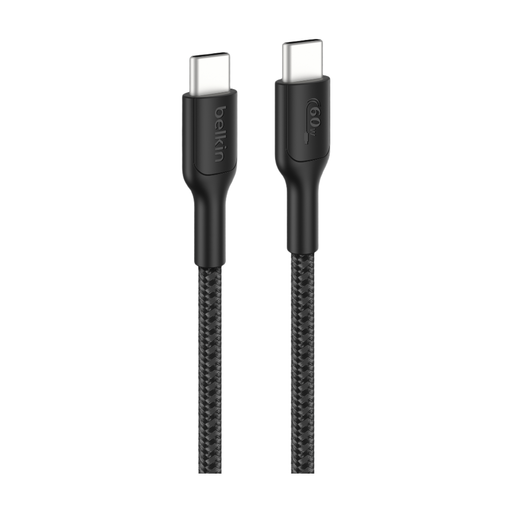
Why it stands out?: Built to last, this 2-metre cable focuses on durability, with a robust jacket made from recycled materials.
Pros?:
Who is it for?? Gamers, students, and anyone who needs a long, durable cable for intensive use at home or in the office, without being tethered to the wall socket.
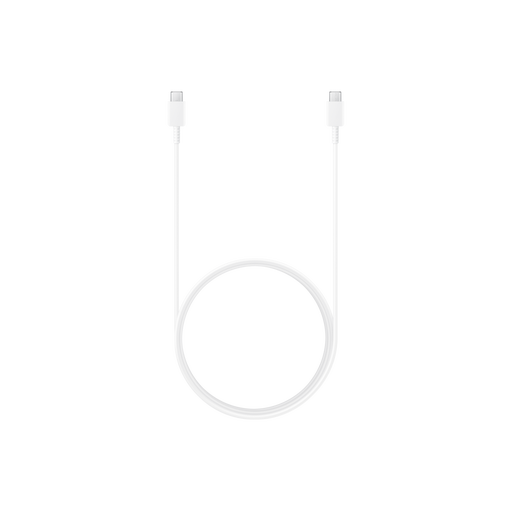
Why it stands out?: As an official cable, it guarantees perfect compatibility with the Samsung ecosystem, especially for 25W Super Fast Charging.
Pros?:
Who is it for?? Users of Samsung Galaxy devices who want a fast and reliable charging solution that's perfectly tailored to their gear.
While USB-C has become the standard almost everywhere, many peripherals (printers, external hard drives, etc.) still use other connectors. If you also need these types of cables, take a look at our selection.
? Discover our range of USB cables for printers and other peripherals
A 60W cable can deliver up to 60 watts, which is more than enough for smartphones, tablets, and many ultra-portable laptops. A 100W cable can deliver up to 100 watts, a power level that is essential for larger, more power-hungry laptops. Using a 100W cable on a 60W device poses no risk: the device and charger will "negotiate" the required power.
In theory, yes, due to a slight power loss from electrical resistance. In practice, with quality cables of 1, 2, or 3 metres, this difference is completely unnoticeable in daily use. Reputable manufacturers compensate for this by using conductors with a sufficient diameter to guarantee the advertised performance.