
Livraison le jour même ou le lendemain

Qualité garantie

Débloquez vos offres de bienvenue: Livraison GRATUITE | Jusqu'à -80 % | 30 jours d'essai gratuits à JoyPlus
Téléchargez l'application
USB-C promised us a simpler world with its universal connector. The reality? A drawer full of cables that look identical but offer radically different performance and durability. A poor-quality cable doesn't just slow down your device's charging; it can fray in no time and even damage your precious devices.
As the Head of Product Recommendations at Joybuy, my mission is to help you make sense of it all. This guide is designed to arm you with the right information to choose the fast-charging USB-C to USB-C cable you need, focusing on the essentials: power, durability, and compatibility.
Before diving into our top picks, let's review the three criteria that separate a basic cable from a high-performance model built to last.
Power, expressed in watts (W), determines how fast your device will charge. The benchmark technology is Power Delivery (PD). This smart charging protocol allows the cable, charger, and device to "talk" to each other to deliver the most suitable power level safely.
A cable is subjected to daily abuse: bent, twisted, coiled... Its construction is therefore crucial for its lifespan.
The ideal length depends on your use case. A 1-metre cable is perfect for your desk or on the go, while a 2m long cable will give you the freedom to use your device while it's charging, whether you're in bed or on the sofa. Also, check that the cable is certified (or at least tested by the manufacturer) to ensure perfect compatibility with your devices.
Here is our selection of models that tick all the boxes, each meeting specific needs in terms of power, durability, and use.
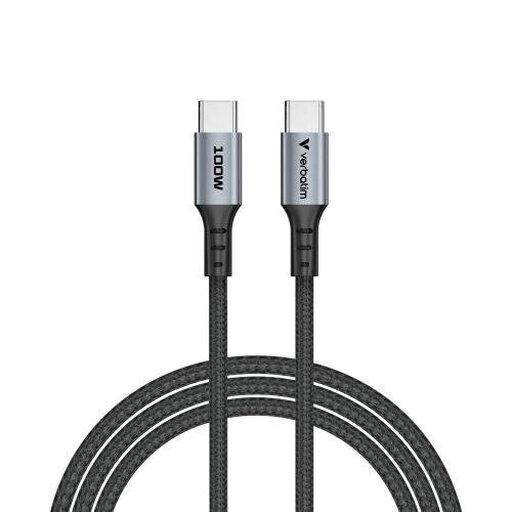
The Highlight: This cable embodies the perfect balance between performance and durability. With its 100W power output, it will effortlessly power most laptops, while its internal aramid fibre reinforcements ensure rock-solid durability.
Key Benefits:
Who is it for? For those looking for THE one-size-fits-all cable: reliable, high-performing, and capable of charging a laptop as well as a smartphone, whether at the office or at home.
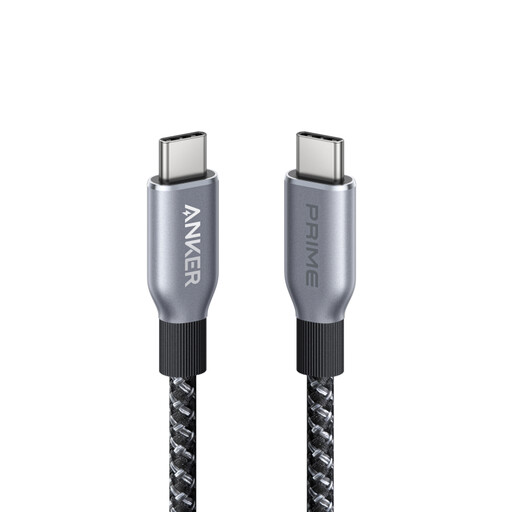
The Highlight: This cable is built for the future and the most power-hungry devices. Its 240W capacity makes it compatible with the most demanding devices of today and tomorrow. Anker doesn't skimp on durability, or even sustainability, with a sheath made from recycled materials.
Key Benefits:
Who is it for? For professionals, creatives, and gamers with high-performance machines. It's also the peace-of-mind choice for those who want a future-proof cable, ready for upcoming innovations.
See the Anker Prime 240W Cable
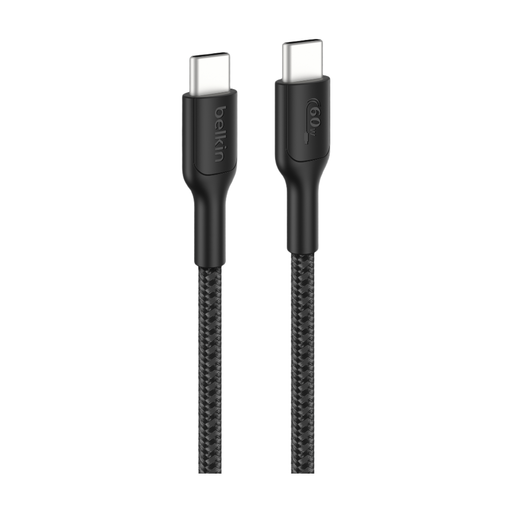
The Highlight: This cable was designed for comfort. Its generous 2-metre length allows you to play or work without being tethered to the outlet, making it a perfect companion for consoles like the Nintendo Switch 2 or for casual use on the sofa.
Key Benefits:
Who is it for? The ideal companion for console and mobile gamers, but also for anyone who wants to comfortably use their iPhone 16, Samsung S24, or tablet while it's charging.
See the Belkin Gaming 2m Cable
Our selection highlights a few gems, but the market is full of options. Need a different length, a specific colour, or advanced technical features? There's a cable out there waiting for you.
Feel free to explore our complete collection to find the perfect model for your devices and your budget.
Discover all our USB-C to USB-C Cables
It all depends on the most power-hungry device you own. For a smartphone or tablet, 60W is more than enough. For a laptop, aim for a 100W USB-C cable for maximum versatility. If you have a very powerful computer or want to be future-proof, a 240W model is a wise choice.
Absolutely no risk. Thanks to the Power Delivery (PD) protocol, the charger, cable, and your device communicate to negotiate the exact amount of power the device needs. The cable will only deliver the requested 30W, not a watt more. Using a cable that is more powerful than necessary is therefore completely safe.
Technically, yes, but in a nearly imperceptible way. A longer cable has slightly higher electrical resistance, which can cause a tiny power loss. However, with quality cables like those in our selection, the difference between a 1m cable and a 2m long cable is practically invisible. The comfort offered by a longer cable far outweighs this theoretical loss.