
Livraison le jour même ou le lendemain

Qualité garantie

Débloquez vos offres de bienvenue: Livraison GRATUITE | Jusqu'à -80 % | 30 jours d'essai gratuits à JoyPlus
Téléchargez l'application
With the widespread adoption of USB-C on chargers and computers, the USB-C to Lightning cable has become an essential accessory for iPhone and iPad owners. Whether you need to replace a worn-out cable, want to experience fast charging, or simply need a second charger for the office?? Navigating the overwhelming number of options can be challenging.
This guide is here to help you make an informed decision by breaking down the key criteria and presenting our selection of the most reliable cables, tailored to every need and budget.
Before we dive into our top picks, let's review the crucial points to check. This will ensure you get a cable that delivers on its promises of performance and safety.
This is THE essential criterion?: MFi (Made for iPhone/iPad/iPod) certification. An MFi-certified cable contains an authentication chip approved by Apple. This chip ensures perfect compatibility with your devices, prevents the infamous "Accessory Not Supported" error messages, and provides a safe charge that protects your battery from overvoltage or overheating. Choosing a non-certified cable might seem like a good deal, but it's a risky gamble?: at best, it will stop working after an iOS update; at worst, it could damage your precious devices.
To take advantage of fast charging on your iPhone, the cable alone isn't enough. It must be paired with a USB-C charger for iPhone that supports Power Delivery (PD), with a minimum output of 20W. This powerful duo can recharge up to 50% of your battery in about 30 minutes on a compatible iPhone (iPhone 8 and later models). In principle, all quality USB-C to Lightning cables are compatible, but it's your power adapter that sets the pace.
A cable's longevity is directly related to its design. A reinforced iPhone cable, often identifiable by its braided nylon sheath, will stand up much better to daily wear and tear, twisting, and repeated bending. Reinforced ends at the connectors are also an excellent indicator of sturdiness. Finally, consider the length?: a 1-meter cable is the versatile standard, but a longer model (1.8m or 2m) is much more convenient for using your phone in bed or when the outlet is just out of reach.
Keeping these criteria in mind, we have selected three excellent models that cater to distinct use cases. All of them are, of course, MFi-certified and compatible with fast charging.
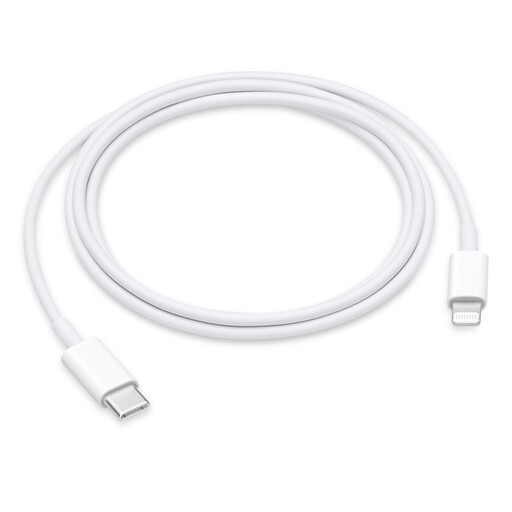
The Peace-of-Mind Choice?: This is the official model, the benchmark designed by Apple for its own devices. It guarantees flawless compatibility and performance within the brand's ecosystem.
The Pros?:
Who is it for? For those who swear by official accessories and want absolute peace of mind. It's the simple, reliable, and hassle-free choice.
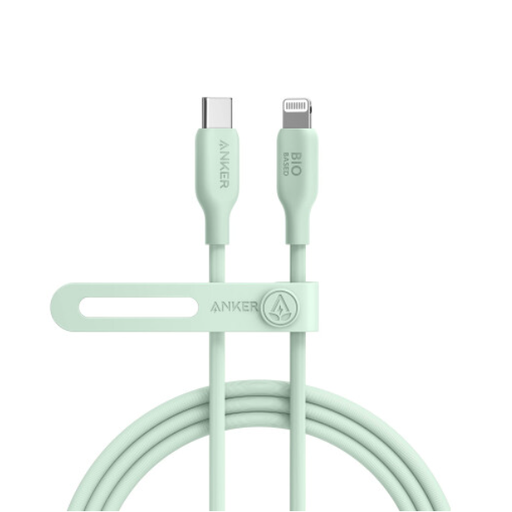
The Longest and Most Eco-Friendly?: This Anker cable checks all the boxes: it's long, durable, and takes a greener approach. Its sheath is made from plant-based materials (corn, sugarcane).
The Pros?:
Who is it for? For those who find the original cable too short and fragile. Its length and durability, combined with its more eco-friendly design, make it an excellent choice for use at home or on the go.
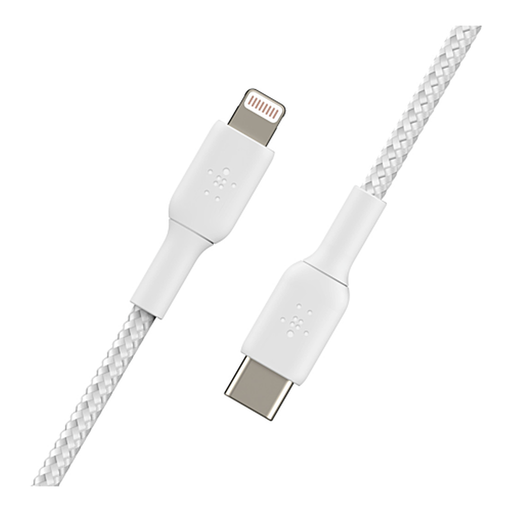
The Most Durable?: Belkin is a trusted name in the world of accessories. This reinforced iPhone cable goes all-in on durability with its braided nylon sheath designed to withstand anything.
The Pros?:
Who is it for? For the serial cable "destroyers." If your chargers always end up frayed or broken at the connectors, this heavy-duty model is the solution designed for you.
Our selection covers the most common needs, but the market is full of alternatives. Lengths, colors, materials... if you're looking for a model that stands out or simply want to compare more options, feel free to browse our catalog.
To discover other certified and high-performance models, explore our complete collection of USB to Lightning cables.
On the Apple device side (iPhone, iPad, AirPods), the connector doesn't change: it's still the Lightning port. The difference is at the other end of the cable. USB-A is the classic rectangular port found on older chargers and computers. USB-C, which is smaller, oval-shaped, and reversible, has established itself as the new standard on modern chargers (including Apple's), MacBooks, and most new electronic devices. Only a USB-C to Lightning cable allows you to use these new chargers and take advantage of fast charging.
Absolutely. A non-certified cable does not meet Apple's safety standards. It can fail to regulate voltage properly, cause the battery to overheat, damage your iPhone's charging port, or even lead to short circuits. Furthermore, there's a high probability it will become unusable after a simple iOS update. Using an MFi-certified cable is therefore an insurance policy for the safety and lifespan of your devices.
Fast charging is supported by the iPhone 8 and all newer models. To benefit from it, the winning combination is essential: a compatible iPhone, a USB-C to Lightning cable, and a USB-C Power Delivery (PD) power adapter of at least 20W.
By the Joybuy Editorial Team