
Livraison le jour même ou le lendemain

Qualité garantie

Débloquez vos offres de bienvenue: Livraison GRATUITE | Jusqu'à -80 % | 30 jours d'essai gratuits à JoyPlus
Téléchargez l'application
The growing number of electronic devices in our lives has a downside: an inextricable tangle of cables and an army of chargers, each dedicated to a single device. If you're tired of juggling the power adapter for your laptop, your smartphone, and your earbuds, GaN technology is the solution you've been waiting for.
As the head of product selections at Joybuy, my mission is to help you make sense of it all. This guide will break down the benefits of a USB-C GaN charger and point you toward the perfect model for your needs. The goal: a desk and travel bag finally free of clutter.
Before diving into our top picks, let's review the key criteria for making the right choice.
Power, measured in watts (W), is the name of the game. It determines charging speed and which devices your charger can support.
Also, consider the maximum power delivered by each port when multiple devices are plugged in simultaneously. A good multi-port USB charger intelligently distributes power to fuel each device efficiently. The Power Delivery (PD) standard is a must-have: it ensures communication between the charger and the device to deliver the right amount of power, safely.
To say goodbye to all your old chargers, a model with at least two or three ports is essential. The most versatile configuration typically includes:
This combination gives you the flexibility to power your laptop and smartphone simultaneously.
This is one of the biggest advantages of GaN (gallium nitride) technology: it allows for chargers that are much smaller and lighter than their silicon-based counterparts with the same power output. A compact charger is a powerful ally, whether for keeping your desk tidy or lightening your suitcase. It's a deciding factor for a travel charger.
Here are some models that stand out for their performance and practicality, designed for different types of users.
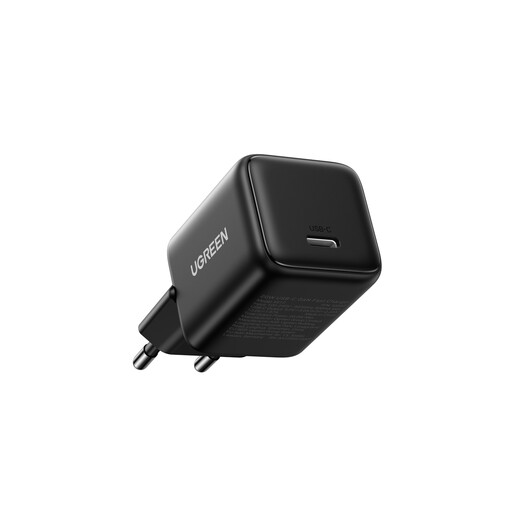
Why It Stands Out
This small block is a powerhouse of simplicity and efficiency. Its tiny size makes it a discreet yet formidable companion for quickly charging one device at a time.
Pros
Who is it for?
For those primarily looking for a compact and fast charger for their smartphone, whether at home or on the go.
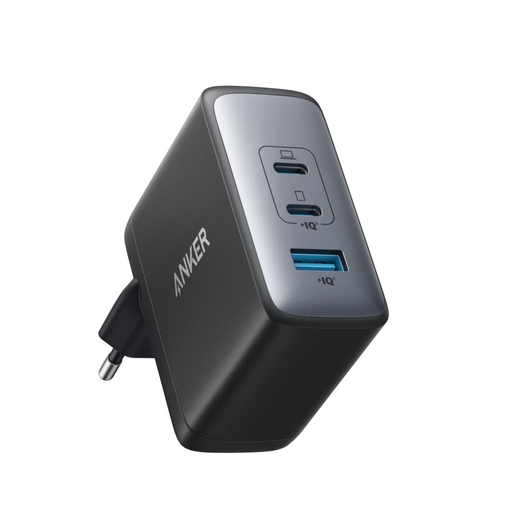
Why It Stands Out
With 100W of power and three ports, the Anker 736 is a true charging station. It can power a demanding laptop while taking care of other devices. According to Anker, its GaN II technology makes it 34% smaller than Apple's original 96W MacBook charger.
Pros
Who is it for?
For professionals, students, and creatives who juggle a complete ecosystem (PC, tablet, smartphone) and want a single, powerful solution for the office or home.
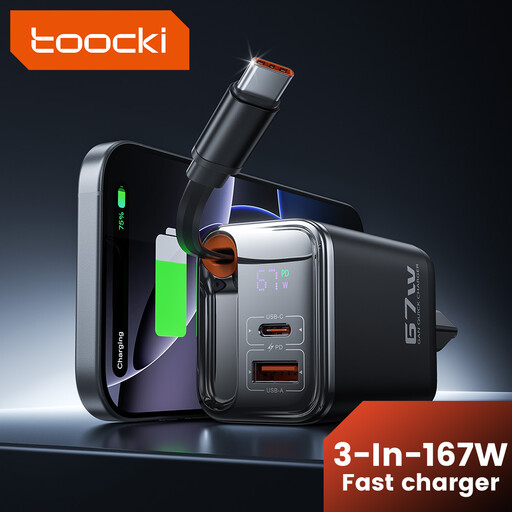
Why It Stands Out
Its killer feature? A built-in retractable USB-C cable. No more forgotten or tangled cables at the bottom of your bag! This ingenious design makes it the ultimate travel charger for the forgetful and the obsessively organised.
Pros
Who is it for?
For frequent travellers and anyone who hates dealing with cables. It's the ultimate all-in-one solution for staying organised and efficient on the move.
This selection is just a glimpse of what GaN chargers have to offer. If you have different needs, or if you simply want to explore other models, power ratings, and port configurations, feel free to browse our full catalogue.
Discover our full range of chargers and adapters
GaN stands for gallium nitride, a semiconductor material that is replacing the silicon in our traditional chargers. Its advantages? It can handle higher voltages and operates at higher frequencies. In practical terms, this allows for chargers that are smaller, lighter, run cooler, and are more energy-efficient.
Yes, in the vast majority of cases. Compatibility is ensured by the ports (USB-C, USB-A) and charging standards like Power Delivery (PD) or Quick Charge (QC). A modern USB-C power adapter is universal by design. You just need to check that the charger's power output is sufficient for your most power-hungry device, typically a laptop.
No, there is absolutely no risk. Modern chargers, especially those compatible with Power Delivery, are 'smart'. The charger and the device 'talk' to each other to agree on the right amount of power to deliver. The charger will never supply more power than the smartphone can safely accept, ensuring a charge that is both fast and perfectly safe.